

The Authority in Global Agricultural Chemistry & Bio-Resources
China Customs Launches Mandatory GHS Label System for Agrochemical Exports
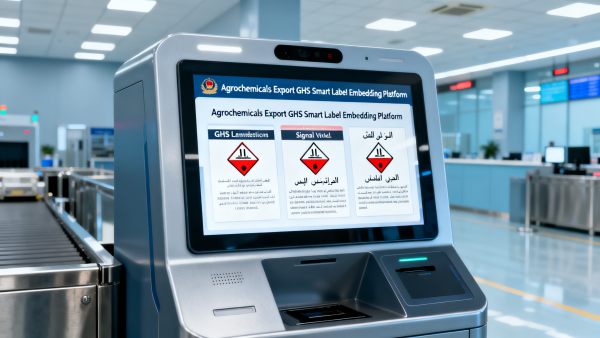
Effective May 8, 2026, China Customs General Administration has fully launched the Agrochemicals Export GHS Smart Label Embedding Platform, imposing new compliance requirements on all pesticide active ingredients and formulations destined for export. The measure directly affects global agrochemical supply chains — particularly exporters, formulators, and logistics providers serving markets requiring UN GHS Rev.10–compliant labeling in English, Spanish, and Arabic. Its enforcement stems from intensified alignment with international chemical regulatory frameworks and growing scrutiny of label accuracy by destination-country customs and pesticide regulatory authorities.
Event Overview
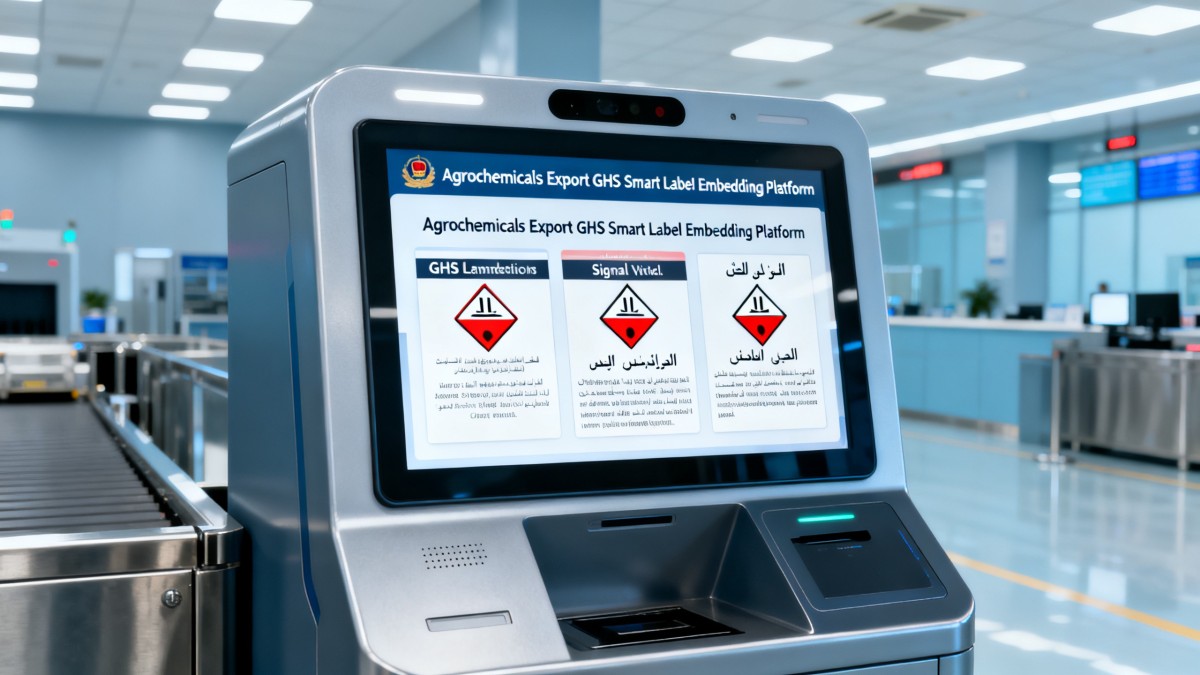
Starting at 00:00 on May 8, 2026, China Customs requires all exporters of agricultural chemicals (including technical-grade active ingredients and formulated products) to upload a multilingual electronic label package — compliant with UN GHS Revision 10 — to the newly operational Agrochemicals Export GHS Smart Label Embedding Platform prior to customs declaration. The system performs automated validation of label structure, hazard pictograms, precautionary statements, and language coverage. Products failing validation will not generate an electronic customs ledger, thereby blocking shipment release and causing delays in overseas customs clearance.
Industries Affected
Direct Trading Enterprises: Export-oriented trading companies face immediate operational impact — label preparation is no longer a post-declaration documentation task but a pre-shipment gatekeeping step. Delays in label submission or validation failure disrupt order fulfillment timelines, increase reliance on third-party labeling services, and raise working capital pressure due to extended lead times before cargo release.
Raw Material Procurement Enterprises: Companies sourcing active ingredients from domestic manufacturers must now verify upstream label readiness and data compatibility (e.g., CAS numbers, concentration thresholds, mixture classification logic). Inconsistent or incomplete classification data from suppliers may trigger rework cycles, delaying their own export submissions and exposing procurement contracts to compliance risk clauses.
Formulation & Manufacturing Enterprises: Formulators must integrate GHS Rev.10 classification workflows into R&D and batch release protocols. This includes updating safety data sheet (SDS) authoring systems, validating translation quality across three languages, and ensuring label layout compliance (e.g., font size, pictogram placement) for each target market. Internal quality control now extends to digital label integrity — not just physical label printing.
Supply Chain Service Providers: Freight forwarders, customs brokers, and labeling solution vendors are experiencing increased demand for integrated platform support — including API-based label upload assistance, validation error diagnostics, and multilingual GHS content verification. Those lacking GHS Rev.10 expertise or platform connectivity risk losing clients to more technically equipped partners.
Key Focus Areas and Recommended Actions
Validate label data against UN GHS Rev.10 — not older revisions
GHS Rev.10 introduces updated criteria for skin sensitization, aquatic toxicity classification, and new precautionary statement codes. Using legacy SDS templates or outdated classification tools will result in automatic rejection. Enterprises should conduct internal gap assessments using Rev.10-specific decision trees before uploading.
Confirm multilingual label package completeness
The platform mandates full parallel text in English, Spanish, and Arabic — including hazard statements, precautionary statements, product identifiers, and supplier contact information. Machine-translated content is insufficient; linguistic accuracy and regulatory terminology consistency (e.g., ‘acute toxicity’ vs. ‘toxicity by ingestion’) must be verified by native-speaking GHS specialists.
Integrate label submission into ERP or customs declaration workflows
Label upload is now a prerequisite for generating the electronic customs ledger. Companies should align their internal systems (e.g., SAP, Oracle) with the platform’s API or adopt certified middleware to avoid manual uploads and version mismatches between declared goods and submitted labels.
Assign internal GHS compliance ownership — not solely rely on external consultants
Given the recurring nature of label updates (e.g., formulation changes, new markets), enterprises need dedicated personnel trained in GHS Rev.10 application, multilingual label management, and platform navigation. Outsourcing only initial setup increases long-term vulnerability to validation bottlenecks.
Editorial Perspective / Industry Observation
Observably, this initiative reflects a broader shift in China’s export regulatory posture — from reactive customs inspection to proactive digital gatekeeping. Unlike previous labeling guidance, which relied on paper-based verification during physical inspections, the new platform enforces standardized, machine-readable compliance *before* any physical movement occurs. Analysis shows that this is less about adding new hazard requirements and more about tightening traceability and interoperability across global chemical trade systems. From an industry perspective, the timing coincides with upcoming EU CLP Annex VI updates and Brazil’s ANVISA Resolution RDC 315/2024 implementation — suggesting coordinated regulatory convergence rather than isolated national action.
Conclusion
This policy marks a structural inflection point: agrochemical exports from China are now subject to a digital-first compliance checkpoint rooted in globally harmonized classification logic. It does not raise new hazard thresholds, but it significantly raises the bar for operational discipline, cross-functional coordination, and technical readiness. A rational interpretation is that the measure favors vertically integrated players and service providers with embedded GHS capabilities — while increasing marginal costs and complexity for fragmented, transactional exporters.
Source Attribution
Official notice issued by China Customs General Administration (Announcement No. 2026-XX, published April 12, 2026); UN GHS Rev.10 (2023); supporting technical specifications released via the China International Trade Single Window portal. Ongoing monitoring is recommended for: (1) phased rollout clarifications for niche product categories (e.g., biopesticides, pheromones), (2) potential extension to non-agrochemical industrial chemicals, and (3) integration timelines with ASEAN and African regional customs platforms.
Related Intelligence
- AgrochemicalsWhat Are the Main Risks of Non-Transparent Agricultural Supply Chains?what are the main risks of non transparent agri supply chains? Explore traceability, compliance, contamination, disruption, and cost risks—plus practical controls.
- AgrochemicalsGrain Production: Key Practices for Improving Yield While Protecting Soil HealthGrain production strategies to improve yield, protect soil health, manage nutrients, reduce compaction, and build resilient fields for lasting results.
- AgrochemicalsHow Do New FDA Rules Affect Agri-Chemical Sourcing Strategies?How do new FDA rules impact agri chemical sourcing strategies? Explore practical supplier screening, traceability, contaminant control, and risk-based compliance steps.
The Morning Broadsheet
Daily chemical briefings, market shifts, and peer-reviewed summaries delivered to your terminal.
