

The Authority in Global Agricultural Chemistry & Bio-Resources
China Customs Launches Mandatory GHS Label Embedding System for Agrochemical Exports
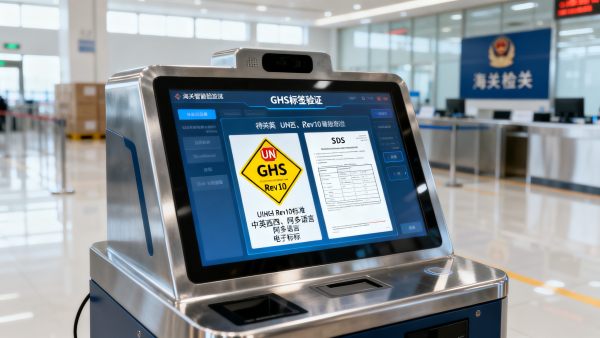
Effective May 11, 2026, China Customs General Administration has fully implemented an intelligent GHS label verification system for agrochemical exports. This development directly affects exporters, formulation manufacturers, and international distributors—particularly those shipping to South America and the Middle East—where compliance with UN GHS Rev.10 and target-country language requirements is now enforced at the customs declaration stage.
Event Overview
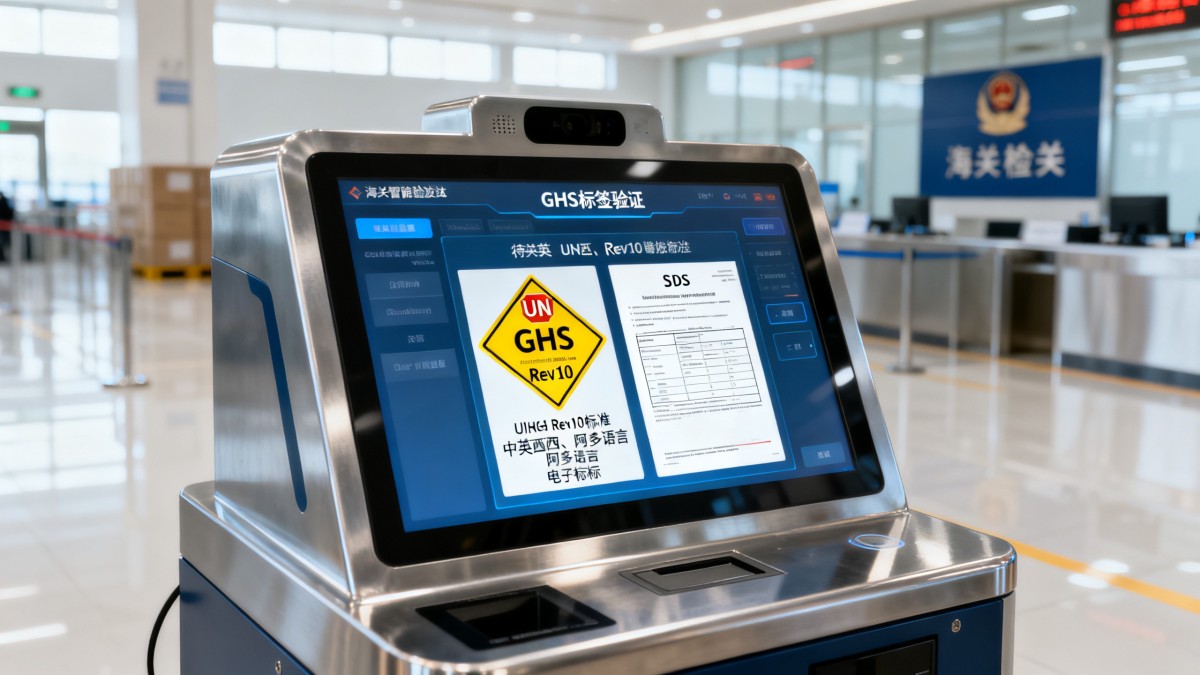
On May 11, 2026, China Customs General Administration activated the Agrochemicals Export GHS Label Intelligent Verification System. As of that date, all export declarations for agrochemicals must be accompanied by an electronic label package—including a Safety Data Sheet (SDS), primary label, and secondary label—that complies with UN GHS Revision 10 and the official language(s) of the destination country. Declarations failing automated validation trigger manual review, resulting in an average customs clearance delay of 2.3 working days. Importers in South America and the Middle East are advised to confirm whether their Chinese suppliers have completed label package registration.
Industries Affected
Direct Exporters and Formulation Manufacturers
These entities bear primary responsibility for label package preparation and submission. They are affected because the system requires real-time, standardized digital labeling aligned with both global harmonized criteria and local linguistic rules—shifting label compliance from a post-shipment documentation step to a mandatory pre-clearance requirement.
Raw Material Suppliers and Contract Manufacturers
While not directly filing customs declarations, these suppliers may be contractually obligated to provide GHS-compliant SDS and labeling assets to their clients. Any mismatch in revision level (e.g., using GHS Rev. 9 instead of Rev. 10) or language scope can cascade into downstream declaration failures and delays.
International Distributors and Importers (especially in South America and the Middle East)
These parties face increased operational risk: shipments may be held pending supplier-side label verification. The notice specifically calls out South American and Middle Eastern importers to verify their suppliers’ label package registration status—indicating higher scrutiny for these markets.
Supply Chain Service Providers (e.g., customs brokers, regulatory consultants)
Service providers must now integrate GHS label package validation into pre-filing workflows. Their value proposition increasingly hinges on technical capacity to verify Rev. 10 alignment, multilingual label structure, and embedded metadata compatibility—not just tariff classification or documentation handling.
Key Considerations and Recommended Actions
Monitor official guidance on label package format specifications
China Customs has not publicly released technical details (e.g., file naming conventions, XML schema, acceptable image resolutions) for the electronic label package. Stakeholders should track updates from the Customs General Administration’s official website and authorized notification channels.
Verify label compliance for high-priority export destinations
South America and the Middle East are explicitly named in the notice as requiring supplier-level confirmation of label package registration. Companies exporting to these regions should prioritize internal audits of current label packages against UN GHS Rev. 10 and local language requirements—especially for Spanish, Arabic, and Portuguese variants.
Distinguish between policy activation and enforcement ramp-up
The system went live on May 11, 2026—but historical patterns suggest initial enforcement may include grace periods or selective targeting. Observably, the 2.3-day average delay cited reflects early operational data; actual timelines may evolve as system stability improves or audit thresholds adjust.
Prepare for upstream coordination with formulators and label vendors
Since SDS and labels must be submitted together as a unified package, procurement teams should align with formulation partners and labeling service providers well ahead of shipment planning. This includes confirming version control (Rev. 10), bilingual/multilingual layout readiness, and secure file transfer protocols.
Editorial Perspective / Industry Observation
This measure is better understood as a procedural hardening of existing GHS obligations—not a new regulatory standard. Analysis shows it formalizes label compliance as a gatekeeping function within customs clearance, elevating its operational weight alongside HS code accuracy and valuation. It signals a broader shift toward digital pre-validation across chemical trade, where documentation integrity is assessed before physical movement begins. From an industry perspective, this is less about imminent penalties and more about infrastructure readiness: firms with mature regulatory operations and integrated labeling workflows will experience minimal disruption, while others may face recurring clearance friction until systems adapt.
Conclusion
China’s implementation of the mandatory GHS label embedding system marks a structural refinement in agrochemical export controls—not a departure from prior requirements. Its significance lies in the operationalization of compliance: what was previously verified retrospectively or through sampling is now enforced as a binary, pre-clearance checkpoint. Currently, this is best interpreted as a process intensification rather than a substantive regulatory expansion. Stakeholders should treat it as a workflow integration challenge, not a compliance crisis—focusing on technical alignment, cross-border coordination, and incremental system testing ahead of peak shipping periods.
Information Source
Main source: Public announcement issued by China Customs General Administration, effective May 11, 2026.
Note: Technical specifications for the electronic label package (e.g., file structure, validation logic, fallback procedures) remain unconfirmed and are subject to ongoing observation.
Related Intelligence
- AgrochemicalsWhat Are the Main Risks of Non-Transparent Agricultural Supply Chains?what are the main risks of non transparent agri supply chains? Explore traceability, compliance, contamination, disruption, and cost risks—plus practical controls.
- AgrochemicalsGrain Production: Key Practices for Improving Yield While Protecting Soil HealthGrain production strategies to improve yield, protect soil health, manage nutrients, reduce compaction, and build resilient fields for lasting results.
- AgrochemicalsHow Do New FDA Rules Affect Agri-Chemical Sourcing Strategies?How do new FDA rules impact agri chemical sourcing strategies? Explore practical supplier screening, traceability, contaminant control, and risk-based compliance steps.
The Morning Broadsheet
Daily chemical briefings, market shifts, and peer-reviewed summaries delivered to your terminal.
