

The Authority in Global Agricultural Chemistry & Bio-Resources
China Customs Launches Mandatory GHS Label AI Verification for Agrochemical Exports

On May 8, 2026, at 00:00 CET, China Customs General Administration officially launched the AI-based GHS label verification system for agrochemical exports — a regulatory measure requiring all export declarations to include bilingual (Chinese/English) electronic labels compliant with UN GHS Rev.10, including pictograms and precautionary statement codes. This development directly affects agrochemical manufacturers, exporters, labeling service providers, and importers handling China-origin shipments — particularly those supplying markets with strict chemical compliance regimes (e.g., EU, ASEAN, Latin America).
Event Overview
Effective May 8, 2026, China Customs General Administration deployed the Agrochemicals Export GHS Label AI Verification System. All export customs declarations must now be accompanied by electronic GHS labels meeting UN GHS Revision 10 requirements in both Chinese and English. Labels must contain standardized hazard pictograms and precautionary statement codes. The system automatically checks format compliance, field completeness, and logical consistency between hazard classification and assigned elements. On its first day of operation, the system flagged 1,247 abnormal submissions, primarily due to mismatched precautionary statement codes and insufficient pictogram resolution.
Industries Affected by Segment
Agrochemical Exporters & Formulators
These entities are directly responsible for generating and submitting compliant labels with each customs declaration. Non-compliance results in immediate rejection or delay of clearance. Impact manifests as increased pre-shipment labeling validation workload, tighter internal coordination between regulatory affairs, packaging, and logistics teams, and higher risk of shipment hold-ups if legacy label templates are reused without revision.
Labeling & Packaging Service Providers
Third-party vendors producing physical or digital labels for agrochemical clients now face stricter technical specifications: mandatory dual-language rendering, minimum resolution thresholds for pictograms, and precise mapping of hazard categories to UN-specified precautionary codes. Their deliverables must align with AI-recognizable formatting — not just human-readable design standards.
Importers & Distributors Receiving China-Origin Shipments
While not directly subject to the filing requirement, these stakeholders may encounter delays or documentation queries from their local customs authorities if upstream labeling fails verification. In markets where GHS alignment is enforced (e.g., EU CLP), discrepancies between China-submitted labels and destination-country expectations could trigger re-evaluation or market access challenges.
Supply Chain & Compliance Technology Providers
Vendors offering GHS authoring, SDS management, or customs integration platforms must now ensure their tools support automated generation of UN GHS Rev.10–compliant bilingual labels — including correct code-to-hazard logic and export-ready file formats acceptable to the AI verifier. Integration with China’s single-window system becomes a functional prerequisite.
Key Points for Enterprises and Practitioners
Monitor official updates on label format specifications
China Customs has not yet published a public technical specification document detailing exact resolution requirements, font sizing, or file type restrictions (e.g., PDF/A vs. PNG). Enterprises should track announcements via the Customs General Administration’s official portal and provincial customs notice boards — especially for clarifications expected in Q3 2026.
Validate label logic against UN GHS Rev.10 — not older versions
Analysis shows that many rejected submissions used Rev.9–based classification logic or outdated precautionary statement codes. Companies must cross-check current hazard classifications (e.g., Acute Tox. Category 2 vs. 3) against Rev.10’s updated criteria and ensure corresponding P-statements match exactly — no substitutions or approximations accepted by the AI engine.
Test label files using high-resolution, vector-compatible outputs
Observably, pictogram resolution was the second most common failure reason. Labels generated from low-DPI raster sources (e.g., scanned images or compressed JPEGs) failed recognition. Current best practice is to use SVG or high-resolution (≥300 dpi) PNG exports embedded in PDF/A-3 files — verified internally before submission.
Separate policy signal from operational readiness
The system’s May 8 launch marks enforcement commencement, but full integration across all regional customs offices may take several weeks. From industry perspective, early adopters report varying response times and feedback detail levels between ports. Enterprises should treat initial submissions as diagnostic runs — logging rejection reasons precisely to refine internal workflows before scaling volume.
Editorial Perspective / Industry Observation
This initiative is better understood as an enforcement escalation — not merely a procedural update. Analysis shows it reflects China’s broader shift toward digital, AI-augmented trade compliance, moving beyond paper-based certification toward real-time, machine-verifiable data integrity. Observably, the high initial rejection rate (1,247 in one day) signals that readiness gaps remain widespread — suggesting this is less a ‘soft launch’ and more a calibrated stress test. From industry angle, the system functions as both a gatekeeper and a catalyst: it raises baseline compliance expectations while accelerating adoption of standardized, interoperable labeling infrastructure. Continued attention is warranted because subsequent phases may extend verification to SDS submission, pre-shipment inspection linkage, or upstream manufacturer registration — all currently unconfirmed but technically feasible extensions of the same architecture.
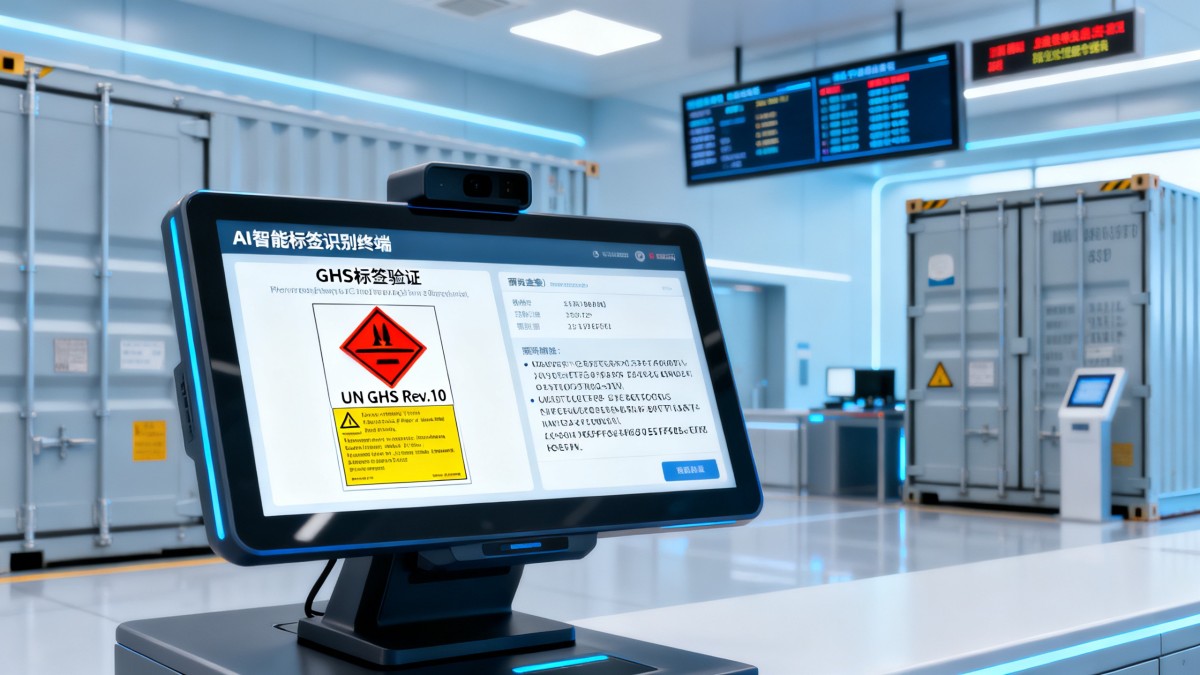
Conclusion: This measure formalizes a new layer of technical accountability in agrochemical export operations. It does not introduce novel hazard classification rules, but significantly tightens execution discipline around existing GHS obligations. Currently, it is more accurately interpreted as an operational checkpoint than a strategic policy shift — yet its reliability and scalability will shape how regulators approach other regulated chemical categories in future. Enterprises are advised to treat it as a fixed requirement in 2026 export planning, not a transitional phase.
Source: China Customs General Administration official announcement (May 8, 2026); initial system performance data released via internal customs bulletin (unpublished externally). Note: Technical implementation details (e.g., file format acceptance, regional rollout timelines) remain under observation and are subject to further clarification.
Related Intelligence
- AgrochemicalsWhat Are the Main Risks of Non-Transparent Agricultural Supply Chains?what are the main risks of non transparent agri supply chains? Explore traceability, compliance, contamination, disruption, and cost risks—plus practical controls.
- AgrochemicalsGrain Production: Key Practices for Improving Yield While Protecting Soil HealthGrain production strategies to improve yield, protect soil health, manage nutrients, reduce compaction, and build resilient fields for lasting results.
- AgrochemicalsHow Do New FDA Rules Affect Agri-Chemical Sourcing Strategies?How do new FDA rules impact agri chemical sourcing strategies? Explore practical supplier screening, traceability, contaminant control, and risk-based compliance steps.
The Morning Broadsheet
Daily chemical briefings, market shifts, and peer-reviewed summaries delivered to your terminal.
