

The Authority in Global Agricultural Chemistry & Bio-Resources
ANVISA Expands Natural Ingredients Exemption to Include Plant-Based Protein Powders
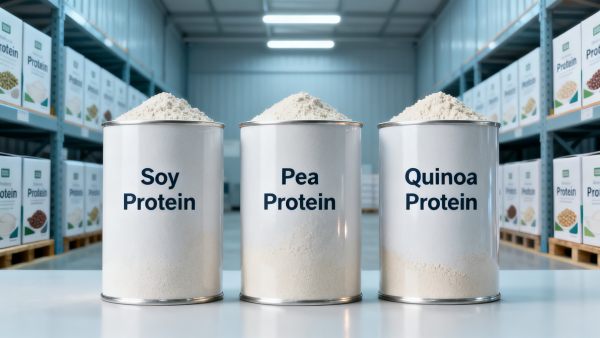
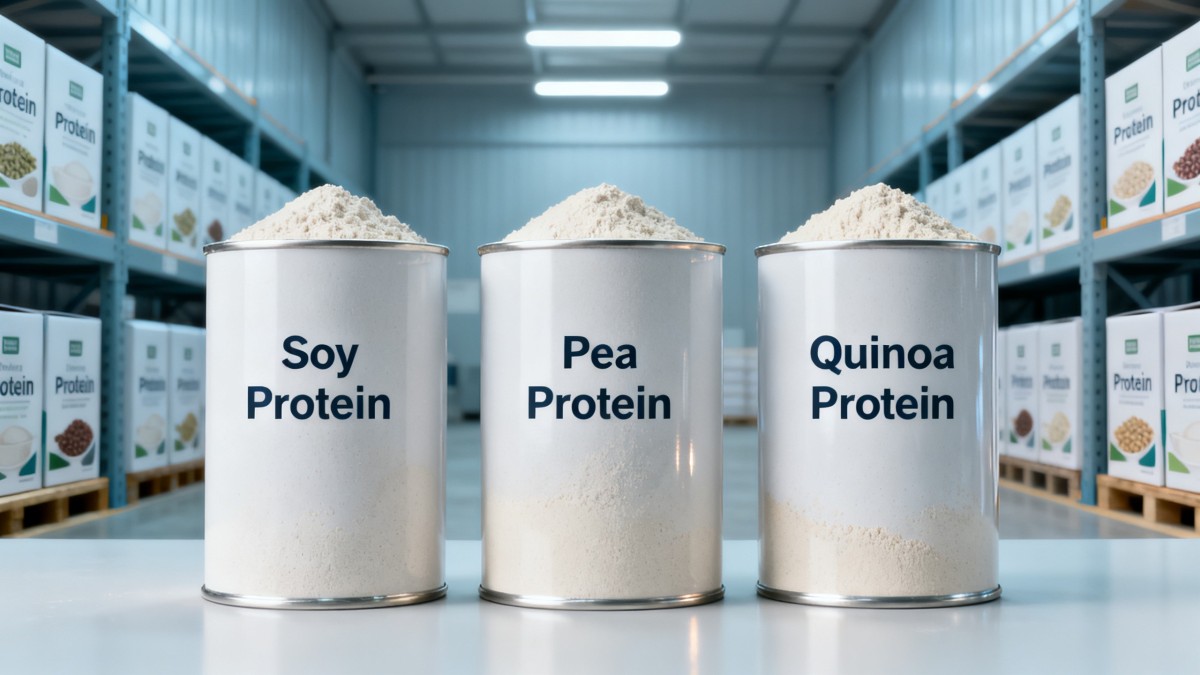
Brazil’s National Health Surveillance Agency (ANVISA) updated Annex to RDC No. 272/2026 on May 8, 2026, adding plant-based protein powders — specifically those derived from soy, pea, and quinoa — to the list of natural ingredients exempt from full product registration. This change directly affects exporters of such ingredients, particularly from China, and signals a procedural shift in market access for functional food and dietary supplement raw materials entering Brazil.
Event Overview
On May 8, 2026, ANVISA issued an amendment to RDC No. 272/2026, expanding the exemption list for Natural Ingredients under its regulatory framework. The updated annex explicitly includes plant-based protein powders sourced from soy, pea, and quinoa. Under the revised provision, Chinese exporters may obtain an ANVISA备案 number (registration reference) within seven working days by submitting only three documents: a GMP certificate, the INCI name of the ingredient, and test reports for heavy metals and microbiological contaminants. On-site audits are no longer required for these products.
Industries Affected
Direct Exporters (China-based)
Chinese manufacturers and trading companies exporting plant-based protein powders to Brazil face reduced administrative burden and faster time-to-market. The exemption eliminates the need for costly and time-consuming facility audits, lowering entry barriers for smaller or mid-sized suppliers.
Ingredient Sourcing & Blending Manufacturers
Companies formulating finished dietary supplements or functional foods in Brazil that rely on imported plant proteins may benefit from more stable supply chains and shorter lead times. Reduced documentation complexity supports faster reformulation or label updates tied to new ingredient sourcing.
Contract Manufacturers & Toll Processors (Brazil-based)
Local Brazilian facilities using imported plant proteins as raw inputs may experience simplified raw material qualification processes. Since ANVISA now treats these ingredients as pre-validated under the Natural Ingredients pathway, internal quality assurance workflows may be streamlined for incoming goods verification.
Regulatory & Compliance Service Providers
Firms offering ANVISA registration support must update their service packages and client guidance to reflect the new exemption scope. Misclassification risks increase if services continue applying full registration protocols to eligible plant protein powders.
What Relevant Enterprises or Practitioners Should Focus On
Monitor official implementation guidance and potential scope clarifications
ANVISA has not yet published detailed instructions on how to submit the three required documents, nor clarified whether batch-level submissions or annual renewals apply. Exporters should track upcoming technical notes or FAQs issued by ANVISA’s Cosmetics & Food Division.
Verify eligibility per botanical source and processing method
The exemption applies only to protein powders from soy, pea, and quinoa — not other legumes or pseudocereals. Furthermore, it covers only products classified as ‘natural ingredients’; hydrolyzed, fermented, or chemically modified variants may fall outside the exemption. Companies must confirm alignment with ANVISA’s definition of ‘natural’ under RDC No. 272/2026.
Distinguish between policy signal and operational readiness
While the regulatory change is effective as of May 8, 2026, actual processing timelines depend on ANVISA’s internal capacity and system updates. Early applicants should allow buffer time and retain evidence of submission timestamps, especially if facing first-time use of the new fast-track channel.
Prepare documentation in advance — especially GMP and testing reports
GMP certificates must be issued by authorities recognized by ANVISA (e.g., NMPA, FDA, or EU competent bodies) and include facility address and scope matching the exported product. Heavy metal and microbiological test reports must be conducted by ISO/IEC 17025-accredited labs and reference current Brazilian limits (e.g., RDC No. 216/2004 for microbiology). Pre-validating lab reports avoids delays due to non-compliant formatting.
Editorial Perspective / Industry Observation
Observably, this amendment reflects ANVISA’s ongoing effort to align regulatory efficiency with global trends in plant-based nutrition — particularly where safety profiles are well-established and manufacturing controls are internationally recognized. Analysis shows the move is less about broad deregulation and more about targeted process optimization for low-risk, high-volume ingredients. It functions primarily as a procedural signal: ANVISA is signaling openness to risk-proportionate oversight, but only for clearly defined categories meeting strict documentation criteria. From an industry perspective, this is not a blanket simplification — it is a narrow, conditional acceleration path requiring precise compliance execution. Continued monitoring is warranted, as future expansions (e.g., to rice or hemp protein) would depend on similar evidence-based assessments.
Conclusion: This regulatory update lowers entry friction for specific plant-based protein powders entering Brazil, but does not represent a general relaxation of food ingredient oversight. It is best understood as a targeted administrative improvement — one that rewards documentation rigor and international quality alignment, rather than reducing substantive safety requirements. For stakeholders, the priority remains accurate classification, timely document preparation, and close attention to ANVISA’s forthcoming operational guidance.
Source: Official amendment to RDC No. 272/2026, published by ANVISA on May 8, 2026. Pending observation: ANVISA’s forthcoming implementation guidance, including submission portal updates and interpretation of ‘natural’ for processed plant proteins.
Related Intelligence
- Natural IngredientsIndustrial-Scale Agricultural Sourcing: Key Criteria for Reliable SupplyIndustrial scale agri sourcing made reliable: assess supplier capacity, traceability, landed cost, logistics, and resilience to protect production continuity.
- Natural IngredientsHow Microencapsulated Botanical Ingredients Improve Stability and Controlled ReleaseMicroencapsulated botanical ingredients enhance stability, protect sensitive actives, and enable controlled release for reliable performance across demanding applications.
- Natural IngredientsHow to Evaluate Bioactive Compounds for Nutraceuticals by Stability, Efficacy, and FormatBioactive compounds for nutraceuticals should be evaluated by stability, efficacy, and format. Learn how to compare ingredients, reduce formulation risk, and choose options that perform in real products.
The Morning Broadsheet
Daily chemical briefings, market shifts, and peer-reviewed summaries delivered to your terminal.
