

The Authority in Global Agricultural Chemistry & Bio-Resources
Green Corridor Asia-Europe Cold Chain Route Launches June 2026
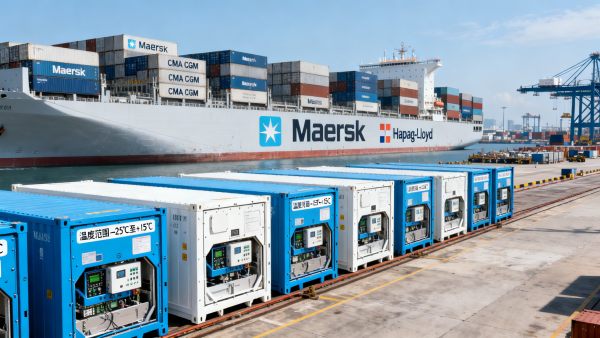
On June 1, 2026, the global shipping alliance ‘Green Corridor’ will launch its dedicated Asia–Europe cold chain service, jointly operated by Maersk, CMA CGM, and Hapag-Lloyd. The route features multi-temperature cargo holds ranging from −25°C to +15°C and is expected to reduce end-to-end temperature-controlled transport costs for precision components—such as mid- to high-end controllers and sensors from Aeration & Water Tech—by 22% versus air freight. It also supports direct integration with IATA CEIV Pharma temperature control certification. Companies in life sciences, industrial automation, and advanced manufacturing supply chains should monitor implications for cross-border logistics cost structure, compliance readiness, and supplier onboarding timelines.
Event Overview
The ‘Green Corridor’ Asia–Europe cold chain专线 (dedicated route) begins operations on June 1, 2026. It is co-operated by Maersk, CMA CGM, and Hapag-Lloyd. The service includes purpose-built multi-temperature cargo holds (−25°C to +15°C). It enables a 22% reduction in temperature-controlled transport costs for Aeration & Water Tech’s mid- to high-end controllers and sensors compared to air freight. The route is certified for direct linkage with IATA CEIV Pharma standards. The list of首批 (first batch) Chinese suppliers integrated into the service has been published on the alliance’s official website.
Impact on Specific Industry Segments
Direct Trading Enterprises
Companies exporting temperature-sensitive industrial components—especially those handling precision controllers or sensors requiring narrow thermal tolerances—face revised cost–service trade-offs. The 22% cost reduction applies specifically to sea-based temperature-controlled transport for this product category, shifting the economic rationale for modal selection away from air freight for time-flexible shipments.
Raw Material & Component Procurement Firms
Firms sourcing critical subassemblies or sensors from Chinese suppliers for final integration in Europe or North America may experience improved landed cost predictability. The standardized IATA CEIV Pharma–compatible handling reduces variability in customs clearance and warehouse handover delays—provided procurement contracts explicitly reference Green Corridor–compliant routing.
Manufacturing Enterprises with Global Assembly Networks
For OEMs managing distributed production (e.g., electronics, medical devices), this route offers a new option for just-in-sequence delivery of calibrated sensors across temperature zones. However, the −25°C to +15°C range does not cover ultra-low-temperature pharmaceuticals (e.g., mRNA vaccines), limiting applicability outside industrial and select life science instrumentation segments.
Supply Chain Service Providers
Third-party logistics providers and cold chain integrators must assess compatibility of their current monitoring hardware, documentation workflows, and certification records with the Green Corridor’s IATA CEIV Pharma–aligned protocols. Integration is not automatic: service participation requires explicit enrollment and validation per the alliance’s published supplier onboarding process.
What Relevant Enterprises or Practitioners Should Monitor and Act On
Track official updates on eligibility criteria and onboarding deadlines
The alliance has published a list of first-batch Chinese suppliers, but no public timeline exists for subsequent enrollment windows. Companies not yet listed should monitor the official Green Corridor website for updated application procedures and technical onboarding requirements—including data interface specifications for real-time temperature telemetry.
Verify alignment between product thermal profiles and the route’s declared temperature bands
The −25°C to +15°C range covers many industrial sensors and controllers, but excludes products requiring sustained −70°C or +25°C+ stability. Firms must cross-check their product’s validated storage/transport thresholds against the route’s certified envelope before committing to it operationally.
Distinguish between certification support and full compliance delegation
While the route supports IATA CEIV Pharma certification *direct connection*, this does not substitute for shipper-side validation of packaging, pre-conditioning, or incident response protocols. Compliance remains the shipper’s responsibility; the route provides infrastructure—not liability transfer.
Assess lead time implications for procurement and inventory planning
Sea-based cold chain transport introduces longer transit durations versus air freight. Procurement teams should model revised order cycle times, safety stock adjustments, and potential buffer requirements—particularly for components with long manufacturing lead times or limited alternative sources.
Editorial Perspective / Industry Observation
Observably, this initiative signals a maturing phase in ocean-based cold chain infrastructure—not a sudden disruption. The 22% cost reduction is specific to one vendor’s component portfolio under defined conditions; it does not represent an industry-wide benchmark. Analysis shows the route prioritizes interoperability (via IATA CEIV Pharma alignment) over thermal extremes, suggesting its design targets industrial automation and diagnostics equipment more than biologics or vaccines. From an industry perspective, this is best understood as an incremental expansion of compliant sea freight options—not a wholesale replacement for air or reefer trucking. Continued attention is warranted for evidence of broader carrier adoption, third-party verification of cost claims, and whether temperature logging data becomes accessible for audit or insurance purposes.
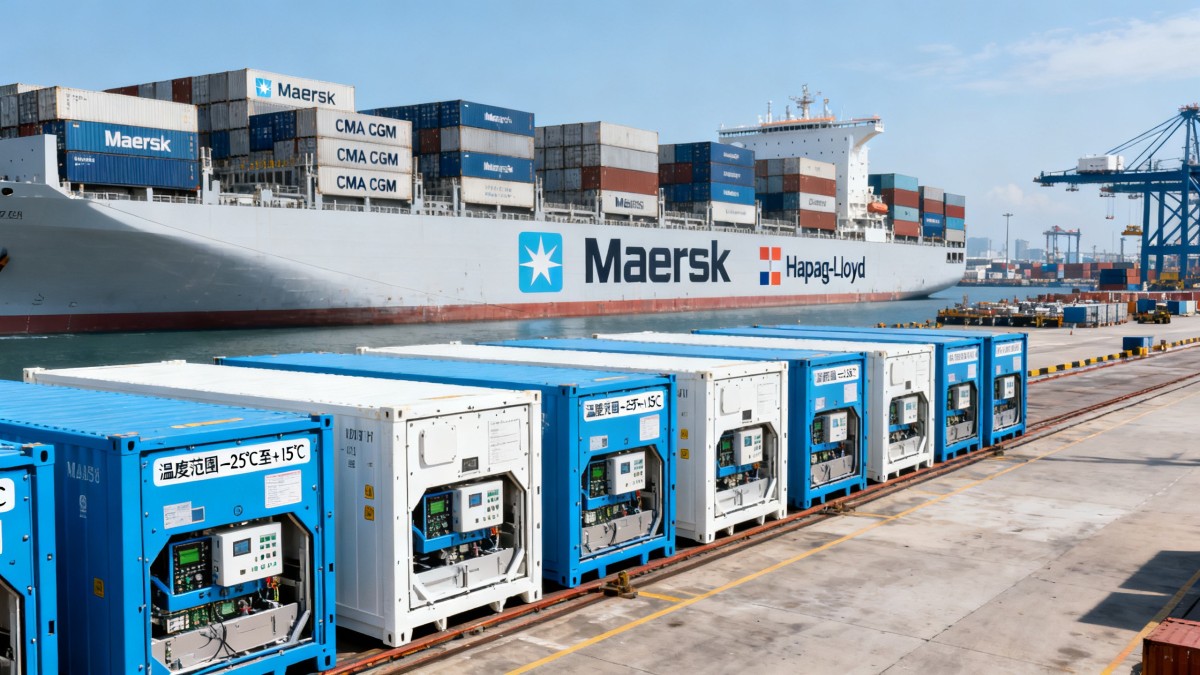
In summary, the Green Corridor Asia–Europe cold chain route introduces a new, certified sea-based logistics option for temperature-sensitive industrial components, with measurable cost advantages under narrow conditions. Its significance lies less in immediate scale and more in its demonstration of standardization progress among major carriers. Currently, it is more appropriately understood as a targeted capability upgrade for select shippers—not a systemic shift in cold chain economics.
Source: Official announcements from Maersk, CMA CGM, and Hapag-Lloyd via the Green Corridor alliance website; confirmed launch date and cost reduction figure cited in joint press release dated Q1 2026. Note: Supplier onboarding status and future expansion plans remain subject to ongoing updates; no independent verification of operational performance or cost savings is available prior to June 2026 launch.
Related Intelligence
- Aeration & Water TechSelecting Solids Filtration for Aquaculture: Flow Rates, Loading, and Fish WelfareSolids filtration aquaculture guide: compare flow rates, peak loading, capture performance, maintenance, and fish welfare to choose a reliable system.
- Aeration & Water TechWhat RO water treatment systems deliver consistent 98% salt rejection at 25°C with feed TDS over 3,000 ppm?RO water treatment systems that deliver proven 98% salt rejection at 25°C with >3,000 ppm TDS—engineered for API synthesis, aquaculture & grain processing.
- Aeration & Water TechCan pond aeration systems maintain dissolved oxygen above 5 mg/L during summer stratification in catfish ponds?Pond aeration systems can sustain >5 mg/L DO during summer stratification—when engineered for mixing *and* oxygen transfer. See field-proven data & design essentials.
The Morning Broadsheet
Daily chemical briefings, market shifts, and peer-reviewed summaries delivered to your terminal.
