

The Authority in Global Agricultural Chemistry & Bio-Resources
India Enforces IS 17892:2026 for Climate Control Devices
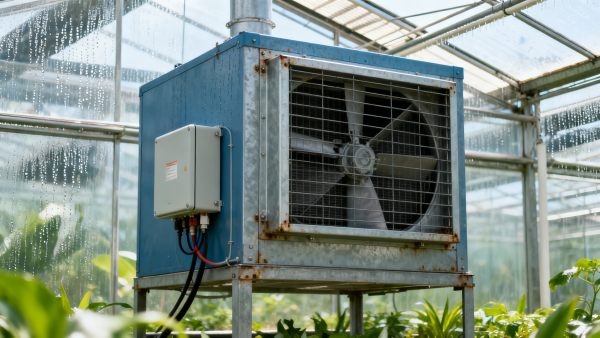
On May 8, 2026, the Bureau of Indian Standards (BIS) mandated full enforcement of IS 17892:2026, General Technical Specification for Agricultural Greenhouse Climate Control and Ventilation Equipment. This regulation introduces a new mandatory environmental stress test—continuous operation at 45°C and 95% relative humidity for 72 hours—as a prerequisite for BIS certification. Exporters of climate control and ventilation equipment targeting the Indian agricultural greenhouse market must now meet this requirement to affix the BIS mark. The update directly affects manufacturers, exporters, and supply chain stakeholders engaged in HVACR solutions for controlled-environment agriculture.
Event Overview
The Bureau of Indian Standards (BIS) issued formal notification on May 8, 2026, confirming that IS 17892:2026 is now fully compulsory for all applicable climate control and ventilation equipment intended for agricultural greenhouse use in India. The standard requires successful completion of a 72-hour continuous operational test under high-temperature, high-humidity conditions (45°C / 95% RH). Devices failing this test are ineligible for BIS certification and may not bear the BIS conformity mark. As of the notification date, 17 Chinese export enterprises specializing in climate control and ventilation equipment have completed the test and obtained valid BIS certification; their names are publicly listed in the official BIS online database.
Industries Affected by the Regulation
Direct Exporters and OEM Manufacturers
Export-oriented manufacturers supplying fans, exhaust systems, evaporative coolers, heating units, or integrated climate controllers to Indian agricultural greenhouse projects are directly subject to the new testing requirement. Non-compliance means inability to obtain BIS marking, which is legally required for market access—effectively blocking entry into regulated distribution channels and government-supported agri-infrastructure tenders.
Component and Subsystem Suppliers
Suppliers of critical subassemblies—including motors rated for high ambient temperature, humidity-resistant control boards, corrosion-protected housings, and sealed sensors—face upstream impact. Since the 45°C/95%RH test evaluates system-level reliability, component performance under sustained thermal-moisture stress becomes a de facto qualification criterion. Buyers may now require pre-validated components to reduce certification risk and time-to-market.
Distribution and Channel Partners in India
Indian importers, distributors, and system integrators marketing climate control equipment must verify BIS certification status before procurement or resale. Stocking non-certified units risks customs rejection, post-import audit penalties, or loss of eligibility for subsidies tied to BIS-compliant infrastructure under national horticulture programs.
Key Considerations and Recommended Actions for Stakeholders
Monitor Official BIS Updates and Test Protocol Clarifications
While the standard is now enforced, BIS may issue technical circulars or laboratory accreditation updates affecting test methodology, acceptable tolerances, or documentation requirements. Stakeholders should subscribe to BIS’s official notifications and cross-check against the latest version of IS 17892:2026 available on the BIS website.
Verify Certification Status Against the Public BIS Database
Importers and buyers in India should independently confirm certification status using the BIS online database—not rely solely on supplier-provided certificates. The list of 17 certified Chinese exporters serves as a reference benchmark but does not imply automatic approval for other models or production batches.
Distinguish Between Regulatory Signal and Operational Readiness
The enforcement date marks a legal threshold—not a grace period. Products manufactured or shipped after May 8, 2026, for Indian greenhouse applications must comply. Pre-May 8 stock may be subject to customs verification upon entry; no blanket grandfathering has been announced.
Review Supply Chain Timing and Testing Lead Times
Given that high-humidity endurance testing requires dedicated chamber capacity and documented validation cycles, manufacturers planning new certifications should factor in minimum 4–6 weeks for test execution and report issuance. Procurement and logistics planning for Q3–Q4 2026 shipments should align with this timeline.
Editorial Perspective / Industry Observation
Observably, IS 17892:2026 signals India’s broader shift toward performance-based, application-specific conformity assessment for agricultural technology—not just safety or electromagnetic compatibility. Analysis shows this is less an isolated product rule and more part of a coordinated effort to raise resilience standards for equipment deployed in India’s increasingly extreme climatic zones. From an industry perspective, it reflects growing regulatory attention on real-world operational durability in controlled-environment agriculture (CEA), where equipment failure directly impacts crop yield and investment ROI. It is currently best understood as an implemented requirement—not a proposal or draft—and therefore represents immediate compliance pressure rather than a forward-looking policy signal.
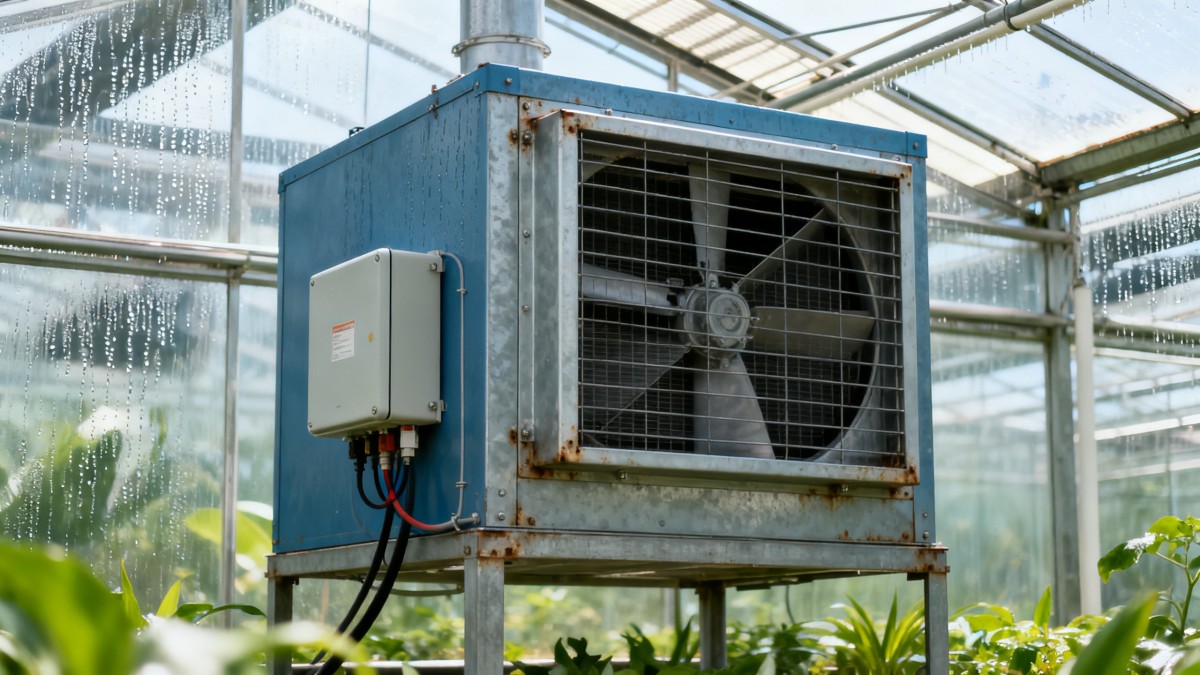
This development underscores how localized technical regulations can rapidly reshape export readiness for climate-sensitive equipment categories. For global suppliers, it highlights the need to treat regional agri-tech standards not as optional add-ons but as core design and validation parameters—especially where environmental stress testing becomes a gatekeeper function.
Information Sources
Main source: Bureau of Indian Standards (BIS), Official Notification dated May 8, 2026, referencing IS 17892:2026. Publicly accessible BIS online certification database (as of May 2026).
Points requiring ongoing observation: Potential future extensions of the 45°C/95%RH test to related standards (e.g., IS 13252 for general electrical safety) or to additional product categories beyond greenhouse-specific ventilation equipment.
Related Intelligence
- Climate Control & VentilationWhat Variable Speed Insights Matter Most When Optimizing Greenhouse Ventilation?Variable speed insights reveal how fan speed affects humidity, airflow, stability, and energy use in greenhouse ventilation. Learn what to adjust first for smarter, more reliable climate control.
- Climate Control & VentilationPoultry Ventilation for Broilers: How to Balance Airflow, Temperature, and Litter QualityPoultry ventilation for broilers made practical: learn how to balance airflow, temperature, humidity, and litter quality to improve flock health, growth, and house performance.
- Climate Control & VentilationLivestock and Poultry Climate Control: Key Parameters for Stable House TemperatureLivestock and poultry climate control starts with the right parameters. Learn how temperature, humidity, airflow, and ventilation work together to keep house conditions stable and improve daily performance.
The Morning Broadsheet
Daily chemical briefings, market shifts, and peer-reviewed summaries delivered to your terminal.
