

The Authority in Global Agricultural Chemistry & Bio-Resources
FAO Updates Global RAS Procurement Guide, Highlights Chinese Modular Systems for Africa
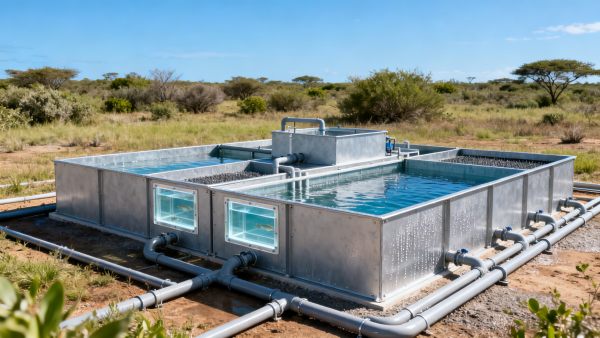
On 7 May 2026, the Food and Agriculture Organization of the United Nations (FAO) released the third revision of its Global Recirculating Aquaculture Systems (RAS) Procurement Guide, marking the first time a China-led ‘modular prefabrication + local assembly’ RAS deployment model has been designated as the ‘recommended preferred solution’ for new RAS projects in African countries. The update integrates this model into FAO’s cost-benefit analysis framework and full lifecycle carbon emission accounting methodology — and includes technical white papers from 12 Chinese RAS system integrators. This development is particularly relevant for aquaculture equipment exporters, modular construction suppliers, international development implementers, and sustainability-focused supply chain service providers.
Event Overview
On 7 May 2026, the FAO published Revision 3 of its Global RAS Procurement Guide. The document formally identifies the China-originated ‘modular prefabrication + local assembly’ RAS implementation approach as the recommended preferred solution for new RAS infrastructure projects in African countries. It incorporates the model into FAO’s standardized cost-benefit evaluation and lifecycle carbon footprint calculation frameworks. The guide also provides direct links to technical white papers from 12 Chinese RAS system integration companies.
Impact on Specific Industry Segments
Direct Exporters of Aquaculture Equipment and Systems
This designation increases visibility and institutional credibility for Chinese RAS exporters targeting African public-sector or donor-funded aquaculture projects. As FAO procurement guidelines influence funding eligibility criteria — especially for World Bank, IFAD, and AU-backed initiatives — inclusion may streamline tender qualification and reduce technical due diligence burdens for pre-vetted vendors.
Modular Construction and Prefab Component Manufacturers
The explicit recognition of ‘modular prefabrication’ as a core enabler signals growing demand for standardized, transport-optimized, climate-resilient RAS sub-assemblies (e.g., tank modules, biofilter skids, control cabinets). Manufacturers capable of certifying compliance with FAO-referenced structural, material, and corrosion-resistance specifications may gain competitive advantage in bid documentation.
International Development Implementers and Project Managers
Implementing partners managing FAO- or multilateral-funded aquaculture projects in Africa now have an officially endorsed technical pathway for rapid, scalable RAS deployment. This may shift project design priorities toward phased commissioning, local labor upskilling for assembly, and simplified logistics planning — rather than bespoke on-site civil works.
Sustainability and Carbon Accounting Service Providers
With FAO embedding full lifecycle carbon emission核算 (accounting) into its RAS procurement framework, third-party verifiers and ESG reporting platforms supporting RAS vendors must align their methodologies with FAO’s updated scope boundaries (e.g., inclusion of transport emissions for modular units, local assembly energy sources, end-of-life material recovery assumptions).
What Stakeholders Should Monitor and Act On
Track official adoption signals beyond the guideline itself
Monitor upcoming FAO country-level aquaculture investment plans, World Bank IDA/IBRD project appraisals, and African Union NEPAD aquaculture roadmaps for explicit references to ‘modular RAS’ or citations of the revised guide — as these indicate operational translation beyond policy endorsement.
Focus on standardization readiness, not just product capability
Vendors should verify whether their modular designs meet FAO-referenced interoperability benchmarks (e.g., ISO 22000-aligned food safety interfaces, IEC 61850-compatible control protocols), as future tenders may require conformance declarations — not just performance data.
Distinguish between FAO guidance and binding procurement rules
While the guide carries strong normative weight, it does not automatically override national procurement laws or donor-specific vendor registration requirements. Companies should confirm whether local implementing agencies have formally adopted the guide’s recommendations into their bidding documents or evaluation matrices.
Prepare localized assembly support documentation
Given the emphasis on ‘local assembly’, stakeholders should develop training materials, torque-spec diagrams, and bilingual (English + French/Portuguese/Arabic) commissioning checklists — anticipating increased requests during pre-bid clarifications or technical proposal submissions.
Editorial Perspective / Industry Observation
Observably, this update functions primarily as a strong institutional signal — not an immediate market shift. FAO’s inclusion reflects accumulated field experience with Chinese modular RAS deployments across Kenya, Ghana, and Zambia since 2022, but actual tender volume will depend on national budget allocations and donor disbursement timelines. Analysis shows the move lowers perceived technical risk for African governments considering RAS, yet does not eliminate financing, grid reliability, or skills-gap constraints. From an industry perspective, it marks a formal step toward recognizing distributed, factory-built aquaculture infrastructure as a viable alternative to traditional civil-engineering-heavy approaches — particularly where speed-to-operation and carbon accountability are prioritized.
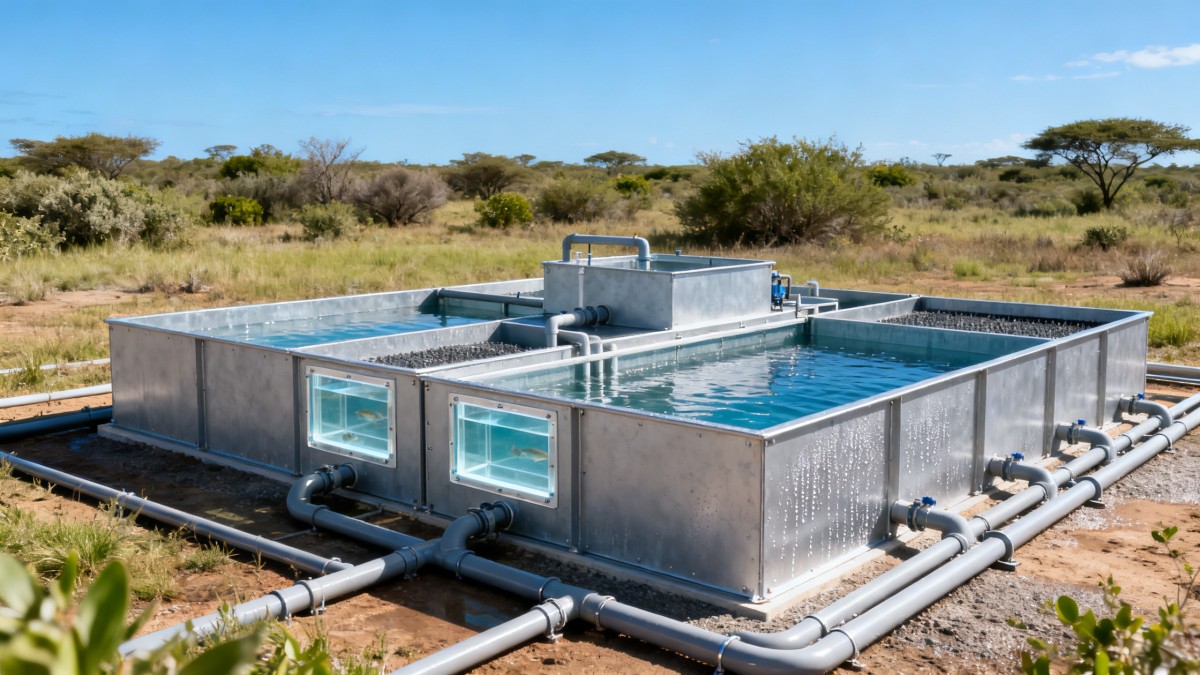
Concluding, this guideline revision signifies a procedural milestone in global aquaculture infrastructure standardization — one that elevates a specific delivery model within multilateral development frameworks. It does not guarantee commercial uptake, nor does it replace site-specific feasibility assessment. Rather, it offers a reference architecture that stakeholders can benchmark against, adapt to local conditions, and progressively refine through implementation feedback. Current interpretation should emphasize alignment readiness over immediate opportunity capture.
Source: Food and Agriculture Organization of the United Nations (FAO), Global Recirculating Aquaculture Systems (RAS) Procurement Guide, Revision 3, published 7 May 2026.
Note: Adoption status by individual African member states and multilateral funders remains under observation and is not confirmed in the published guide.
Related Intelligence
- RAS SystemsHow to Vet Middle East Oxygenation System Suppliers for RAS ProjectsOxygenation system suppliers Middle East: learn how to vet RAS partners for proven performance, resilience, local service, and lifecycle value.
- RAS SystemsEngineered RAS Systems: Designing Modular Farms Around Stocking DensityEngineered RAS systems designed around stocking density: explore modular farm design, water-quality control, resilience, and scalable growth.
- RAS SystemsHow to Select an Ammonia Water Quality Sensor for Aquaculture SystemsAmmonia water quality sensor selection guide for aquaculture: compare technologies, accuracy, salinity compatibility, maintenance, and integration for reliable monitoring.
The Morning Broadsheet
Daily chemical briefings, market shifts, and peer-reviewed summaries delivered to your terminal.
