

The Authority in Global Agricultural Chemistry & Bio-Resources
Singapore Extends Aquaculture Tech FastTrack to Aeration & Water Tech
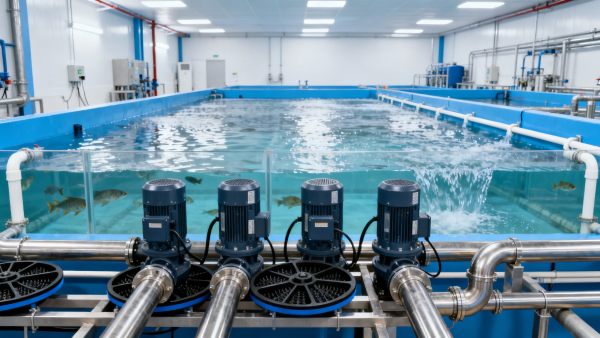
On May 10, 2026, Singapore’s Singapore Food Agency (SFA) expanded its ‘Aquaculture Tech FastTrack’ mutual recognition framework to cover the full range of aeration and water treatment equipment. This update directly impacts aquaculture equipment exporters, importers, system integrators, and project developers operating across Southeast Asia—particularly those sourcing from China-certified suppliers. It signals a tangible reduction in time-to-market for qualified hardware, making it a notable development for supply chain efficiency in land-based and offshore aquaculture infrastructure projects.
Event Overview
On May 10, 2026, the Singapore Food Agency (SFA) announced the formal inclusion of aeration and water treatment equipment under the ‘Aquaculture Tech FastTrack’ mutual recognition mechanism. Under this arrangement, equipment tested and certified by laboratories accredited by China’s National Accreditation Service for Conformity Assessment (CNAS) is exempt from redundant type testing in Singapore. The certification turnaround time is reduced to seven working days.
Industries Affected
Direct Trade Enterprises (Exporters/Importers)
Companies exporting aeration blowers, diffusers, ozone generators, UV sterilizers, or mechanical filtration units from China to Singapore—and onward to regional markets—face streamlined regulatory clearance. The exemption from duplicate testing lowers compliance overhead and accelerates customs release, especially for time-sensitive project deliveries.
System Integrators & Project Developers
Firms designing and deploying recirculating aquaculture systems (RAS), hatcheries, or offshore cage support infrastructure rely on rapid component qualification. Shorter certification windows improve tender responsiveness and reduce buffer time previously allocated for regulatory uncertainty.
Manufacturers with CNAS-Accredited Lab Partnerships
Producers whose products are already validated by CNAS-accredited labs gain immediate eligibility for FastTrack processing. This creates a measurable advantage over competitors relying on non-CNAS pathways—without requiring new certifications, only documentation alignment.
Supply Chain & Logistics Service Providers
Third-party logistics and regulatory consultancy firms handling technical documentation, test reports, and SFA submissions will see increased demand for FastTrack-specific filing support—especially for equipment categories newly added under this expansion.
What Relevant Enterprises or Practitioners Should Focus On
Monitor official SFA guidance on scope definitions and documentation requirements
The SFA has not yet published detailed annexes specifying eligible subcategories (e.g., whether low-pressure vs. high-pressure aerators are equally covered). Stakeholders should track updates via SFA’s official portal and verify device classifications before initiating applications.
Confirm CNAS lab accreditation status for specific test standards
Not all CNAS-accredited labs cover the full suite of ISO/IEC 17025 test methods relevant to aeration performance or water disinfection efficacy. Exporters must verify that their lab’s scope includes the exact standards referenced in SFA’s FastTrack technical annexes.
Distinguish between policy announcement and operational readiness
While the expansion was announced on May 10, 2026, actual processing capacity at SFA may require internal system updates. Early applicants should allow for a short ramp-up period and retain evidence of submission timing to support timeline-sensitive contracts.
Prepare procurement and contract language aligned with FastTrack eligibility
Buyers in Singapore and ASEAN should begin incorporating FastTrack-eligible certification clauses into RFPs and purchase orders—especially for projects scheduled for Q4 2026 delivery or later—so suppliers can plan lab testing and documentation accordingly.
Editorial Perspective / Industry Observation
Observably, this expansion reflects Singapore’s prioritization of regulatory interoperability in high-priority agri-tech segments—not as an isolated policy shift, but as a calibrated step within its broader Aquaculture Innovation Roadmap. Analysis shows the move targets bottlenecks most frequently cited by Chinese equipment vendors during SFA stakeholder consultations: prolonged certification cycles and inconsistent interpretation of test equivalency. It is currently best understood as an operational signal rather than a fully matured regime; real-world throughput and cross-border enforcement consistency remain areas requiring close monitoring over the next 6–12 months.
Conclusion: This extension meaningfully lowers entry friction for pre-qualified aeration and water treatment equipment in Singapore’s aquaculture market—but does not eliminate technical or documentation due diligence. It is more accurately interpreted as a procedural acceleration tool than a de facto harmonization of safety or performance standards. Stakeholders should treat it as a time-saving mechanism contingent on strict adherence to current CNAS-SFA alignment criteria—not as a broad regulatory waiver.
Source: Singapore Food Agency (SFA) official announcement, May 10, 2026.
Notes for ongoing observation: Specific test standard references, eligible sub-product lists, and SFA’s internal processing benchmarks have not yet been published and remain subject to future clarification.
Related Intelligence
- Aeration & Water TechSelecting Solids Filtration for Aquaculture: Flow Rates, Loading, and Fish WelfareSolids filtration aquaculture guide: compare flow rates, peak loading, capture performance, maintenance, and fish welfare to choose a reliable system.
- Aeration & Water TechWhat RO water treatment systems deliver consistent 98% salt rejection at 25°C with feed TDS over 3,000 ppm?RO water treatment systems that deliver proven 98% salt rejection at 25°C with >3,000 ppm TDS—engineered for API synthesis, aquaculture & grain processing.
- Aeration & Water TechCan pond aeration systems maintain dissolved oxygen above 5 mg/L during summer stratification in catfish ponds?Pond aeration systems can sustain >5 mg/L DO during summer stratification—when engineered for mixing *and* oxygen transfer. See field-proven data & design essentials.
The Morning Broadsheet
Daily chemical briefings, market shifts, and peer-reviewed summaries delivered to your terminal.
