

The Authority in Global Agricultural Chemistry & Bio-Resources
2026 Milan Food Exhibition Opens: Green Packaging & Plant-Based Export Standards
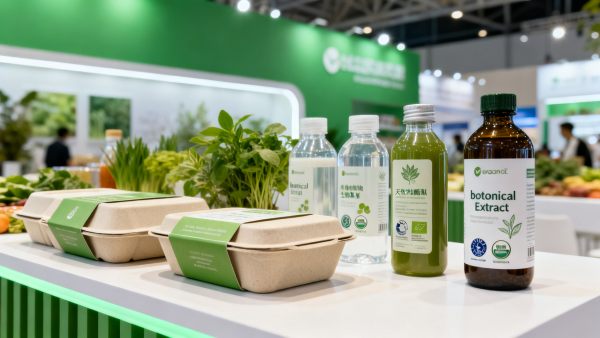
On May 11, 2026, the Milan International Food Exhibition opened with a strategic focus on ESG-driven green packaging, plant-based foods, and data-informed marketing standards — directly impacting exporters and suppliers targeting the EU market. Companies active in botanical extracts, natural ingredients, and food-grade enzymes should monitor implications for labeling, compliance verification, and market access protocols.
Event Overview
The 2026 Milan International Food Exhibition commenced on May 11, 2026. It introduced three coordinated priorities: (1) sustainability-aligned green packaging solutions; (2) plant-based food product development and certification frameworks; and (3) data-driven marketing standards grounded in consumer preference measurement. The exhibition deployed facial monitoring and eye-tracking technologies to assess real-time consumer responses to sustainable product displays. These measurements are stated to inform regulatory alignment and label design for botanical extracts, natural ingredients, and food-grade enzymes within the EU market. Overseas buyers are advised to adjust procurement specifications and compliance validation procedures accordingly.
Industries Affected
Direct Trading Enterprises
These firms face revised expectations for documentation and labeling compliance when exporting to the EU. The exhibition’s emphasis on standardized sustainability metrics means that buyer-side due diligence now extends beyond ingredient origin to include packaging recyclability claims and carbon footprint disclosures tied to specific product categories.
Raw Material Sourcing Companies
Suppliers of botanical extracts, natural ingredients, and food-grade enzymes may encounter updated technical specifications from EU importers — particularly around traceability, processing method declarations, and third-party verification of plant-based status. Labeling requirements may shift to reflect new consumer preference signals captured via biometric tools.
Food Processing & Manufacturing Firms
Manufacturers integrating plant-based formulations or adopting novel green packaging must align production records and quality control documentation with emerging EU-facing benchmarks. Eye-tracking and facial monitoring data may influence how functional claims (e.g., ‘sustainably sourced’, ‘plastic-free’) are substantiated and presented on-pack.
Supply Chain & Compliance Service Providers
Third-party auditors, certification bodies, and logistics partners supporting EU-bound shipments may see increased demand for verification services covering packaging material composition, botanical authenticity testing, and digital traceability infrastructure — especially where biometric consumer insights feed into regulatory interpretation.
Key Focus Areas and Practical Responses
Monitor official guidance from EU food safety and packaging authorities
While the exhibition showcased measurement tools and industry standards, no new binding regulation was announced. Analysis shows that current developments represent preparatory alignment — not formal rulemaking. Stakeholders should track updates from EFSA, the European Commission Directorate-General for Health and Food Safety, and national competent authorities for formal adoption timelines.
Review labeling and technical dossiers for botanical extracts, natural ingredients, and food-grade enzymes
Current more relevant action is to audit existing EU-facing labels and regulatory files against newly emphasized criteria: packaging material origin and end-of-life classification; plant-based claim substantiation (e.g., absence of animal-derived processing aids); and consistency between marketing language and verified product attributes. Discrepancies may trigger re-evaluation during customs or post-market surveillance.
Distinguish between exhibition-driven signals and enforceable requirements
Observably, the use of facial monitoring and eye-tracking reflects industry-level experimentation in preference mapping — not a regulatory mandate. From an operational standpoint, companies should treat these tools as indicators of evolving buyer expectations rather than compliance prerequisites — unless explicitly referenced in contractual terms or upcoming delegated acts.
Prepare for updated procurement specifications from EU importers
Overseas buyers are directed to revise procurement and compliance verification workflows. Current more appropriate preparation includes updating internal checklists for supplier questionnaires, reviewing third-party test report scopes (e.g., for plastic migration, botanical adulteration), and initiating cross-functional alignment between R&D, regulatory affairs, and supply chain teams ahead of anticipated specification updates.
Editorial Perspective / Industry Observation
This exhibition serves primarily as a signal — not a policy enactment. Analysis shows it consolidates ongoing shifts in EU market expectations around transparency, sustainability evidence, and consumer-centric validation. It does not introduce new law, but it accelerates convergence between commercial practice and regulatory readiness. Observably, the integration of biometric feedback into standard-setting discussions suggests growing institutional interest in linking behavioral data with product compliance frameworks — a trend requiring sustained attention over the next 12–24 months.
Conclusion
The 2026 Milan International Food Exhibition marks a coordination point for sustainability-linked commercial practices in EU food trade — particularly for exporters of botanical extracts, natural ingredients, and food-grade enzymes. It underscores that market access increasingly depends on demonstrable alignment across packaging, formulation, and communication — validated not only through documentation but also through emerging consumer response metrics. Currently, this is best understood as an anticipatory benchmarking exercise, not an immediate compliance threshold.
Source Attribution
Main source: Official announcement of the 2026 Milan International Food Exhibition (May 11, 2026).
Points requiring ongoing observation: Formal adoption status of any standards derived from biometric consumer data; timeline for integration into EU regulatory guidance or harmonized standards.
Related Intelligence
- Botanical ExtractsChoosing Botanical Extracts for Pharmaceuticals: Potency, Purity, and ComplianceBotanical extracts for pharmaceuticals: learn how to assess potency, purity, traceability, and GMP compliance for confident, regulatory-ready supplier selection.
- Botanical ExtractsBotanical Extracts Market Outlook: Supply, Pricing, and Buyer RisksBotanical extracts market insights on supply, pricing, quality control, and buyer risks—compare suppliers confidently and protect your sourcing strategy.
- Botanical ExtractsEurope Botanical Extracts Market: Key Growth Drivers, Risks, and OpportunitiesEurope botanical extracts market insights: explore growth drivers, regulatory risks, supply-chain challenges, and scalable opportunities for compliant, high-value ingredients.
The Morning Broadsheet
Daily chemical briefings, market shifts, and peer-reviewed summaries delivered to your terminal.
