

The Authority in Global Agricultural Chemistry & Bio-Resources
Green Corridor Asia-Europe Cold Chain Route Launches June 2026
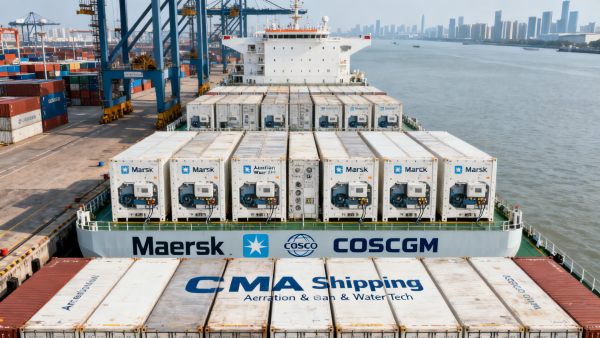
On 1 June 2026, the global shipping alliance ‘Green Corridor’ will launch its dedicated Asia–Europe cold chain service, jointly operated by Maersk, CMA CGM, and COSCO Shipping. The route initially connects Shanghai with Rotterdam and Hamburg, offering multi-temperature cargo holds ranging from −25°C to +15°C. With Aeration & Water Tech equipment integrated into temperature control protocols—and associated freight costs reduced by 22% versus general cargo—this development warrants close attention from perishable goods exporters, pharmaceutical logistics providers, and temperature-sensitive supply chain stakeholders.
Event Overview
The ‘Green Corridor’ Asia–Europe cold chain专线 (specialized route) begins operations on 1 June 2026. It is co-operated by Maersk, CMA CGM, and COSCO Shipping. The inaugural phase covers the Shanghai–Rotterdam–Hamburg corridor and features dedicated multi-temperature reefer capacity (−25°C to +15°C). Aeration & Water Tech equipment—including bioreactors, dissolved oxygen probes, and intelligent controllers—is formally included in the temperature assurance protocol. Sea freight rates for eligible cold chain shipments are stated to be 22% lower than standard dry or reefer general cargo rates. On-time performance is reported at 98.3%.
Industries Affected
Direct Exporters of Perishable Goods
Exporters of fresh produce, frozen seafood, and chilled dairy face direct implications: the new route offers a standardized, high-reliability option between key Asian production hubs and major European consumption centers. The −25°C to +15°C range supports diverse product categories—from deep-frozen meat to temperature-controlled pharmaceutical intermediates—without requiring ad-hoc reefer configurations.
Raw Material Procurement Entities
Companies sourcing temperature-sensitive raw materials (e.g., enzymes, microbial cultures, or live-cell biologics) for manufacturing may benefit from improved transit stability. The 98.3% schedule reliability reduces buffer stock requirements, while the inclusion of Aeration & Water Tech components suggests enhanced viability for oxygen-dependent biological cargoes—though this remains contingent on carrier implementation standards.
Food & Pharma Processing Manufacturers
Manufacturers relying on just-in-time inbound cold chain logistics—particularly those with EU-based facilities receiving semi-finished ingredients from China—may experience tighter inventory planning windows. The 22% freight reduction applies only to shipments meeting the alliance’s defined cold chain eligibility criteria, not blanket cost savings across all refrigerated cargo.
Distribution & Third-Party Logistics Providers
3PLs and cold chain integrators must assess whether their current reefer booking workflows align with the Green Corridor’s operational parameters—including equipment certification, documentation for Aeration & Water Tech integration, and adherence to prescribed temperature setpoints. Non-compliant tenders may forfeit the 22% rate advantage or scheduled reliability guarantees.
What Stakeholders Should Monitor and Do Now
Track official eligibility criteria and equipment validation procedures
The 22% freight discount and 98.3% on-time guarantee are tied to compliance with the alliance’s cold chain assurance framework. Stakeholders should monitor published technical specifications for Aeration & Water Tech deployment—especially how bioreactor and dissolved oxygen probe data are recorded, transmitted, and audited during transit.
Assess applicability to specific product categories and trade lanes
The route currently serves only Shanghai–Rotterdam–Hamburg. Exporters from Ningbo, Qingdao, or Guangzhou—or importers targeting inland EU markets beyond Hamburg and Rotterdam—should verify whether feeder connectivity, transshipment handling, or last-mile cold chain handover falls within the guaranteed service level.
Distinguish between announced capability and operational rollout
While the 1 June 2026 launch date is confirmed, full fleet deployment, crew training on Aeration & Water Tech interfaces, and integration with port-side cold chain infrastructure remain subject to phased execution. Early bookings may encounter capacity constraints or provisional terms before Q3 2026.
Prepare documentation and pre-qualify equipment ahead of first shipment
Carriers have indicated that Aeration & Water Tech units must be certified and pre-registered. Shippers should initiate equipment validation and data logging protocol alignment now—not after booking—to avoid delays in slot confirmation or temperature audit non-conformance.
Editorial Perspective / Industry Observation
Observably, the Green Corridor initiative functions less as a standalone commercial service and more as a coordinated infrastructure signal: it reflects growing carrier alignment on standardized, tech-integrated cold chain benchmarks—particularly for biologically active cargoes. Analysis shows that the inclusion of Aeration & Water Tech is notable not because it introduces novel hardware, but because it formalizes real-time physiological parameter monitoring (e.g., dissolved oxygen) as part of contractual service delivery. This shifts accountability upstream—from terminal handlers or shippers alone—to the ocean carrier’s end-to-end thermal and biochemical management system. From an industry perspective, this is best understood as an early-stage protocol test rather than a mature market solution; scalability beyond the initial three-port loop and cross-alliance interoperability remain unconfirmed.
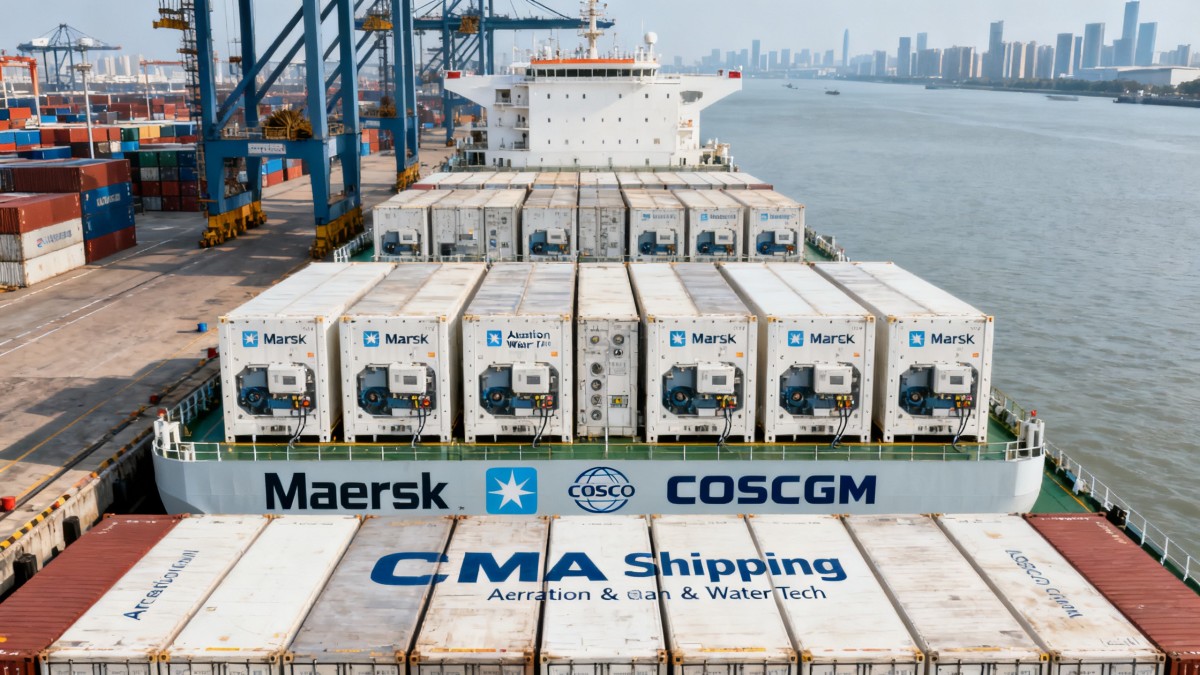
Conclusion: The Green Corridor Asia–Europe cold chain route represents a targeted upgrade in service specification—not a broad cost reduction mechanism. Its significance lies in institutionalizing measurable, equipment-verified temperature and biochemical stability as a baseline expectation for premium cold chain segments. For stakeholders, it is more appropriately interpreted as a benchmark-setting pilot than a universally applicable logistics alternative. Continued observation is warranted on equipment validation transparency, feeder network extension, and whether similar protocols emerge on trans-Pacific or intra-Asia corridors.
Source: Joint announcement by Maersk, CMA CGM, and COSCO Shipping (publicly released, no further attribution specified).
Note: Equipment validation standards, feeder connectivity details, and post-launch performance metrics remain under observation and are not yet publicly documented.
Related Intelligence
- Aeration & Water TechGreen Corridor Asia-Europe Cold Chain Route Launches June 2026Green Corridor Asia-Europe cold chain route launches June 2026—multi-temp reefer service (−25°C to +15°C), 22% lower freight, 98.3% on-time. Key for pharma & perishables exporters.
- Aeration & Water TechSingapore Extends Aquaculture Tech FastTrack to Aeration & Water TechAquaculture Tech FastTrack now covers aeration & water tech in Singapore—speed up certification to 7 days for CNAS-certified equipment from China.
- Aeration & Water TechGreen Corridor Asia-Europe Cold Chain Route Launches June 2026Green Corridor Asia-Europe cold chain route launches June 2026—22% lower costs vs air freight for precision controllers, sensors & CEIV Pharma-compliant logistics.
The Morning Broadsheet
Daily chemical briefings, market shifts, and peer-reviewed summaries delivered to your terminal.
