

The Authority in Global Agricultural Chemistry & Bio-Resources
FAO Updates Global RAS Procurement Guide, Highlights Chinese Modular Systems for Africa
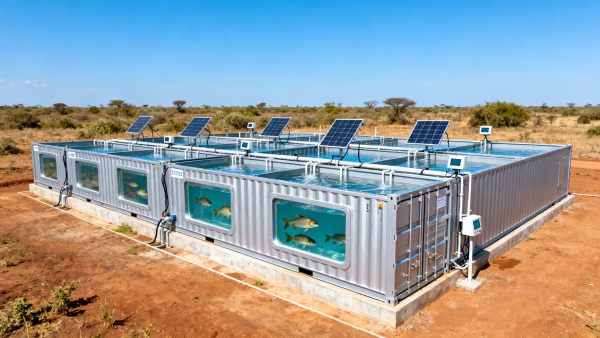
On May 10, 2026, the Food and Agriculture Organization of the United Nations (FAO) released the revised Global Recirculating Aquaculture Systems (RAS) Procurement Guide (Rev.2026). This update formally recommends China-developed containerized modular RAS systems for small- and medium-scale aquaculture projects across Africa — marking the first time such systems receive explicit endorsement in an FAO procurement framework. The guide identifies three key adaptive advantages: resilience under unstable power supply, compatibility with local water quality monitoring infrastructure, and robust support for on-site technician training. Stakeholders in aquaculture equipment trade, modular system manufacturing, international development supply chains, and technical capacity-building services should closely monitor implications for market access, procurement alignment, and implementation readiness.
Event Overview
On May 10, 2026, the FAO published the Global RAS Systems Procurement Guide (Rev.2026). The revision explicitly lists containerized modular RAS systems developed under Chinese technical leadership as a recommended configuration for new small- and medium-scale aquaculture projects in Africa. The guide cites demonstrated suitability in three areas: operation under variable electricity supply, integration with existing water quality monitoring platforms, and provision of localized operations and maintenance training support.
Industries Affected by This Update
Direct Exporters and Trade Firms Specializing in Aquaculture Equipment
These firms may face shifting tender requirements in FAO-supported or donor-funded aquaculture projects across Africa. As the Guide serves as a reference for procurement criteria in multilateral development programs, its recommendation elevates the competitive positioning of certified modular RAS systems — particularly those meeting FAO’s stated interoperability and service-support benchmarks.
Manufacturers of Modular Aquaculture Systems (Including OEMs and System Integrators)
Manufacturers whose products align with the containerized modular architecture described in the Guide may see increased demand signals from African implementing partners. However, eligibility depends on verifiable compliance with the Guide’s technical and support criteria — not just physical form factor. Production planning and certification documentation may need adjustment to meet procurement transparency expectations.
Supply Chain and Technical Capacity-Building Service Providers
Entities delivering after-sales service, technician training, or remote monitoring integration are directly referenced in the Guide’s rationale. Their documented capacity to deliver localized training and maintain system performance under grid instability becomes a qualifying differentiator — not merely an add-on service.
What Relevant Enterprises or Practitioners Should Focus On — And How to Respond Now
Monitor official FAO implementation guidance and regional procurement notices
The Guide itself is a technical reference, not a binding procurement mandate. Current priority lies in tracking how FAO country offices, regional fisheries units, and partner agencies (e.g., AU-FAO joint initiatives) translate this recommendation into actual bidding documents or project design templates — especially for upcoming Phase II investments under the Africa Blue Economy Strategy.
Verify alignment of product documentation and service frameworks with Guide criteria
Exporters and manufacturers should cross-check their technical specifications, power tolerance testing reports, water quality sensor interface protocols, and training curriculum outlines against the three cited advantages. Where gaps exist, targeted documentation updates — rather than hardware redesign — may suffice for near-term eligibility.
Distinguish between policy signal and operational adoption timelines
This update reflects a formal recognition of technical suitability, not evidence of immediate large-scale deployment. Field-level uptake will depend on national regulatory approvals, financing mechanisms, and local partner capacity — all of which operate on longer cycles than guideline publication. Near-term impact is most likely in proposal preparation and prequalification stages, not contract awards.
Prepare localized service delivery materials and bilingual technical support protocols
Given the emphasis on local运维 (operations and maintenance) training, stakeholders should begin developing training modules, troubleshooting guides, and spare parts catalogs in relevant African languages — particularly French and Portuguese — alongside English. Preparing these in advance supports faster response to emerging tenders tied to the Guide.
Editorial Observation / Industry Perspective
Observably, this update functions primarily as a validation signal — not yet an operational catalyst. It confirms that certain modular RAS configurations have met a threshold of technical and contextual appropriateness in FAO’s assessment framework, particularly for resource-constrained settings. Analysis shows the inclusion reflects growing institutional attention to implementation feasibility over theoretical performance metrics. From an industry standpoint, it more closely resembles a ‘pre-qualification benchmark’ than a demand forecast: it lowers information asymmetry for buyers but does not guarantee volume or accelerate disbursement. Continued attention is warranted because subsequent FAO technical notes, regional adaptation handbooks, or donor coordination meetings may operationalize this recommendation further — especially if pilot deployments in Kenya, Ghana, or Senegal report measurable outcomes by late 2026.
Conclusion
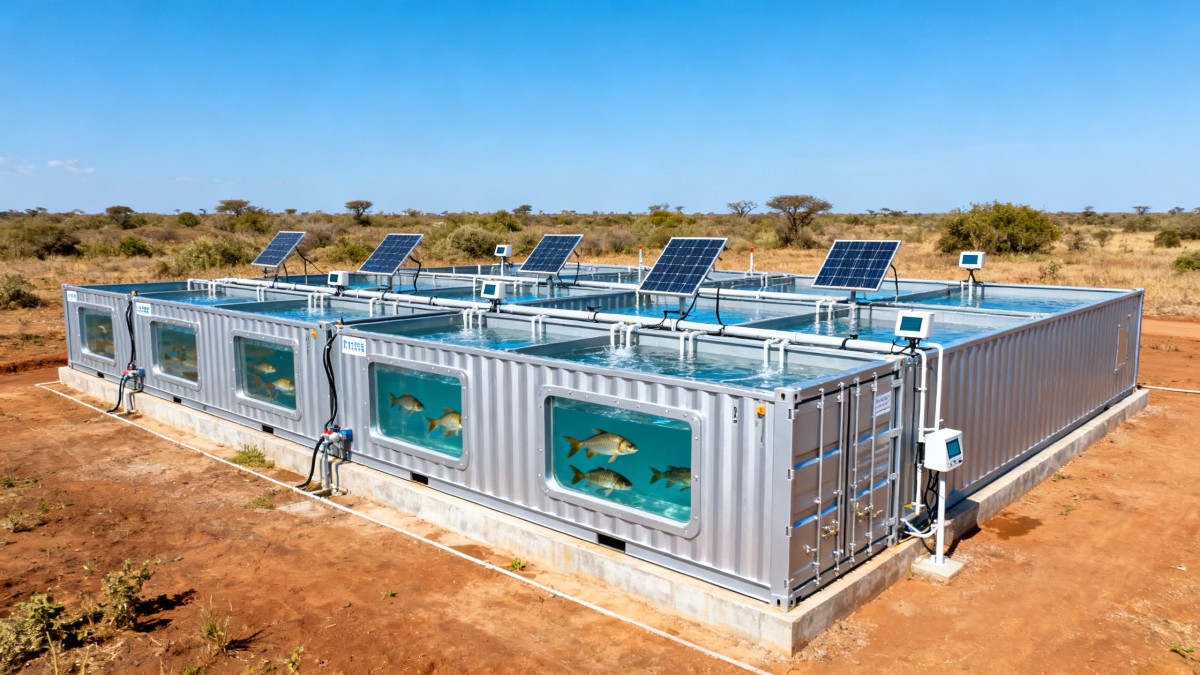
FAO’s 2026 RAS Procurement Guide update signifies a formal shift in institutional preference toward context-adapted, service-integrated aquaculture infrastructure — with Chinese-designed modular systems serving as a reference case for African applications. It does not constitute a market entry guarantee nor reflect broad-based policy change across African member states. Instead, it better represents a technical consensus point that raises the bar for credible participation in internationally supported RAS projects. For industry actors, the current value lies in strategic alignment — not immediate scale — and in treating the Guide as a diagnostic tool for service readiness, not a sales mandate.
Information Sources
Primary source: Food and Agriculture Organization of the United Nations (FAO), Global RAS Systems Procurement Guide (Rev.2026), published May 10, 2026.
Note: Implementation status across individual African countries, national regulatory acceptance, and linkage to specific funding windows remain subject to ongoing observation and are not confirmed by the Guide itself.
Related Intelligence
- RAS SystemsFAO Updates Global RAS Procurement Guide, Highlights Chinese Modular Systems for AfricaFAO’s 2026 RAS Procurement Guide highlights Chinese modular systems for Africa—key for aquaculture exporters, manufacturers & capacity-builders seeking competitive edge in FAO-backed projects.
- RAS SystemsFAO Updates Global RAS Procurement Guide, Highlights Chinese Modular Systems for AfricaFAO’s updated Global RAS Procurement Guide highlights Chinese modular RAS systems as the preferred solution for Africa—boosting export, ESG, and infrastructure opportunities.
- RAS SystemsFAO Updates Global RAS Procurement Guide, Chinese Modular Systems Recommended for AfricaFAO recommends Chinese modular RAS systems for Africa — discover how this global procurement shift unlocks export opportunities and ODA financing.
The Morning Broadsheet
Daily chemical briefings, market shifts, and peer-reviewed summaries delivered to your terminal.
