

The Authority in Global Agricultural Chemistry & Bio-Resources
ANVISA Expands Natural Ingredients Exemption for Chinese Plant Protein Powders
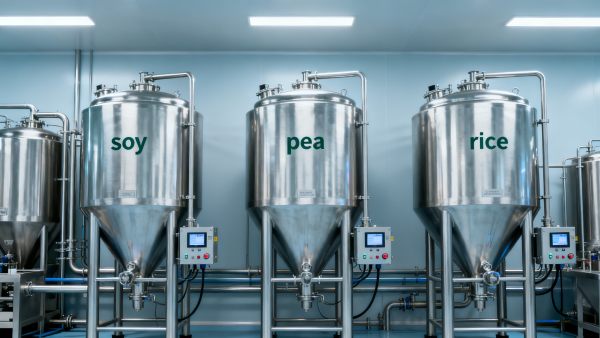
Brazil’s National Health Surveillance Agency (ANVISA) updated Resolution RDC No. 221/2026 on May 10, 2026, expanding the simplified registration pathway for Natural Ingredients to include plant-based protein powders—specifically soy, pea, and rice protein—originating from China. This change introduces a streamlined备案 process for eligible Chinese manufacturers, with approval targeted within 12 working days. The policy took effect immediately and applies to all Chinese producers holding valid CNCA certification. Exporters, ingredient suppliers, and functional food formulators targeting the Brazilian market should closely monitor implications for market access, compliance timelines, and supply chain coordination.
Event Overview
On May 10, 2026, ANVISA issued an amendment to Resolution RDC No. 221/2026, formally including soy, pea, and rice protein powders in the ‘Natural Ingredients’ category eligible for the simplified registration pathway. Under the updated framework, qualified Chinese manufacturers may register such products in Brazil using only a valid Chinese GMP certificate and a full-spectrum laboratory test report. The official processing time is now capped at 12 working days. The measure applies exclusively to Chinese enterprises that have completed CNCA certification, and it entered into force on the date of publication.
Industries Affected
Direct Exporters & Trading Companies
These entities handle cross-border documentation and regulatory submissions for finished or semi-finished plant protein products. They are directly affected because the revised pathway shifts responsibility for compliance verification from third-party local representatives to the exporter’s ability to supply verified GMP and testing documentation. Impact includes reduced pre-market lead time, lower reliance on Brazilian legal representatives for dossier preparation, and increased accountability for document authenticity and technical alignment with ANVISA requirements.
Ingredient Sourcing & Procurement Firms
Firms sourcing plant proteins from China for formulation in Brazil—or for onward distribution to LATAM markets—are impacted by the new eligibility criteria. Their due diligence must now explicitly verify CNCA certification status and confirm whether supplier facilities are authorized to issue GMP certificates recognized under the updated RDC. Impact includes tighter vendor qualification protocols and potential renegotiation of supply agreements to reflect documentation obligations.
Contract Manufacturers & Finished Product Formulators
Companies producing functional foods, sports nutrition supplements, or clinical nutrition products in Brazil using imported Chinese plant proteins face indirect but consequential effects. While not required to submit registration themselves, they must ensure their raw material suppliers meet the new pathway’s evidentiary standards—particularly if product claims or labeling reference natural origin or regulatory compliance. Impact includes heightened traceability expectations and possible reformulation timelines if alternate compliant sources are needed.
Regulatory & Compliance Service Providers
Consultancies, laboratories, and local representative firms supporting ANVISA submissions must adapt service offerings to align with the simplified process. Impact includes reduced demand for full dossier development services for covered products, increased demand for GMP audit support, translation and notarization of Chinese-language test reports, and verification of CNCA certification validity—all within compressed 12-day windows.
Key Considerations for Enterprises and Practitioners
Monitor Official Implementation Guidance
ANVISA has not yet published detailed procedural instructions (e.g., acceptable test report formats, language requirements, or GMP certificate validation mechanisms). Enterprises should track updates via ANVISA’s official portal and registered communications channels, particularly for clarifications on laboratory accreditation scope and document authentication.
Verify CNCA Certification Status Before Engagement
Only Chinese manufacturers with active CNCA certification qualify. Buyers and exporters must independently confirm current certification status through the CNCA public database—not rely solely on supplier-provided certificates—to avoid submission rejection or post-approval audits.
Distinguish Policy Framework from Operational Readiness
The 12-working-day timeline reflects ANVISA’s internal processing target—not total time-to-market. Enterprises must account for external variables: sample shipping duration, report turnaround from accredited labs, document translation, and potential requests for supplementary information. Realistic planning should add buffer time beyond the stated deadline.
Prepare Documentation Infrastructure Early
Chinese manufacturers intending to leverage this pathway should ensure their GMP certificates explicitly cover plant protein powder manufacturing (not just general food production), and that test reports include all parameters listed in Annex I of RDC No. 221/2026—such as microbiological limits, heavy metals, residual solvents, and allergen declarations—before initiating submissions.
Editorial Perspective / Industry Observation
Observably, this update signals ANVISA’s incremental effort to harmonize administrative burden with risk-based oversight for low-risk natural ingredients—especially those with established safety profiles and mature quality infrastructure in exporting countries. Analysis shows the inclusion of specific plant proteins reflects growing recognition of non-dairy alternatives in Brazilian dietary supplement and functional food markets. However, it remains a targeted adjustment rather than a broad deregulatory shift: the exemption applies narrowly to defined commodities, requires strict upstream documentation, and does not relax post-market surveillance or labeling rules. From an industry perspective, this is best understood not as a permanent simplification, but as a pilot-aligned policy lever—subject to performance review and possible recalibration based on compliance outcomes over the next 12–18 months.
In summary, ANVISA’s May 2026 amendment lowers entry barriers for compliant Chinese plant protein powder exporters—but does so conditionally, with precision documentation and verified certification as non-negotiable prerequisites. It does not eliminate regulatory scrutiny; instead, it relocates verification upstream and compresses timing downstream. For stakeholders, the most pragmatic interpretation is that this represents a procedural optimization—not a structural relaxation—and its utility depends entirely on disciplined preparation and accurate alignment with the letter of RDC No. 221/2026.
Source: ANVISA Resolution RDC No. 221/2026 (amended May 10, 2026); official notice published on ANVISA’s institutional website. Ongoing observation is recommended regarding implementation guidelines, laboratory accreditation acceptance criteria, and any future extension of the exemption to additional plant-based ingredients.
Related Intelligence
- Natural IngredientsIndustrial-Scale Agricultural Sourcing: Key Criteria for Reliable SupplyIndustrial scale agri sourcing made reliable: assess supplier capacity, traceability, landed cost, logistics, and resilience to protect production continuity.
- Natural IngredientsHow Microencapsulated Botanical Ingredients Improve Stability and Controlled ReleaseMicroencapsulated botanical ingredients enhance stability, protect sensitive actives, and enable controlled release for reliable performance across demanding applications.
- Natural IngredientsHow to Evaluate Bioactive Compounds for Nutraceuticals by Stability, Efficacy, and FormatBioactive compounds for nutraceuticals should be evaluated by stability, efficacy, and format. Learn how to compare ingredients, reduce formulation risk, and choose options that perform in real products.
The Morning Broadsheet
Daily chemical briefings, market shifts, and peer-reviewed summaries delivered to your terminal.
