

The Authority in Global Agricultural Chemistry & Bio-Resources
5th International Healthcare Week Highlights Smart Greenhouse in Medicinal Plant Cultivation
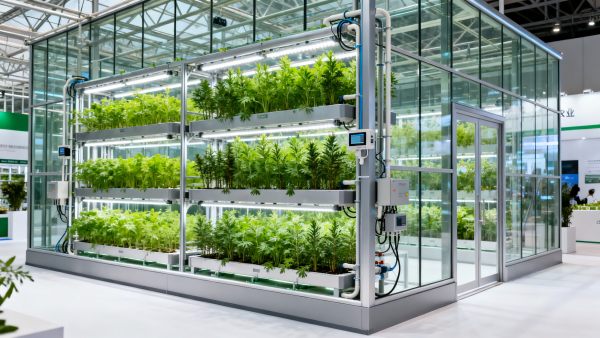
From May 11 to 31, 2026, the Hong Kong Trade Development Council (HKTDC) will host the 5th International Healthcare Week in Hong Kong, featuring for the first time a dedicated ‘Medicinal Plant Factory’ exhibition zone. This development signals growing cross-sector attention from pharmaceutical manufacturing, agricultural technology, and healthcare infrastructure stakeholders—particularly those engaged in GACP-compliant cultivation of high-value medicinal plants and GMP-compliant facility planning across Southeast Asia and the Middle East.
Event Overview
The 5th International Healthcare Week, organized by the Hong Kong Trade Development Council, takes place from May 11 to 31, 2026. A new ‘Medicinal Plant Factory’ thematic zone is introduced, spotlighting Smart Greenhouse systems in the context of Good Agricultural and Collection Practices (GACP)-compliant cultivation of medicinal plants—including precursors for paclitaxel and artemisinin. Demonstrated capabilities include precise environmental control, batch-to-batch consistency, and blockchain-enabled traceability. The event notes rising demand for such systems as core infrastructure in newly built GMP-certified pharmaceutical facilities across Southeast Asia and the Middle East.
Industries Affected
Pharmaceutical Raw Material Sourcing Firms
These firms may face tightening expectations around origin verification and cultivation compliance for botanical active ingredients. The emphasis on blockchain traceability and GACP alignment suggests future procurement frameworks could prioritize suppliers with integrated digital cultivation records and auditable environmental controls.
GMP Facility Developers & Engineering Contractors
As medical plant factories emerge as standard ancillary infrastructure for new GMP pharmaceutical plants in emerging markets, developers and contractors may need to incorporate controlled-environment agriculture (CEA) design standards—including climate control integration, power redundancy, and data interface protocols—into early-stage master planning.
Agricultural Technology Providers Serving Healthcare Supply Chains
Vendors offering greenhouse automation, sensor networks, or cultivation management software may see increased RFP activity tied to regulatory-grade validation requirements—not just yield optimization. Demand may shift toward systems pre-validated for GACP documentation workflows or compatible with existing pharma quality management systems (QMS).
Regulatory Affairs & Quality Assurance Professionals
With Smart Greenhouse deployments now positioned as part of GMP facility ecosystems, QA teams may need to expand scope-of-review to include cultivation environment monitoring protocols, raw material chain-of-custody documentation, and digital audit trail integrity—especially where blockchain is cited as a compliance enabler.
What Stakeholders Should Monitor and Do Now
Track official updates on GACP implementation guidance in target markets
While GACP is referenced, its interpretation and enforcement vary regionally. Stakeholders should monitor regulatory publications from ASEAN health authorities and Gulf Cooperation Council (GCC) agencies for formal adoption or adaptation of WHO GACP guidelines—particularly where Smart Greenhouse use is explicitly acknowledged.
Assess exposure to artemisinin and paclitaxel supply chains
These two compounds are named as key application cases. Companies involved in sourcing, processing, or formulating related APIs or botanical extracts should review current supplier certifications and evaluate whether upstream cultivation partners have begun integrating traceable, controlled-environment systems.
Distinguish between pilot demonstrations and scalable deployment readiness
The event showcases capabilities—but does not confirm commercial availability, certification pathways, or local regulatory acceptance of Smart Greenhouse outputs. Stakeholders should treat exhibited systems as reference models rather than validated turnkey solutions until independent verification or regulatory recognition is documented.
Initiate cross-functional alignment on data interoperability requirements
If blockchain traceability is positioned as a value driver, procurement, IT, and QA teams should jointly map current data capture points (e.g., harvest logs, environmental sensor feeds, QC test results) and assess gaps in structured, time-stamped, tamper-evident data generation—prerequisites for credible blockchain integration.
Editorial Perspective / Industry Observation
Observably, this initiative reflects a structural shift: controlled-environment agriculture is no longer framed solely as an agritech innovation but as a regulated input layer within pharmaceutical manufacturing infrastructure. Analysis shows the inclusion of Smart Greenhouse in a major healthcare trade event—rather than an agri-tech or sustainability forum—signals institutional recognition of its role in securing supply chain integrity for botanical actives. However, it remains an early-stage signal: no regulatory mandates, no regional harmonization, and no commercial deployment benchmarks are confirmed in the available information. From an industry perspective, this is best understood not as a near-term operational requirement, but as a leading indicator of evolving quality expectations—particularly where geopolitical factors increase pressure to localize or verify botanical sourcing.
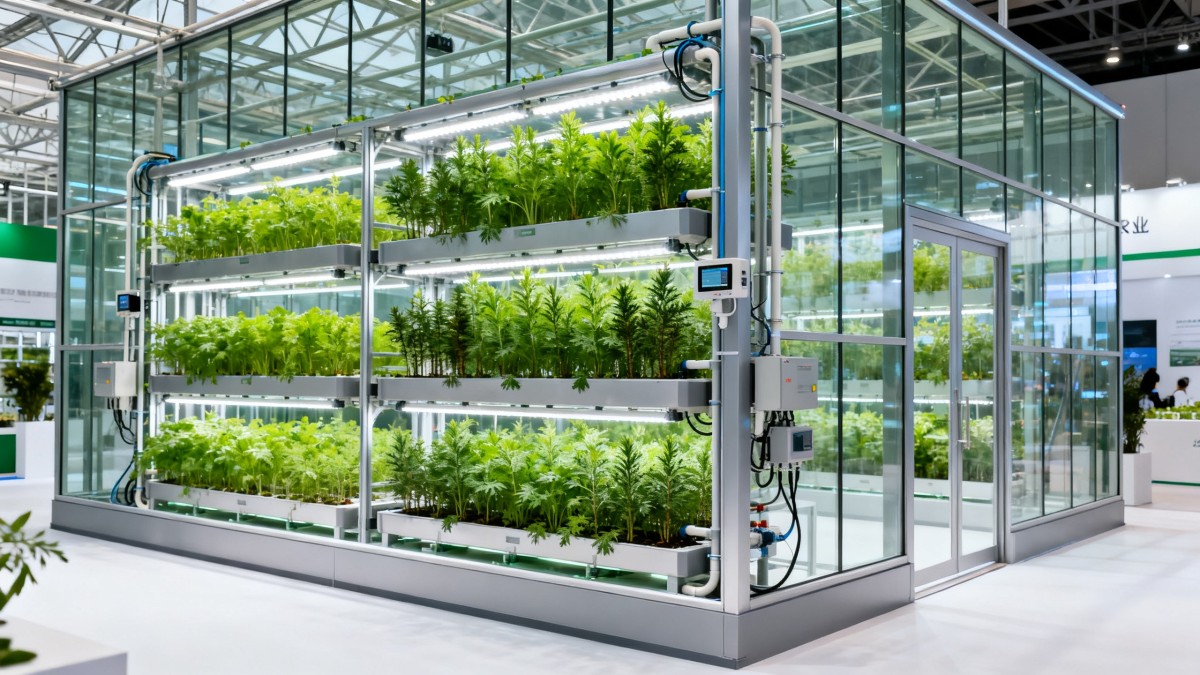
In summary, the 5th International Healthcare Week introduces Smart Greenhouse technology into mainstream healthcare infrastructure discourse—not as a standalone product, but as an emerging component of GMP-aligned botanical supply chains. Its significance lies less in immediate adoption and more in the recalibration of quality, traceability, and facility design expectations across multiple sectors. Currently, it is more appropriately understood as a forward-looking policy and investment signal than a finalized operational standard.
Source: Hong Kong Trade Development Council (HKTDC), official announcement of the 5th International Healthcare Week (2026).
Note: Specific technical specifications of Smart Greenhouse systems, certification status, and regional regulatory acceptance remain unconfirmed and require ongoing observation.
Related Intelligence
- Smart GreenhouseSelecting Greenhouse Propagation Equipment for Hot, Humid Southeast Asian NurseriesGreenhouse propagation equipment Southeast Asia: discover how to select resilient irrigation, ventilation, benches, and automation for hot, humid nurseries.
- Smart GreenhouseWhat Are the Biggest Challenges in Agri-Tech Adoption in 2026?What are the biggest challenges in agri tech adoption for 2026? Explore cost, data, connectivity, skills, compliance, and ROI barriers.
- Smart GreenhouseHow Does Compact Greenhouse Technology Improve Yield in Space-Limited Growing Environments?Compact greenhouse technology improves yield in space-limited environments through better climate uniformity, vertical efficiency, precise irrigation, and repeatable crop performance.
The Morning Broadsheet
Daily chemical briefings, market shifts, and peer-reviewed summaries delivered to your terminal.
