

The Authority in Global Agricultural Chemistry & Bio-Resources
Brazil ANVISA Opens Fast-Track for Chinese Plant Protein Powders
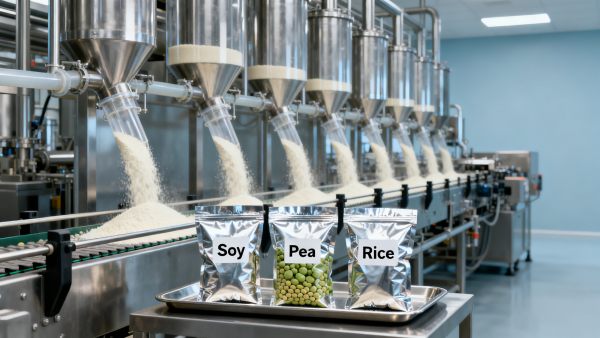
Brazil’s National Health Surveillance Agency (ANVISA) announced regulatory relief for plant-based protein ingredients on 9 May 2026 — a move poised to reshape market access for exporters in the global functional food and dietary supplement supply chain. The revision targets long-standing compliance bottlenecks for natural-source proteins, lowering scientific burden and accelerating time-to-market in one of Latin America’s largest health & wellness markets.
Event Overview
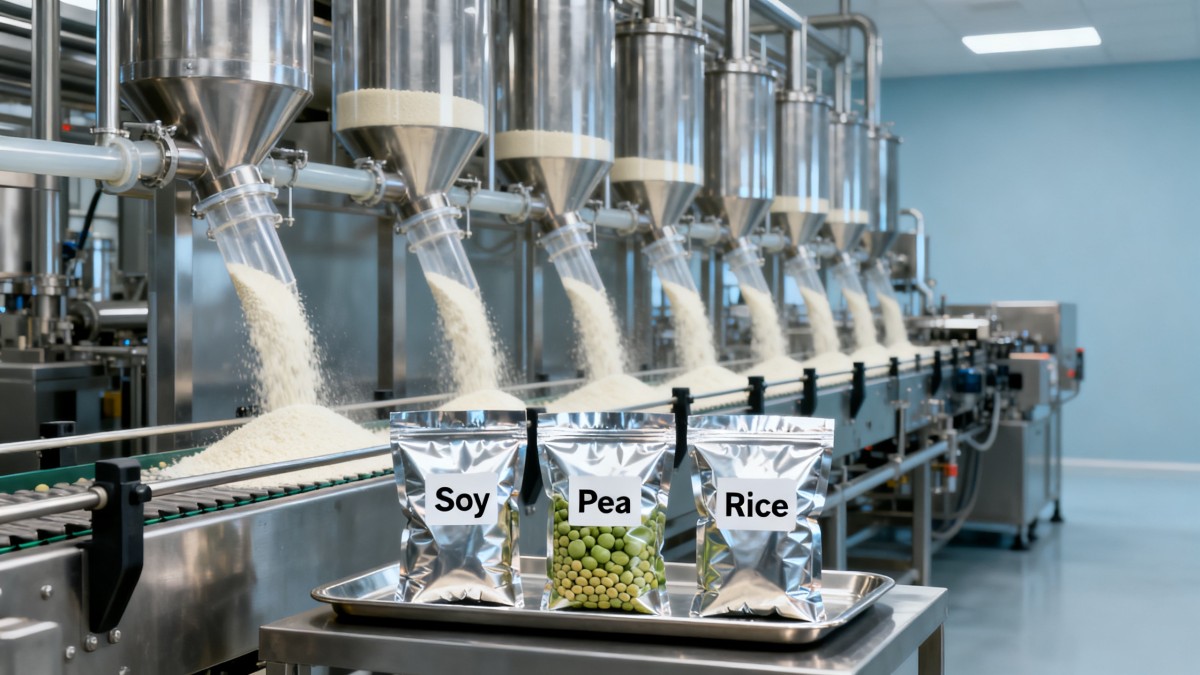
On 9 May 2026, ANVISA issued Resolution RDC No. 27/2026, expanding the ‘Low-Risk Natural Ingredients’ registration exemption to include plant protein powders derived from soy, pea, and rice. Under the new rule, mandatory toxicological reports are waived, and the official备案 (notification) timeline is reduced from 180 days to 15 working days. As of the regulation’s effective date, 12 Chinese manufacturers holding GMP certification have completed the first wave of notifications; their products are now authorized for direct distribution to Brazilian pharmacy chains and health food retailers.
Industries Impacted
Direct Export Trading Companies
These firms face immediate operational uplift: shorter notification windows reduce inventory holding costs and enable faster order fulfillment. However, eligibility remains tightly linked to supplier-level GMP compliance — meaning trade intermediaries must now verify and document manufacturing credentials more rigorously than before. The shift also raises competitive pressure, as speed-to-market becomes a differentiator among peers offering similar SKUs.
Raw Material Sourcing Enterprises
Suppliers of soy, pea, and rice isolates/concentrates — especially those with traceable, non-GMO, and allergen-controlled processing — stand to gain enhanced pricing leverage. Demand for upstream certifications (e.g., ISO 22000, FSSC 22000) and origin documentation is expected to rise, as downstream notifiers require auditable supply chain evidence to meet ANVISA’s ‘natural ingredient’ definition.
Processing & Contract Manufacturing Firms
Chinese contract manufacturers producing private-label or toll-manufactured plant proteins now qualify for direct notification — provided they hold valid domestic GMP certification recognized by ANVISA. This bypasses the need for local legal representatives in many cases, lowering structural entry barriers. Yet it also intensifies scrutiny on batch consistency, labeling compliance (Portuguese-language requirements), and post-notification surveillance readiness.
Supply Chain & Regulatory Support Providers
Consultancies, testing labs, and logistics partners specializing in ANVISA submissions must adapt service offerings: demand will grow for rapid dossier preparation, Portuguese-language label review, and pre-submission gap assessments — but volume per client may decline as streamlined processes reduce repeat engagement cycles. Firms relying heavily on legacy 180-day timelines may need to rebalance fee structures and resource allocation.
Key Focus Areas and Recommended Actions
Confirm GMP Certification Validity and Scope
ANVISA explicitly requires GMP certification issued by China’s NMPA or an ICH-aligned authority. Exporters must verify that their certificate covers the specific protein type (e.g., ‘pea protein isolate’) and intended use (‘food supplement ingredient’), not just general food manufacturing.
Prioritize Batch-Level Documentation
While toxicology is waived, ANVISA retains requirements for identity, purity, microbiological limits, and heavy metal screening per batch. Firms should ensure test reports align with Brazilian Pharmacopoeia (FBP) or internationally accepted standards (e.g., USP, EP) — and retain full traceability records for at least five years.
Validate Labeling Against RDC No. 27/2026 Annexes
Portuguese-language labels must reflect updated classification (‘Ingrediente Natural de Baixo Risco’) and omit any therapeutic claims. Misalignment — even in font size or placement of mandatory statements — risks post-notification rejection or market withdrawal.
Editorial Perspective / Industry Observation
Observably, this policy change signals ANVISA’s broader strategic pivot toward risk-proportionate regulation — not deregulation. By anchoring exemptions to well-characterized, widely consumed botanical matrices (soy, pea, rice), the agency avoids compromising safety while removing redundant administrative friction. Analysis shows that similar pathways are under discussion in Mexico (COFEPRIS) and Colombia (INVIMA), suggesting a regional convergence toward harmonized natural-ingredient frameworks. That said, the exemption applies only to unmodified proteins — hydrolyzed, fermented, or enzymatically treated variants remain subject to full evaluation. This distinction matters: current eligibility is narrower than it appears.
Conclusion
This update does not represent an open door — but rather a calibrated key for qualified entrants. For the plant-based nutrition sector, it affirms Brazil’s intent to integrate into global supply chains without sacrificing regulatory integrity. The real test lies ahead: whether accelerated access translates into sustained shelf presence, consumer trust, and commercial scalability — factors dependent less on notification speed and more on consistent quality execution and localized marketing discipline.
Source Attribution
Official text: ANVISA RDC No. 27/2026, published 9 May 2026, available at anvisa.gov.br/rdc27-2026.
Implementation guidance and list of notified entities remain pending publication in the Diário Oficial da União. Ongoing monitoring is advised for updates on post-notification audit frequency, enforcement thresholds, and potential extension to other plant sources (e.g., fava bean, mung bean).
Related Intelligence
- Natural IngredientsIndustrial-Scale Agricultural Sourcing: Key Criteria for Reliable SupplyIndustrial scale agri sourcing made reliable: assess supplier capacity, traceability, landed cost, logistics, and resilience to protect production continuity.
- Natural IngredientsHow Microencapsulated Botanical Ingredients Improve Stability and Controlled ReleaseMicroencapsulated botanical ingredients enhance stability, protect sensitive actives, and enable controlled release for reliable performance across demanding applications.
- Natural IngredientsHow to Evaluate Bioactive Compounds for Nutraceuticals by Stability, Efficacy, and FormatBioactive compounds for nutraceuticals should be evaluated by stability, efficacy, and format. Learn how to compare ingredients, reduce formulation risk, and choose options that perform in real products.
The Morning Broadsheet
Daily chemical briefings, market shifts, and peer-reviewed summaries delivered to your terminal.
