

The Authority in Global Agricultural Chemistry & Bio-Resources
How to shortlist agri and forestry machinery manufacturers
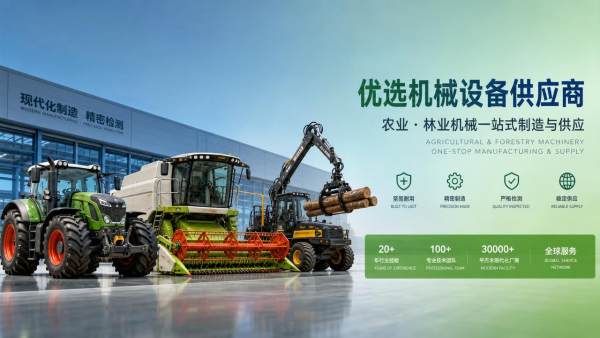
Choosing among today’s Agri & Forestry machinery manufacturers now involves far more than unit pricing. Regulation, automation, input volatility, and service continuity have changed what a strong supplier looks like.
A reliable shortlist should reflect lifetime operating value, parts access, technical fit, emissions compliance, and evidence of stable manufacturing performance across different market cycles.
For capital-intensive fleets, the best Agri & Forestry machinery manufacturers are often those that combine engineering consistency with transparent documentation, realistic lead times, and dependable support after delivery.
Why shortlisting Agri & Forestry machinery manufacturers is becoming more complex
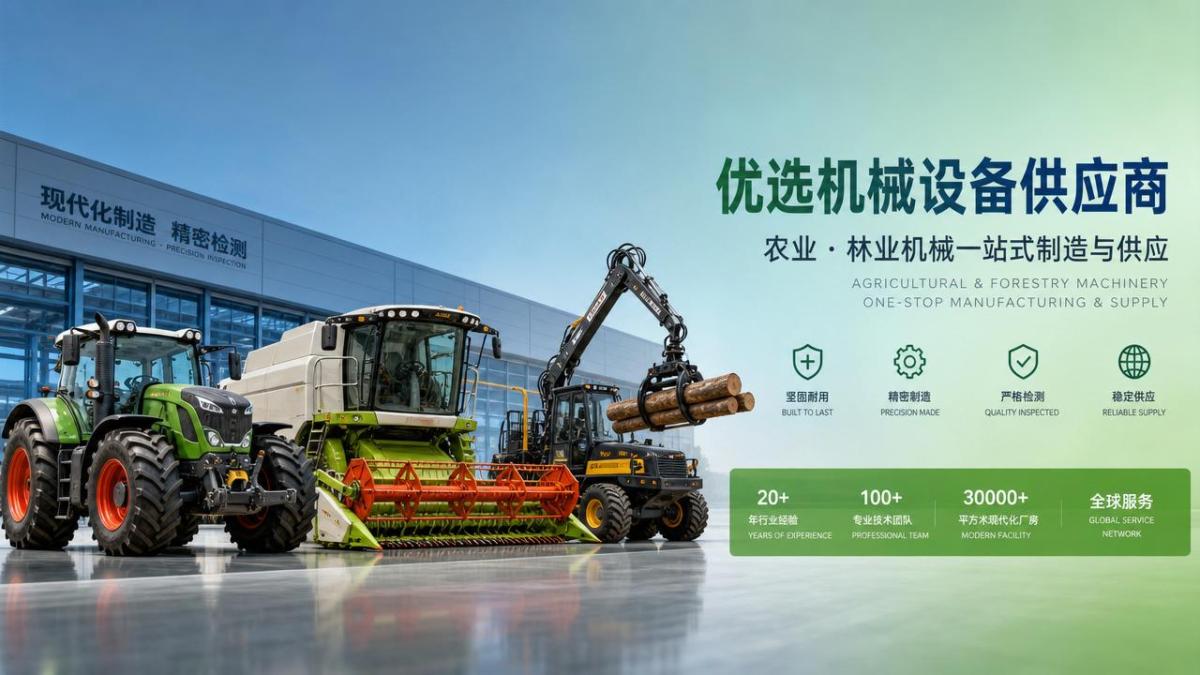
The market has shifted from simple equipment sourcing to risk-based supplier evaluation. Buyers now compare resilience, traceability, digital compatibility, and field performance alongside upfront cost.
Agricultural and forestry operations also face tighter pressure on fuel efficiency, operator safety, uptime, and environmental reporting. These pressures elevate supplier quality from a preference to a strategic requirement.
As a result, Agri & Forestry machinery manufacturers are increasingly judged by the strength of their systems, not only the specifications on a product sheet.
Current signals shaping the market
- Longer decision cycles due to stricter technical and compliance reviews.
- Higher demand for machines compatible with telematics and precision operations.
- Growing emphasis on spare parts availability across regional service networks.
- Preference for manufacturers with proven export and documentation capabilities.
- More scrutiny on production lead times and component sourcing continuity.
The forces pushing Agri & Forestry machinery manufacturers toward higher standards
Several structural forces explain why supplier evaluation has intensified. These drivers affect both machine performance expectations and the way capital approvals are made.
What these changes mean for equipment decisions across operations
The biggest effect is that machine selection now influences broader operating reliability. A weak supplier can increase service delays, idle labor, seasonal losses, and compliance exposure.
This is especially important where harvesting windows are short, terrain is demanding, or multi-site fleet planning depends on standardized parts and consistent maintenance routines.
Business areas most affected
- Capital planning: forecasts must include fuel use, service intervals, and residual value.
- Maintenance scheduling: workshop readiness depends on spare part predictability.
- Compliance administration: approvals require accurate technical files and certifications.
- Operator productivity: ergonomics, controls, and training shape output consistency.
- Expansion strategy: supplier scale matters when fleet growth is phased.
Because of these connections, evaluating Agri & Forestry machinery manufacturers should be treated as a business continuity decision, not only an equipment sourcing exercise.
The most reliable way to shortlist Agri & Forestry machinery manufacturers
A strong shortlist starts with a clear scoring model. This keeps technical reviews objective and prevents overreliance on brochure claims or one-time pricing incentives.
1. Verify production capability before product features
Check factory scale, output stability, welding and machining controls, testing procedures, and quality records. Capacity should match the volume and timing your program actually requires.
Agri & Forestry machinery manufacturers with inconsistent production planning often struggle with delivery discipline and part replacement speed after installation.
2. Examine compliance depth, not just labels
Request documentation for emissions, safety systems, material traceability, and export readiness. Confirm whether certificates apply to the exact model and configuration under review.
Reliable Agri & Forestry machinery manufacturers maintain organized technical files and can explain regulatory scope without ambiguity.
3. Compare total cost of ownership across realistic use conditions
Include maintenance labor, wear parts, fuel burn, hydraulic component life, tire or track replacement, training time, and expected resale value in the comparison.
A lower purchase price may lose value quickly if service intervals are short or parts arrive slowly during high-demand seasons.
4. Test after-sales infrastructure with evidence
Ask for regional service maps, average response times, parts fill rates, warranty claim procedures, and training options. Support quality is often where shortlist differences become decisive.
5. Look for application-specific track record
Machines used in row crops, orchards, plantations, logging roads, or steep forestry plots face very different stress conditions. Supplier references should match the intended environment.
Key evaluation points that deserve the closest attention
Shortlists are stronger when they focus on a manageable set of high-impact criteria. The following points usually reveal whether a supplier can perform under operational pressure.
- Documented quality control across fabrication, assembly, and final inspection.
- Availability of critical spare parts for at least several operating seasons.
- Clear warranty scope, exclusions, and turnaround commitments.
- Compatibility with local fuels, terrain, attachments, and weather conditions.
- Operator training materials, manuals, and service documentation quality.
- Lead time credibility supported by production and logistics planning.
- Financial stability and export experience of the manufacturer.
These checkpoints help separate capable Agri & Forestry machinery manufacturers from suppliers that only appear competitive during initial quoting.
A practical scoring approach for narrowing the field
Using weighted criteria improves comparability. It also helps internal reviewers understand why one supplier creates lower long-term risk than another.
This framework is especially useful when comparing domestic and export-oriented Agri & Forestry machinery manufacturers with different service footprints and production models.
How to respond as the market keeps shifting
Shortlist decisions should remain flexible because standards, software integration needs, and parts logistics can change faster than fleet replacement cycles.
Recommended next-step actions
- Define required machine functions by terrain, season, and workload profile.
- Create a weighted supplier scorecard before requesting final quotations.
- Ask shortlisted suppliers for documentation packs and service evidence.
- Validate at least two reference installations with similar operating conditions.
- Stress-test total cost assumptions against downtime and parts delay scenarios.
- Review expansion fit if future fleet growth or regional deployment is expected.
The most dependable Agri & Forestry machinery manufacturers are rarely identified by price alone. They stand out through evidence, discipline, and the ability to support performance long after delivery.
A disciplined shortlist built on compliance, lifecycle value, and support strength can reduce procurement risk and improve operating outcomes across agricultural and forestry investments.
Related Intelligence
- Heavy Agri MachineryMachinery Supplier Verification: A Due-Diligence Checklist for Overseas BuyersMachinery supplier verification made practical: use this due-diligence checklist to assess quality, compliance, export readiness, and after-sales support before buying overseas.
- Heavy Agri MachineryHow to Assess Heavy Agricultural Machinery Producers for Dealer Support and Parts AvailabilityHeavy agricultural machinery producers: learn how to assess dealer expertise, critical parts availability, service response, and downtime risk before you buy.
- Heavy Agri MachineryCan Agricultural Equipment Be Retrofitted for Precision Agriculture?Can agricultural equipment be retrofitted for precision agriculture? Discover practical upgrades, compatibility checks, costs, and smarter ways to boost farm efficiency.
The Morning Broadsheet
Daily chemical briefings, market shifts, and peer-reviewed summaries delivered to your terminal.
