

The Authority in Global Agricultural Chemistry & Bio-Resources
China Launches 'Multi-User Green Power Direct Connection' for Grain Storage
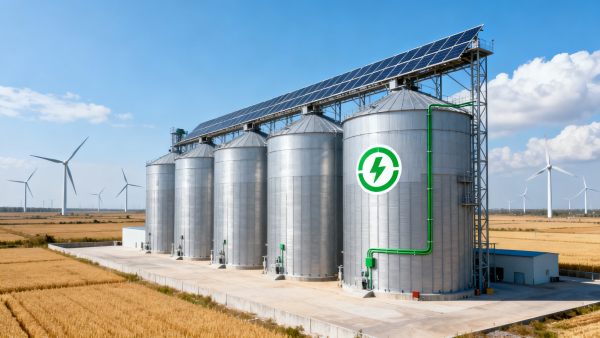
On May 20, 2026, China’s National Development and Reform Commission (NDRC) and National Energy Administration (NEA) jointly issued a policy enabling large-scale grain silos and storage facilities to procure wind and solar power directly via a green electricity aggregation platform — at a fixed tariff of RMB 0.28/kWh. This marks the first national-level mechanism allowing multi-user, point-of-use green power procurement in agri-logistics infrastructure, with implications for energy cost structure, decarbonization timelines, and international competitiveness of China’s grain storage systems.
Event Overview
The NDRC and NEA announced on May 20, 2026, that Grain Silos & Storage projects meeting minimum capacity thresholds may access renewable electricity through the newly established ‘Green Electricity Aggregation Platform’. Under the arrangement, eligible projects may sign long-term bilateral agreements for wind or photovoltaic power at RMB 0.28 per kilowatt-hour — a price 22% below the current average industrial and commercial electricity tariff. The policy explicitly targets temperature-controlled grain storage facilities and links green power access to lifecycle cost optimization for export-oriented grain infrastructure projects, especially those deployed under Belt and Road Initiative cooperation frameworks.
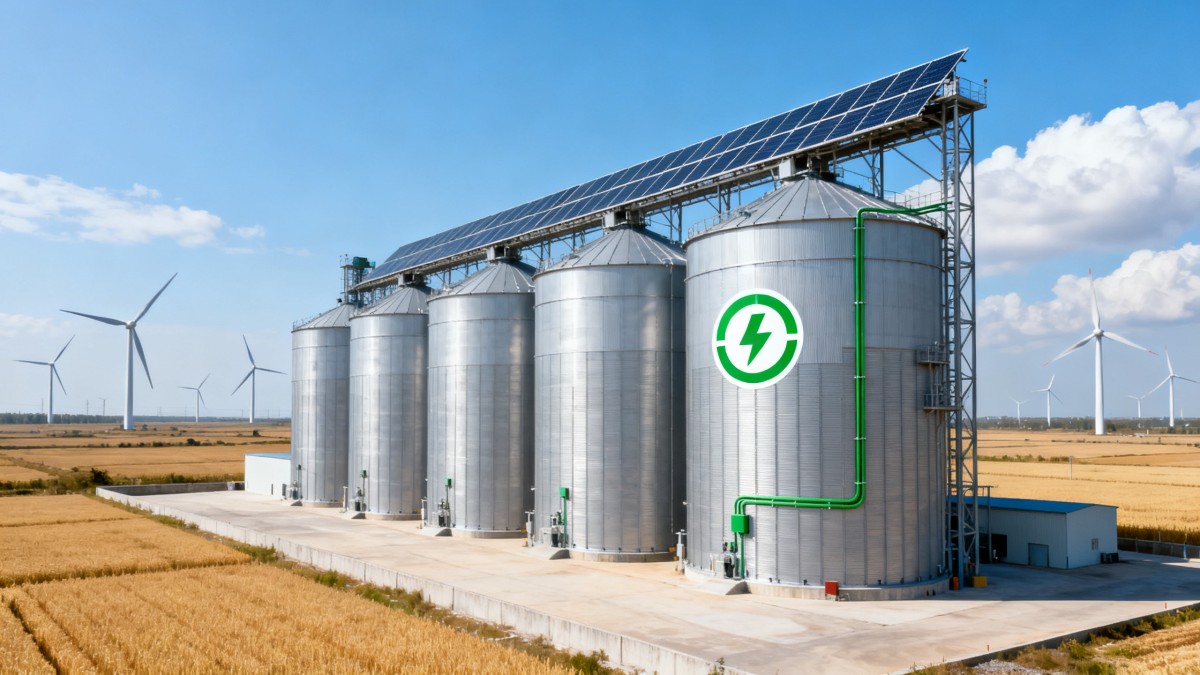
Industries Affected
Direct Trade Enterprises
Export-focused grain trading firms — particularly those supplying integrated storage-and-logistics solutions to overseas markets — face revised total cost of ownership calculations. Since green power directly reduces operational expenditure (OPEX) for climate-controlled storage, trade enterprises bidding on turnkey grain infrastructure contracts in Southeast Asia, Central Asia, or Africa may now embed lower energy assumptions into project financing models and tender pricing. However, eligibility hinges on project scale and grid interconnection conditions — not all overseas deployments qualify unless co-located with domestic green generation zones or linked via cross-regional transmission pathways approved under the new framework.
Raw Material Procurement Enterprises
Firms sourcing bulk commodities (e.g., wheat, rice, corn) for long-term warehousing are indirectly affected: lower storage energy costs may ease margin pressure on holding inventories, potentially supporting more flexible procurement cycles. Yet no direct procurement incentive is introduced — the benefit accrues only where the buyer also owns or operates qualifying storage assets. For third-party commodity aggregators without vertical control over storage infrastructure, the policy offers no immediate leverage over upstream suppliers or logistics partners.
Processing & Manufacturing Enterprises
Grain millers, feed producers, and food processors operating their own silo networks — especially those investing in automated, climate-stable facilities — gain measurable OPEX reduction potential. At RMB 0.28/kWh, annual energy savings for a 50,000-ton capacity facility could exceed RMB 1.2 million, assuming continuous refrigeration load. Still, implementation requires technical integration with the aggregation platform, metering upgrades, and compliance with real-time dispatch protocols — meaning benefits materialize only after 6–12 months of onboarding, not upon policy release.
Supply Chain Service Providers
Third-party cold-chain logistics operators, warehouse management system (WMS) vendors, and energy service companies (ESCOs) must adapt service offerings. ESCOs, for instance, may shift from retrofits-only models toward bundled green power procurement + efficiency-as-a-service packages. WMS providers face new data interface requirements to support green power consumption tracking and reporting — a capability not yet standardized across existing platforms. Meanwhile, logistics integrators lacking in-house energy procurement expertise may need to partner with licensed green power aggregators to remain competitive in tenders specifying low-carbon storage compliance.
Key Considerations and Recommended Actions
Verify Eligibility Against Capacity and Grid Criteria
Projects must meet minimum installed storage capacity (not publicly specified in initial notice) and connect to designated provincial grids participating in the pilot phase. Applicants should consult provincial energy bureaus before initiating platform registration — early adopters in Gansu, Inner Mongolia, and Ningxia report faster approval due to local wind/solar surplus availability.
Assess Contractual Flexibility in Power Purchase Agreements (PPAs)
The RMB 0.28/kWh rate applies only to fixed-price, 10-year PPAs signed via the official aggregation platform. Shorter-term or volume-flexible contracts are not covered. Enterprises evaluating alternatives — such as on-site solar + storage or bilateral deals outside the platform — must compare full levelized cost, including grid connection fees and curtailment risk premiums.
Update Lifecycle Cost Models for Export Projects
For grain storage systems exported under Belt and Road cooperation, developers should revise financial models to reflect lower OPEX and improved ESG scoring — which increasingly influences multilateral development bank (MDB) lending terms. However, foreign jurisdictions may not recognize China’s green certificate (GEC) tracking system; thus, export projects requiring internationally verified renewable energy claims may still need parallel certification (e.g., I-REC).
Editorial Perspective / Industry Observation
Observably, this policy is less about subsidizing green power adoption than about strategically aligning energy infrastructure modernization with agricultural supply chain resilience. Analysis shows the 0.28/kWh floor price is calibrated to match marginal generation cost in Class I wind/solar resource zones — suggesting the goal is grid stability and curtailment reduction, not broad consumer relief. From an industry standpoint, the ‘multi-user’ design signals a pivot toward shared infrastructure economics, moving beyond single-plant PPAs toward pooled demand aggregation — a model likely to expand to cold-chain logistics and data centers in Phase II. Current more critical questions concern interoperability: whether the aggregation platform will integrate with existing smart grid systems or require proprietary hardware layers remains unconfirmed.
Conclusion
This initiative does not fundamentally alter grain storage technology or global trade rules — but it recalibrates the economic baseline for energy-intensive agri-infrastructure. It better positions Chinese-built storage systems for cost-sensitive, sustainability-conscious export markets — provided developers treat green power access as an integrated engineering and contractual requirement, not merely a compliance checkbox. A rational reading suggests medium-term impact will be strongest where policy execution matches ambition: consistent inter-provincial transmission coordination, transparent eligibility criteria, and timely platform scalability.
Source Attribution
Official Notice No. [2026]XX issued jointly by the National Development and Reform Commission and the National Energy Administration, dated May 20, 2026. Full text published on www.ndrc.gov.cn and www.nea.gov.cn. Key implementation guidelines — including provincial rollout schedule, technical standards for aggregation platform interfaces, and eligibility verification procedures — are pending publication and remain under observation.
Related Intelligence
- Grain Silos & StorageHow Modular Feed and Grain Systems Support Scalable Storage and Processing ExpansionModular feed and grain systems enable smarter, scalable expansion across storage, conveying, processing, and loadout. Discover how to eliminate bottlenecks, protect future capacity, and keep operations moving.
- Grain Silos & StorageHow to Size a Grain Pre-Cleaner for Capacity, Crop Type, and Impurity LoadGrain pre cleaner machine sizing guide: match capacity, crop type, moisture, and impurity load to improve flow, separation quality, and downstream performance.
- Grain Silos & StorageHow Can You Verify That a Grain Handling System Meets Export Standards?How do I know if a grain handling system meets export standards? Explore practical checks for traceability, sanitation, quality control, and export-ready compliance.
The Morning Broadsheet
Daily chemical briefings, market shifts, and peer-reviewed summaries delivered to your terminal.
