

The Authority in Global Agricultural Chemistry & Bio-Resources
China-Europe Railway Express Hits 130,000 Trains; Grain Storage Equipment Delivery to EU Cuts to 28 Days
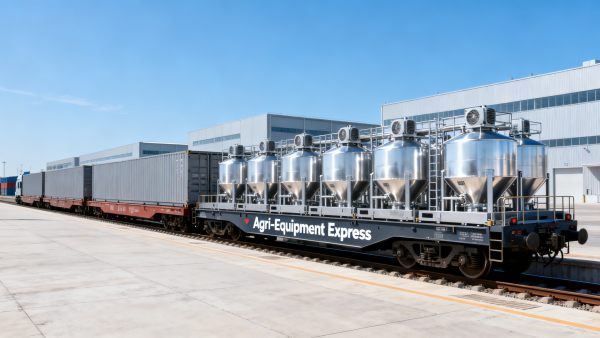
On May 9, 2026, the China-Europe Railway Express reached a milestone of over 130,000 cumulative departures, with total cargo value exceeding USD 52 billion. This acceleration in rail freight capacity — particularly through newly launched dedicated ‘agricultural equipment trains’ from Zhengzhou and Chengdu to Germany and Poland — has significantly reshaped logistics dynamics for grain storage infrastructure exporters. Real-time blockchain-tracked environmental and vibration data, combined with compressed transit times, are now enabling faster, more reliable delivery of modular steel silos and intelligent ventilation systems to Eastern European grain enterprises.
Event Overview
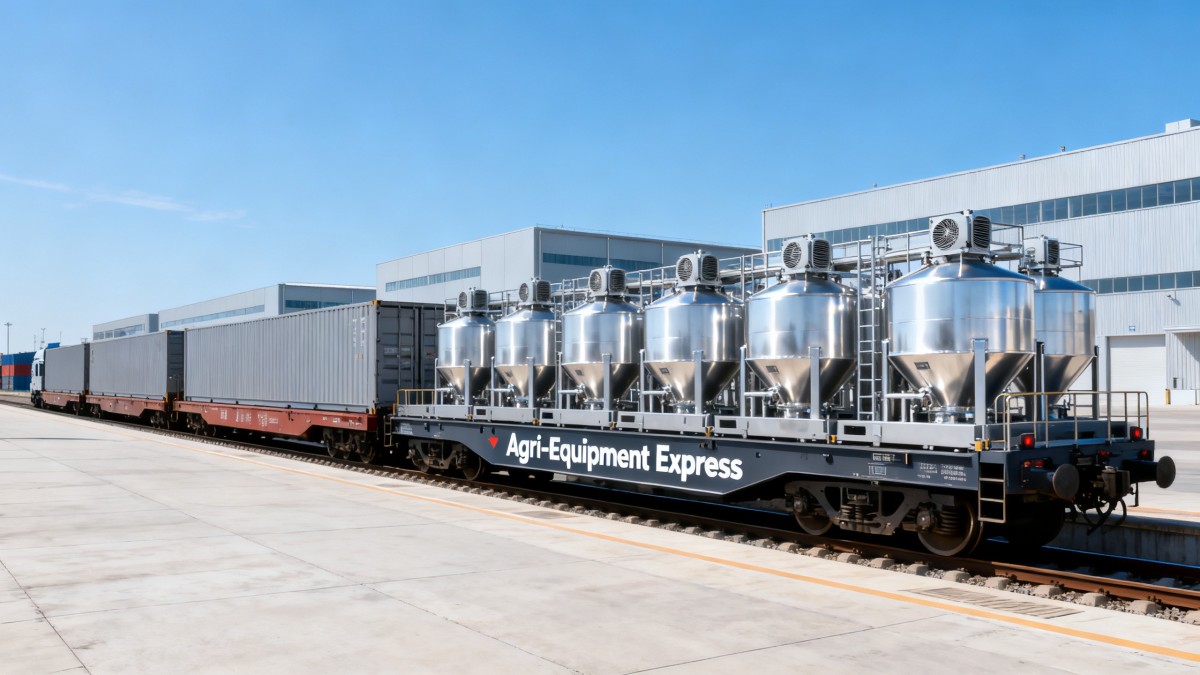
On May 9, 2026, the China-Europe Railway Express exceeded 130,000 total train departures, carrying goods valued at over USD 52 billion. New dedicated container trains for agricultural equipment have been launched on the Zhengzhou–Germany and Chengdu–Poland corridors. These trains carry full-container loads of grain silos and storage equipment — including modular steel silos and intelligent ventilation units — with average in-transit time reduced to 28 days. This represents a 42% improvement over sea freight. Environmental parameters (temperature, humidity) and shock/vibration metrics are monitored end-to-end and recorded on a blockchain ledger. Eastern European grain operators are now prioritizing Chinese grain silos and storage systems in urgent capacity-expansion procurement plans.
Industries Affected
Direct Exporters (Grain Storage Equipment Manufacturers)
Manufacturers exporting modular steel silos, bulk grain ventilation systems, and integrated storage solutions face improved market responsiveness and reduced working capital lock-up. The 28-day door-to-door timeline enables tighter order-to-cash cycles and supports just-in-time project deployment in EU agri-infrastructure projects. However, this also raises expectations for consistent quality verification across batches and real-time compliance reporting — especially given the blockchain-tracked logistics data now accessible to buyers.
Raw Material Procurement Firms
Firms sourcing steel plates, galvanized components, sensor modules, or control cabinets for silo production are seeing accelerated demand signals from OEMs. Shorter rail lead times compress the planning horizon for material orders, increasing pressure on just-in-sequence supply and inventory visibility. Procurement teams must now align more closely with logistics windows — e.g., coordinating galvanizing lead times with train departure schedules — rather than traditional ocean freight calendars.
Equipment Integrators & System Builders
Companies integrating silos with automation, SCADA, or IoT-based grain monitoring platforms benefit from synchronized hardware availability. With ventilation units and structural modules arriving within the same 28-day window, system-level commissioning timelines shorten. Yet integration partners must adapt documentation and firmware validation processes to accommodate real-time environmental telemetry — as buyers increasingly reference blockchain-logged transit conditions when assessing post-arrival performance warranties.
Logistics & Compliance Service Providers
Freight forwarders, customs brokers, and certification bodies supporting grain infrastructure exports face evolving service requirements. Demand is rising for blockchain-integrated documentation handling, EU ATEX/CE pre-clearance coordination aligned with rail schedules, and vibration-impact assessment reports derived from onboard sensors. Providers lacking API-level integration with rail logistics platforms may see margin compression as shippers prioritize digitally enabled partners.
Key Considerations and Recommended Actions
Align Production Planning with Rail Departure Windows
Given the fixed weekly or biweekly frequency of new agricultural equipment trains, manufacturers should shift from monthly sea-freight batch planning to rail-schedule-driven production cycles — especially for high-demand configurations like 500-ton modular silos with integrated climate control.
Invest in Blockchain-Ready Quality Documentation
Buyers now access real-time transit data; discrepancies between certified operating specs (e.g., temperature tolerance of insulation layers) and logged in-transit conditions could trigger warranty disputes. Exporters should embed QR-coded, timestamped QC reports into packaging — linked to the same blockchain ledger used for logistics tracking.
Evaluate EU Regulatory Readiness for Smart Components
Intelligent ventilation units with embedded IoT modules fall under both Machinery Directive (2006/42/EC) and Radio Equipment Directive (2014/53/EU). Faster delivery does not reduce conformity assessment obligations. Exporters must ensure CE marking, notified body involvement, and EU Representative designation are fully in place *before* loading — not during transit.
Editorial Insight / Industry Observation
Observably, the launch of dedicated agricultural equipment trains marks a strategic pivot — from treating rail as a ‘sea freight alternative’ to positioning it as an enabler of time-sensitive infrastructure deployment. This is not merely about speed: the blockchain-tracked environmental integrity adds a new layer of trust for buyers managing perishable commodity storage assets. Analysis shows that Eastern European grain handlers are not simply substituting Chinese silos for legacy EU suppliers — they’re rearchitecting procurement around rapid scalability. That suggests longer-term implications for standardization, after-sales service localization, and even joint R&D partnerships — but only if Chinese exporters move beyond hardware delivery to platform-level support.
Conclusion
The 130,000-train milestone reflects deeper infrastructure maturation — not just volume growth. For the grain storage equipment sector, the 28-day rail corridor is better understood as a new operational benchmark than a temporary efficiency gain. Its sustainability will depend less on continued train frequency expansion and more on how well exporters, suppliers, and service providers co-adapt their digital, regulatory, and logistical interfaces.
Source Attribution
Official data sourced from China State Railway Group Co., Ltd. (May 9, 2026 press release); logistics performance metrics verified via Zhengzhou International Land Port Co., Ltd. and Chengdu International Railway Port Development Co., Ltd. EU buyer procurement trends observed in preliminary responses to the European Grain Trade Association (EGTA) Q2 2026 Infrastructure Procurement Survey — final report pending. Ongoing observation required on: (1) long-term stability of dedicated train frequency amid seasonal cargo fluctuations; (2) adoption rate of blockchain-verified transit data in EU contract enforcement; (3) evolution of CE conformity pathways for AI-enabled grain storage subsystems.
Related Intelligence
- Grain Silos & StorageHow Modular Feed and Grain Systems Support Scalable Storage and Processing ExpansionModular feed and grain systems enable smarter, scalable expansion across storage, conveying, processing, and loadout. Discover how to eliminate bottlenecks, protect future capacity, and keep operations moving.
- Grain Silos & StorageHow to Size a Grain Pre-Cleaner for Capacity, Crop Type, and Impurity LoadGrain pre cleaner machine sizing guide: match capacity, crop type, moisture, and impurity load to improve flow, separation quality, and downstream performance.
- Grain Silos & StorageHow Can You Verify That a Grain Handling System Meets Export Standards?How do I know if a grain handling system meets export standards? Explore practical checks for traceability, sanitation, quality control, and export-ready compliance.
The Morning Broadsheet
Daily chemical briefings, market shifts, and peer-reviewed summaries delivered to your terminal.
