

The Authority in Global Agricultural Chemistry & Bio-Resources
FDA Extends Pre-Review for Food-Grade Enzymes to 12 Workdays
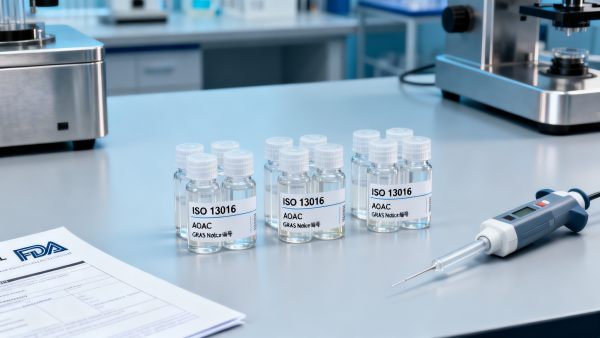
On May 15, 2026, the U.S. Food and Drug Administration (FDA) announced an extension of the pre-review period for food-grade enzymes to 12 working days — a formal adjustment following the April 2026 implementation of revised import compliance requirements. This shift reflects heightened scrutiny over documentation integrity and scientific traceability, directly impacting exporters, laboratories, and supply chain stakeholders engaged in enzyme trade with the U.S. market.
Event Overview
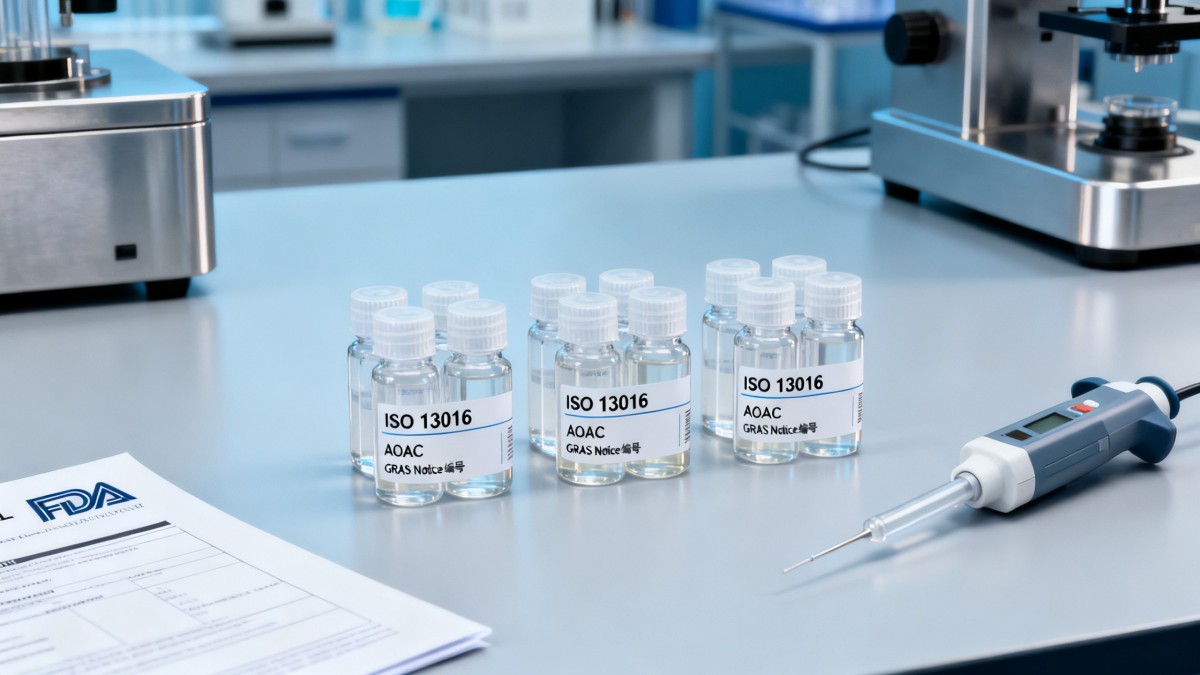
Following the April 2026 policy rollout, the FDA reported on May 15, 2026, that the average pre-review duration for food-grade enzyme submissions stood at 11.6 working days during the first month of enforcement. Over 73% of rejected submissions were attributed to three recurring deficiencies: (1) inconsistencies between Chinese and English labeling; (2) omission of enzyme activity units specified under ISO 13016 or AOAC method numbers; and (3) absence of a microbial strain safety statement, including a valid GRAS Notice number. Exporters are now required to submit a compliance pre-inspection report — issued by an FDA-recognized laboratory — no later than 72 hours prior to U.S. customs entry filing.
Industries Affected
Direct Trading Enterprises: Exporters of food-grade enzymes face delayed clearance, increased rework costs, and potential demurrage charges due to pre-review bottlenecks. The 72-hour submission window tightens operational margins, especially for SMEs lacking dedicated regulatory affairs capacity.
Raw Material Procurement Enterprises: Companies sourcing enzyme-producing microbial strains or fermentation substrates must now verify upstream GRAS status and traceability documentation — not just for final products but for foundational inputs. Strain lineage records and historical safety assessments are increasingly requested during vendor qualification.
Processing & Manufacturing Enterprises: Firms producing enzyme-blended ingredients (e.g., baking aids, dairy processing enzymes, meat tenderizers) must align internal quality control protocols with ISO 13016/AOAC validation standards. Labeling systems must support dual-language accuracy and dynamic unit formatting — a change from legacy batch-level declarations.
Supply Chain Service Providers: Customs brokers and regulatory consultants report rising demand for integrated pre-submission audits and lab coordination services. The requirement for FDA-recognized lab reports adds a new verification layer, shifting liability toward service providers who co-sign or facilitate filings.
Key Focus Areas and Response Measures
Labeling Consistency Verification
Before submission, enterprises must conduct side-by-side bilingual label reviews — not only for terminology but for grammatical alignment, unit placement, and regulatory claim hierarchy. Automated linguistic validation tools are emerging, but human-in-the-loop review remains essential for context-sensitive phrasing (e.g., “activity per gram” vs. “units/mg protein”).
Enzyme Activity Unit Standardization
ISO 13016 and AOAC method numbers must be explicitly cited on both labels and supporting dossiers — not merely referenced in footnotes or technical appendices. Enterprises should map each commercial enzyme product to its corresponding validated assay method and retain full method transfer documentation from contract labs.
GRAS Documentation Readiness
A valid GRAS Notice number is mandatory for all non-exempt microbial strains. Where notice numbers are unavailable (e.g., legacy strains grandfathered under prior regulations), enterprises must prepare a documented justification referencing FDA’s GRAS exemption criteria (21 CFR §170.30) — reviewed and signed by qualified experts.
Pre-Inspection Lab Coordination
Only laboratories listed on FDA’s Recognized Testing Laboratories for Food-Grade Enzymes roster may issue pre-inspection reports. Enterprises should initiate lab engagement at least 10 business days before intended filing — accounting for sample shipping, assay turnaround, and report authentication timelines.
Editorial Perspective / Industry Observation
Observably, this policy extension is less about procedural delay and more about systemic calibration: FDA is using the extended window to cross-validate labeling claims against analytical data and biological safety assertions. Analysis shows the 73% rejection rate is concentrated among first-time filers — suggesting a steep learning curve rather than intentional noncompliance. From an industry perspective, the shift signals a broader move toward ‘pre-market readiness’ expectations for functional food ingredients, where documentation quality functions as a de facto safety proxy. Current enforcement patterns suggest FDA prioritizes consistency over novelty — meaning well-documented legacy products may clear faster than newly formulated ones lacking full traceability.
Conclusion
This development underscores a maturing regulatory posture toward food-grade enzymes — one that treats them not as generic additives but as biologically active substances requiring end-to-end accountability. For global suppliers, the takeaway is not increased restriction per se, but a recalibration of compliance investment: stronger emphasis on upfront documentation rigor, standardized assay reporting, and proactive strain safety governance. A rational interpretation is that the 12-day window offers a realistic buffer — provided enterprises treat it as a planning milestone, not a grace period.
Source Attribution
U.S. FDA Center for Food Safety and Applied Nutrition (CFSAN), Import Alert IA-54-11 Revision Notice (May 15, 2026); FDA Guidance Document ‘Enzyme-Specific Documentation Requirements for Food Use’, Version 2.1 (April 2026). Note: FDA’s list of recognized laboratories remains under active expansion — ongoing monitoring advised.
Related Intelligence
- Food Grade EnzymesWhat Drives Industrial Enzyme Costs? Activity, Format, and Supply Risk ExplainedIndustrial enzyme cost factors explained: compare activity, formulation, shelf life, documentation, and supply risk to reduce process costs and improve purchasing decisions.
- Food Grade EnzymesIs There a Global Standard for Biochemical Engineering Product Quality?Is there a global standard for biochemical engineering product quality? Explore GMP, ISO, traceability, and supplier checks for confident global sourcing.
- Food Grade EnzymesHow Enzymes for Cracker Formulation Improve Texture and Shelf LifeEnzymes for cracker formulation can enhance dough handling, crisp texture, and shelf life. Explore targeted enzyme strategies for consistent, high-quality crackers.
The Morning Broadsheet
Daily chemical briefings, market shifts, and peer-reviewed summaries delivered to your terminal.
