

The Authority in Global Agricultural Chemistry & Bio-Resources
FDA Extends Prior Notice for Food-Grade Enzymes to 12 Business Days
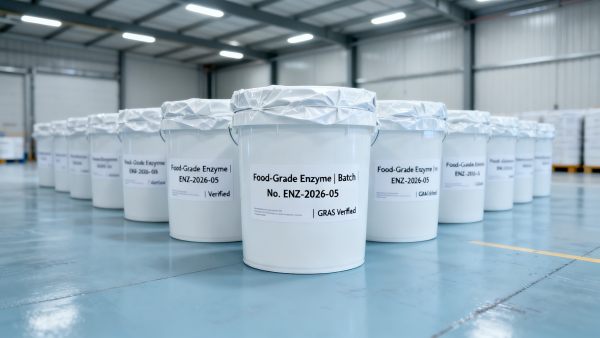
On May 14, 2026, the U.S. Food and Drug Administration (FDA) announced an update to its Prior Notice Operational Manual for Natural Enzyme Preparations, extending the mandatory pre-arrival notification processing window for food-grade enzymes from 7 to 12 business days. The change introduces two new documentation requirements—batch-specific enzyme activity stability reports and a GRAS re-evaluation status declaration—and takes effect immediately. This adjustment directly affects import scheduling, inventory planning, and compliance workflows across the U.S. food ingredient supply chain.
Event Overview
The U.S. Food and Drug Administration (FDA) updated its Natural Enzyme Preparations Import Prior Notice Operational Manual on May 14, 2026. Under the revised guidance, the FDA’s review period for Prior Notice submissions related to food-grade enzymes (Food Grade Enzymes) is extended from 7 to 12 business days. Concurrently, importers must now submit, with each Prior Notice filing: (1) enzyme activity stability data per production batch, and (2) a signed statement confirming the current GRAS (Generally Recognized as Safe) re-evaluation status of the enzyme preparation. The policy is effective immediately upon publication.
Industries Impacted
Direct Trading Enterprises: U.S.-based importers and international exporters engaged in cross-border trade of food-grade enzymes face tighter scheduling constraints. The five-day extension compresses time available for customs coordination, port release, and cold-chain handover—particularly critical for thermolabile or pH-sensitive enzymes. Delays may trigger demurrage fees, accelerated shelf-life pressure, and renegotiation of Incoterms (e.g., shifting from DAP to DPU to clarify responsibility during extended review windows).
Raw Material Procurement Entities: Companies sourcing enzymes for downstream formulations—including functional food, dairy starter, and plant-based protein manufacturers—must now factor in longer lead times when placing orders. Procurement cycles previously aligned with 7-day clearance assumptions require recalibration; failure to adjust may result in production line stoppages or reliance on higher-cost air freight alternatives to offset delays.
Processing & Manufacturing Firms: Enzyme-dependent processors—such as cheese makers using microbial rennet, bakery suppliers applying amylases, or beverage producers utilizing pectinases—may experience ripple effects on batch consistency and quality assurance timelines. Extended pre-clearance means less buffer time to verify incoming enzyme potency against specifications before release into production, increasing reliance on in-house analytical validation.
Supply Chain Service Providers: Third-party logistics (3PL) firms, customs brokers, and regulatory consultants supporting enzyme imports must revise SOPs and client advisories. Brokers now need capacity to validate enzyme stability reports and GRAS statements prior to submission—a non-trivial task given variability in international lab accreditation standards and GRAS dossier formats. Some providers are introducing pre-submission compliance audits as a value-added service.
Key Considerations and Recommended Actions
Update internal import timelines and buffer stock policies
Importers should revise ERP-based clearance calendars to reflect the 12-business-day window—not just for filing, but for full FDA acknowledgment. Inventory safety stock levels should be reassessed, especially for enzymes with ≤90-day ambient stability or those subject to seasonal demand spikes (e.g., lactase ahead of holiday dairy product launches).
Standardize documentation protocols with overseas suppliers
Procurement teams must formalize contractual language requiring suppliers to provide enzyme activity stability reports (per ICH Q5C or AOAC 2012.01, where applicable) and GRAS status declarations—including expiration date, reviewing body, and scope limitations—prior to shipment booking. A shared digital template helps reduce back-and-forth.
Engage FDA-registered third-party labs early
Given the specificity of required stability data (e.g., residual activity after 30/60/90 days at defined temperature/humidity), firms should identify and pre-qualify labs with FDA-recognized testing accreditations. Labs outside the U.S. must demonstrate ISO/IEC 17025:2017 certification with enzyme assay scope explicitly listed.
Editorial Perspective / Industry Observation
Analysis shows this change is less about tightening enforcement and more about aligning pre-market oversight with evolving scientific expectations for biocatalyst consistency. Observably, the FDA is treating enzyme preparations not as static commodities but as dynamic biological agents—where batch-to-batch performance variation carries material risk. From industry perspective, the GRAS re-evaluation requirement signals growing scrutiny of legacy GRAS determinations made before modern enzymology standards (e.g., structural characterization, impurity profiling). Current more critical question isn’t whether the delay is burdensome—but whether companies have mapped their entire enzyme portfolio against active GRAS validity dates and identified gaps requiring re-submission or new notifications.
Conclusion
This update reflects a broader regulatory shift toward lifecycle-aware oversight of functional food ingredients. It does not signal restriction, but rather demands greater transparency, traceability, and technical rigor upstream. For stakeholders, the operational impact is tangible—but the strategic opportunity lies in upgrading documentation infrastructure, supplier collaboration models, and internal scientific review capacity. A 12-day window is manageable; operating without validated stability baselines or outdated GRAS assumptions is increasingly untenable.
Source Attribution
U.S. FDA Guidance Document: Prior Notice Operational Manual for Natural Enzyme Preparations, Revision 2026-05 (published May 14, 2026); Federal Register notice FR Doc #2026-11842 (pending codification in 21 CFR Part 1.279). Note: GRAS re-evaluation criteria and acceptable formats for stability reporting remain under informal FDA clarification—status to be monitored via FDA’s Enzyme Regulatory Liaison Program updates.
Related Intelligence
- Food Grade EnzymesIs There a Global Standard for Biochemical Engineering Product Quality?Is there a global standard for biochemical engineering product quality? Explore GMP, ISO, traceability, and supplier checks for confident global sourcing.
- Food Grade EnzymesHow Enzymes for Cracker Formulation Improve Texture and Shelf LifeEnzymes for cracker formulation can enhance dough handling, crisp texture, and shelf life. Explore targeted enzyme strategies for consistent, high-quality crackers.
- Food Grade EnzymesWhat to Look for in Enzyme Blend Ingredients for Food and Supplement FormulasExplore enzyme blend ingredients for food and supplement formulas—learn how to assess activity, stability, compliance, and performance for smarter sourcing.
The Morning Broadsheet
Daily chemical briefings, market shifts, and peer-reviewed summaries delivered to your terminal.
