

The Authority in Global Agricultural Chemistry & Bio-Resources
2026 Asia Wood-Structure Building Expo Opens in Guangzhou
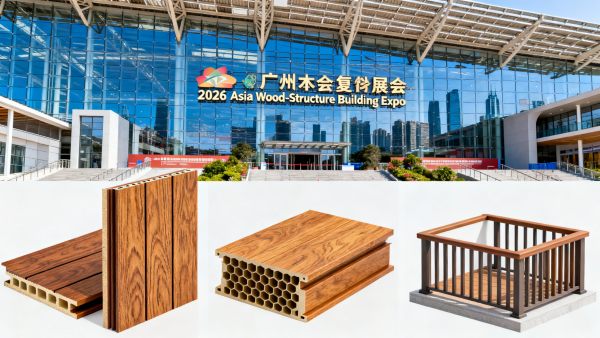
On May 15, 2026, the Asia Wood-Structure Building Industry Exhibition opened at the Canton Fair Complex in Guangzhou, spotlighting whole-life-cycle low-carbon management of Wood-Plastic Composites (WPC). The event signals heightened regulatory attention for WPC exporters targeting the EU, Canada, and South Korea—particularly those using Botanical Extracts-based feedstocks—making it highly relevant for composite material manufacturers, export traders, sustainable procurement officers, and supply chain compliance specialists.
Event Overview
The 2026 Asia Wood-Structure Building Exhibition commenced on May 15, 2026, at the China Import and Export Fair Complex (Canton Fair Complex) in Guangzhou. During the exhibition, the Asia WPC Export Green Compliance Guidelines were officially released. These guidelines stipulate that WPC products using Botanical Extracts as raw material and destined for the EU, Canada, or South Korea must be accompanied by an Environmental Product Declaration (EPD) and verifiable FSC/PEFC dual certification traceability documentation. Absence of either requirement may negatively affect the ESG procurement weighting applied by major buyers.
Industries Affected
Direct Export Trading Enterprises
These enterprises face immediate operational implications: their ability to tender for contracts with Tier-1 buyers in the EU, Canada, and South Korea now hinges on documented EPD and dual-certification traceability. Non-compliance risks exclusion from ESG-weighted procurement cycles—not as a penalty, but as an automatic scoring disadvantage in supplier evaluation frameworks.
Raw Material Sourcing & Procurement Firms
Firms supplying Botanical Extracts—or intermediaries sourcing botanical feedstocks for WPC production—must now ensure upstream traceability aligns with FSC/PEFC chain-of-custody requirements. This affects not only documentation but also supplier qualification protocols and audit readiness.
WPC Manufacturing & Processing Companies
Manufacturers producing Botanical Extracts-based WPC must integrate EPD development into product lifecycle planning. Unlike one-off certifications, EPDs require verified, third-party life cycle assessment (LCA) data—impacting R&D timelines, testing budgets, and technical documentation workflows.
Supply Chain & Certification Service Providers
Third-party verifiers, EPD program operators (e.g., IBU, EPD International), and FSC/PEFC-accredited certification bodies are likely to see increased demand for integrated verification services—especially those capable of cross-referencing botanical origin, processing energy use, and end-product declaration alignment.
What Relevant Enterprises or Practitioners Should Focus On
Monitor official guidance updates from regional trade desks
Analysis shows that while the Guidelines were launched at the exhibition, formal adoption mechanisms—such as alignment with EU’s upcoming Ecodesign for Sustainable Products Regulation (ESPR) or Canada’s Green Procurement Policy—are not yet confirmed. Enterprises should track announcements from the China Council for the Promotion of International Trade (CCPIT) Guangdong and EU Delegation to China for implementation roadmaps.
Prioritize EPD development for top three export SKUs
Observably, EPD preparation is resource-intensive. Rather than pursuing blanket coverage, companies should identify their highest-volume or highest-margin WPC SKUs bound for the EU, Canada, or South Korea—and initiate LCA modeling and verification for those first.
Distinguish between policy signal and enforceable requirement
From an industry perspective, the Guidelines currently function as a procurement benchmark—not a legal import barrier. Their enforcement depends on buyer adoption, not customs regulation. Therefore, impact is commercial (e.g., bid eligibility) rather than regulatory (e.g., border rejection).
Verify current FSC/PEFC scope coverage and upgrade traceability systems
Current more suitable action is to audit existing certification scope: many FSC/PEFC certificates cover timber only—not botanical extracts or post-industrial bio-residues. Companies should confirm whether their current certificate permits inclusion of Botanical Extracts, and if not, engage accredited bodies to extend scope prior to EPD submission.
Editorial Perspective / Industry Observation
This development is better understood as a forward-looking procurement signal—not yet a binding standard. Analysis shows it reflects growing convergence between private-sector ESG procurement criteria and public sustainability agendas in key markets. Observably, it mirrors trends seen earlier with EPDs in EU construction product CE marking pathways, suggesting a potential trajectory toward mandatory disclosure. However, no timeline or legislative anchor has been announced. From an industry angle, the real significance lies in its early adoption by influential buyers: it signals shifting expectations among procurement teams, not just compliance departments.
Conclusion
While not a new regulation, the release of the Asia WPC Export Green Compliance Guidelines marks a tangible step toward standardized sustainability documentation for botanical-based WPC exports. It does not impose legal obligations—but it does recalibrate commercial viability in priority markets. Currently, it is more accurately interpreted as an anticipatory benchmark, urging proactive alignment—not reactive compliance.
Information Source
Main source: Official announcement issued during the 2026 Asia Wood-Structure Building Exhibition, Guangzhou, May 15, 2026. Pending observation: Formal integration status with EU ESPR, Canadian Green Procurement Policy, or Korean Green Public Procurement Framework remains unconfirmed and requires ongoing monitoring.
Related Intelligence
- Botanical ExtractsChoosing Botanical Extracts for Pharmaceuticals: Potency, Purity, and ComplianceBotanical extracts for pharmaceuticals: learn how to assess potency, purity, traceability, and GMP compliance for confident, regulatory-ready supplier selection.
- Botanical ExtractsBotanical Extracts Market Outlook: Supply, Pricing, and Buyer RisksBotanical extracts market insights on supply, pricing, quality control, and buyer risks—compare suppliers confidently and protect your sourcing strategy.
- Botanical ExtractsEurope Botanical Extracts Market: Key Growth Drivers, Risks, and OpportunitiesEurope botanical extracts market insights: explore growth drivers, regulatory risks, supply-chain challenges, and scalable opportunities for compliant, high-value ingredients.
The Morning Broadsheet
Daily chemical briefings, market shifts, and peer-reviewed summaries delivered to your terminal.
