

The Authority in Global Agricultural Chemistry & Bio-Resources
Dongning Black Fungus Output to Exceed $390M; Botanical Extracts Certification Accelerates
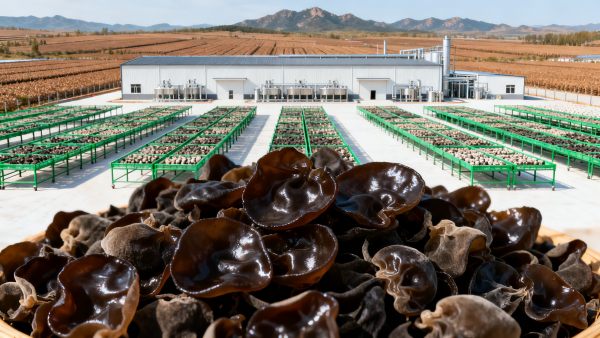
As China’s designated ‘Black Fungus Hometown,’ Dongning City is advancing a dual-certification pathway (ISO 22000 and EU Organic) for botanical extract producers, with the first three enterprises expected to receive certification by June 2024. With projected dry black fungus output exceeding 40,000 tonnes in 2026 and a total industry value approaching $390 million USD, this development carries measurable implications for international botanical ingredients buyers—particularly those sourcing polysaccharide- and triterpenoid-rich extracts for dietary supplements, functional foods, and cosmetics in the EU, Japan, and South Korea.
Event Overview
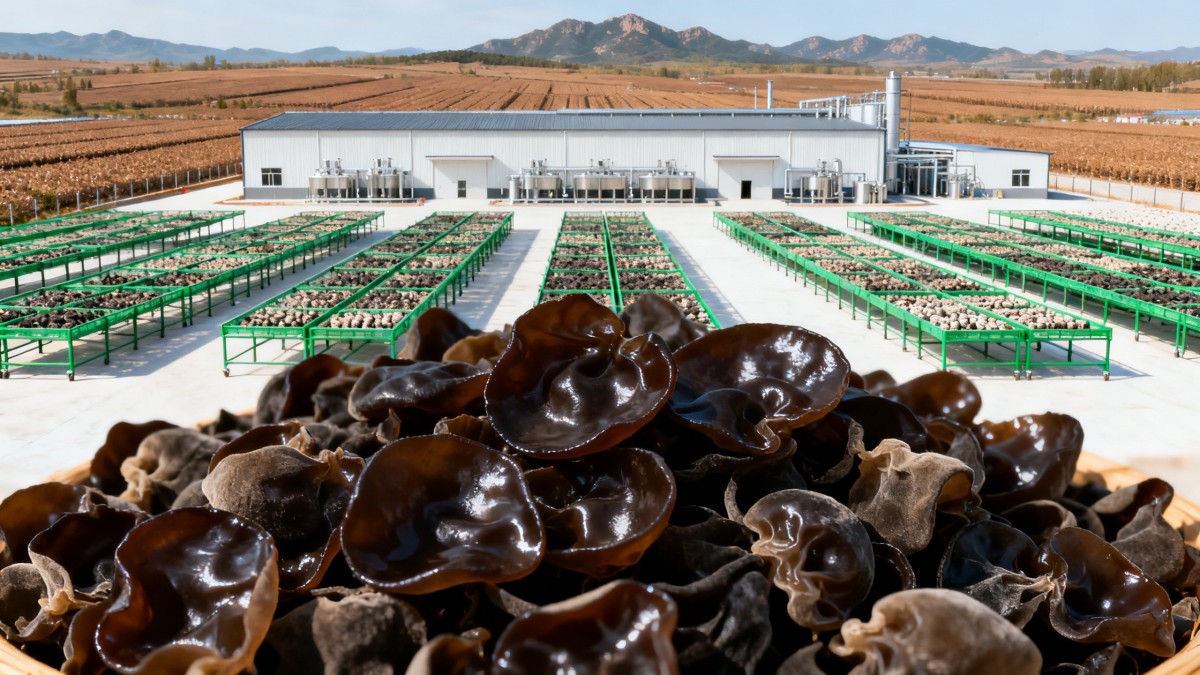
Dongning City has established a 150,000-mu (10,000 ha) green food raw material base and a 120,000-mu (8,000 ha) geographical indication–protected cultivation zone for black fungus. The local government has initiated a fast-track certification process aligned with ISO 22000 and EU Organic standards. Three botanical extract enterprises are scheduled to complete certification by June 2024. No specific start date for the fast-track program was disclosed; the timeline references current public statements about certification completion.
Which Subsectors Are Affected
Direct Importers & Distributors of Botanical Extracts (EU, Japan, South Korea)
These entities rely on consistent, traceable, and compliant supply chains for high-value fungal actives. Dongning’s dual-certified output introduces a new geographically concentrated source for polysaccharide- and triterpenoid-based materials—categories increasingly demanded for immune-support and adaptogenic formulations. Impact manifests in expanded supplier options, potential lead-time reductions for regionally proximate importers, and added pressure to verify chain-of-custody documentation under EU Organic Regulation (EC) No 834/2007.
Raw Material Sourcing Teams at Finished Product Manufacturers
Companies formulating dietary supplements or functional foods requiring standardized fungal extracts may now evaluate Dongning-sourced material as a complement—or alternative—to existing suppliers in other Asian regions or Latin America. The impact lies primarily in procurement flexibility: dual certification supports claims substantiation (e.g., ‘organic-compliant’ labeling in EU markets), while the scale of the local raw material base signals potential volume stability not yet demonstrated for smaller, single-farm cooperatives.
Contract Extraction & Toll Processing Facilities
Firms offering GMP-compliant extraction services may face intensified competition if Dongning-based producers expand in-house capabilities post-certification. Conversely, certified local processors could become strategic partners for foreign brands seeking co-manufacturing with organic-compliant infrastructure—provided they meet client-specific technical requirements (e.g., solvent residue limits, heavy metal thresholds).
Supply Chain Verification & Certification Support Providers
Third-party auditors, traceability platform vendors, and organic compliance consultants may see increased demand for support services in Northeast China. Dongning’s fast-track initiative reflects growing regional emphasis on export-aligned certifications—not just for bulk commodities but for midstream extract categories. This suggests near-term opportunities in audit readiness training, batch-level documentation systems, and EU Organic import certificate validation workflows.
What Relevant Companies or Practitioners Should Monitor and Do Now
Track official updates on certification scope and validity
Confirm whether the EU Organic certification applies to final extract products or only to upstream cultivation—and whether it covers all claimed active compounds (e.g., β-glucans, ganoderic acids). Monitor announcements from China’s Certification and Accreditation Administration (CNCA) and the EU’s Control Authority list for newly approved operators.
Assess eligibility and timing for pilot procurement
For buyers targeting Q3–Q4 2024 launches, engage with the three certified enterprises *after* June 2024 to request COAs, full analytical reports, and sample batches. Prioritize verification of heavy metals, microbial load, and residual solvents—parameters not automatically covered by organic or food safety certification alone.
Distinguish between policy signal and operational readiness
The fast-track program signals institutional prioritization—but does not guarantee immediate scalability. Evaluate actual throughput capacity, drying/extraction infrastructure, and cold-chain logistics capability before adjusting long-term supplier allocations. Avoid treating ‘certification achieved’ as equivalent to ‘commercially available at scale.’
Prepare internal alignment on documentation requirements
Ensure regulatory, quality assurance, and procurement teams jointly review EU Organic import rules—especially Annex III (permitted substances) and Article 28 (import certification procedures). Assign responsibility for maintaining updated importer registration numbers and ensuring batch-level traceability maps are integrated into ERP systems.
Editorial Perspective / Industry Observation
Observably, Dongning’s certification acceleration is best understood as an infrastructural signal—not yet a market-ready shift. It reflects coordinated provincial-level investment in upgrading upstream agricultural zones into compliant midstream ingredient hubs. Analysis shows that the real inflection point will occur not at certification issuance, but when third-party lab data, commercial shipment records, and EU customs clearance histories become publicly verifiable. From an industry perspective, this initiative matters less as a standalone supply source and more as a precedent: it demonstrates how GI-protected cultivation zones in China are evolving toward vertically integrated, regulation-responsive models—potentially replicable for other medicinal fungi (e.g., Ganoderma lucidum, Cordyceps militaris) and botanicals with strong regional cultivation heritage.
Conclusion: Dongning’s progress underscores a broader trend—geographically anchored raw material zones in China are increasingly structured to meet downstream regulatory expectations of mature export markets. However, its current significance lies in signaling intent and building foundational compliance capacity, rather than delivering immediate, large-scale alternatives to established global suppliers. For stakeholders, it is更适合理解为 a medium-term diversification enabler—not a short-term substitution trigger.
Source Attribution:
Primary information derived from official Dongning Municipal Government announcements regarding black fungus industrial development and certification timelines. Specific figures (390 million USD valuation, 40,000+ tonnes 2026 output, 150,000-/120,000-mu base areas, June 2024 certification target) are cited as publicly reported. Ongoing monitoring is advised for confirmation of EU Organic certification scope, issuing authority, and post-certification commercial performance metrics.
Related Intelligence
- Botanical ExtractsChoosing Botanical Extracts for Pharmaceuticals: Potency, Purity, and ComplianceBotanical extracts for pharmaceuticals: learn how to assess potency, purity, traceability, and GMP compliance for confident, regulatory-ready supplier selection.
- Botanical ExtractsBotanical Extracts Market Outlook: Supply, Pricing, and Buyer RisksBotanical extracts market insights on supply, pricing, quality control, and buyer risks—compare suppliers confidently and protect your sourcing strategy.
- Botanical ExtractsEurope Botanical Extracts Market: Key Growth Drivers, Risks, and OpportunitiesEurope botanical extracts market insights: explore growth drivers, regulatory risks, supply-chain challenges, and scalable opportunities for compliant, high-value ingredients.
The Morning Broadsheet
Daily chemical briefings, market shifts, and peer-reviewed summaries delivered to your terminal.
