

The Authority in Global Agricultural Chemistry & Bio-Resources
Guangxi Mangroves Adopt 'Low-Altitude+' Drone Surveillance for Crop Disease预警
Introduction
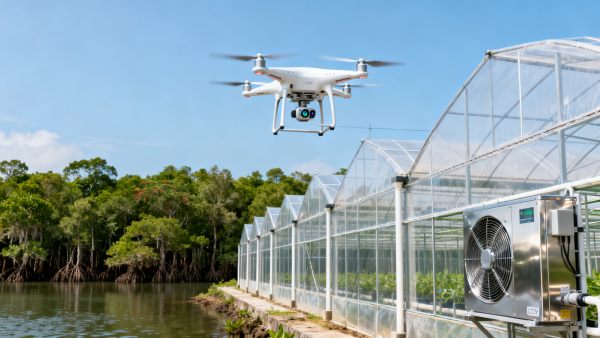
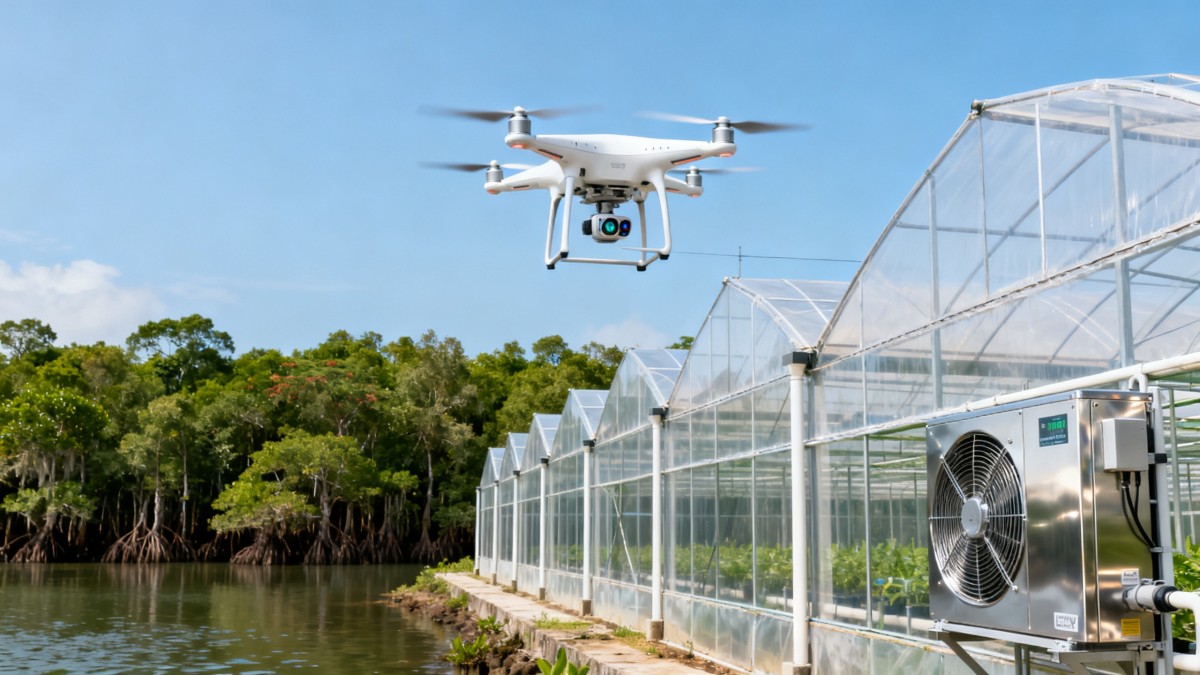
Guangxi’s mangrove conservation zones have recently deployed an integrated low-altitude drone inspection system coupled with an AI-powered pest and disease early-warning model. Though the exact implementation date remains unconfirmed, this initiative marks a significant operational shift in ecological monitoring—and, more broadly, signals a new pathway for cross-sector technology transfer into climate-controlled agriculture. Its relevance extends beyond environmental management: by packaging the model as a SaaS service interoperable with Climate Control & Ventilation (CCV) systems, the development directly impacts global greenhouse equipment supply chains, particularly in climate-stressed regions.
Event Overview
The Guangxi Computing Center has deployed its self-developed unmanned aerial vehicle (UAV) integrated management platform in the Beihai mangrove area. The platform enables AI-based identification of pests and diseases with 98.7% accuracy and delivers early warnings up to 72 hours in advance. The underlying predictive model has been containerized as a cloud-delivered SaaS offering, designed for integration into CCV system logic by equipment manufacturers. Export-ready versions of Chinese-made CCV hardware—embedded with the model—are now available to importers in the Middle East and Central/Eastern Europe, where high temperature–high humidity conditions elevate crop disease risk and associated batch losses.
Industries Affected
Direct Trading Enterprises
Export-oriented trading firms handling Chinese CCV equipment face immediate product differentiation pressure. With embedded AI forecasting capability, their offerings now carry verifiable value-added functionality—not just hardware compliance. This shifts buyer expectations toward performance benchmarks (e.g., warning lead time, false-negative rates), requiring traders to strengthen technical documentation, after-sales support capacity, and regional certification readiness (e.g., CE, SASO).
Raw Material Procurement Enterprises
Suppliers of sensors, edge-computing modules, and corrosion-resistant UAV components see rising demand specificity. The 72-hour warning requirement implies tighter latency tolerances and higher environmental resilience standards—especially for optical and thermal imaging units deployed in saline, humid coastal zones. Procurement strategies must now weigh durability under tropical microclimates against unit cost, rather than relying solely on generic industrial specs.
Manufacturing Enterprises
CCV system integrators and OEMs are under growing pressure to embed third-party AI models into proprietary control logic. Doing so demands API compatibility testing, real-time data pipeline validation, and cybersecurity hardening—particularly when models run inference at the edge. Manufacturers lacking modular software architecture may face longer time-to-market or increased integration licensing costs.
Supply Chain Service Providers
Logistics and after-sales service networks must adapt to ‘intelligent hardware’ requirements. Firmware updates, model retraining triggers, and remote diagnostics become part of service SLAs. In regions like the Middle East, where localized calibration data (e.g., regional pathogen strains) is scarce, service providers may need to co-develop feedback loops with growers—turning maintenance visits into data-capture opportunities.
Key Considerations and Recommended Actions
Validate Interoperability Before Market Entry
Importers and distributors should require third-party verification of model integration—specifically testing latency, failover behavior during network disruption, and compatibility with existing SCADA or BMS platforms. Relying solely on vendor claims risks field deployment failures.
Assess Local Data Relevance
The model was trained on mangrove-associated pathogens in Guangxi. Its efficacy in detecting tomato leaf mold in Jordanian greenhouses—or basil downy mildew in Polish tunnels—remains unverified. Buyers should commission localized validation trials before large-scale procurement.
Review Warranty and Liability Terms
Standard hardware warranties do not cover AI model performance degradation over time. Contracts must explicitly define responsibilities for model retraining, version updates, and liability in cases where false negatives contribute to crop loss—especially where regulatory frameworks lack precedent for algorithmic accountability.
Editorial Perspective / Industry Observation
Observably, this case reflects a broader trend: environmental monitoring infrastructure is no longer siloed from commercial agri-tech. What began as a regional conservation tool is now being repurposed as a globally exportable risk-mitigation layer. Analysis shows that the real strategic advantage lies not in the 98.7% accuracy figure itself—but in the standardization of model delivery (SaaS), which lowers adoption barriers for mid-tier CCV vendors. From an industry perspective, this blurs traditional boundaries between ecological research institutes and industrial software suppliers—a shift that may accelerate consolidation among vertical AI solution providers.
Conclusion
This initiative does not merely digitize mangrove surveillance; it demonstrates how domain-specific environmental AI can be operationally decoupled and redeployed across sectors. For the global CCV industry, it represents a tangible step toward outcome-based hardware value propositions—where ‘preventing disease’ becomes a measurable, billable service layer. A rational interpretation is that competitive differentiation will increasingly hinge on certified, field-validated AI integration—not just sensor density or actuator precision.
Source Attribution
Information sourced from official announcements by the Guangxi Zhuang Autonomous Region Computing Center and technical briefings issued by the Beihai Municipal Forestry Bureau. Note: Model validation reports for non-mangrove crops and overseas climatic conditions remain pending; ongoing field trials in Saudi Arabia and Romania are scheduled for Q3 2024 and will be tracked for material updates.
Related Intelligence
- Climate Control & VentilationHow to Specify Modular Control Panels for Poultry House Ventilation SystemsModular control panels for poultry ventilation: learn how to specify reliable I/O, sensors, alarms, variable-speed fans, and future-ready expansion.
- Climate Control & VentilationWhat Variable Speed Insights Matter Most When Optimizing Greenhouse Ventilation?Variable speed insights reveal how fan speed affects humidity, airflow, stability, and energy use in greenhouse ventilation. Learn what to adjust first for smarter, more reliable climate control.
- Climate Control & VentilationPoultry Ventilation for Broilers: How to Balance Airflow, Temperature, and Litter QualityPoultry ventilation for broilers made practical: learn how to balance airflow, temperature, humidity, and litter quality to improve flock health, growth, and house performance.
The Morning Broadsheet
Daily chemical briefings, market shifts, and peer-reviewed summaries delivered to your terminal.
