

The Authority in Global Agricultural Chemistry & Bio-Resources
China-Chile Atacama Trench Data Released for Aquaculture Tech
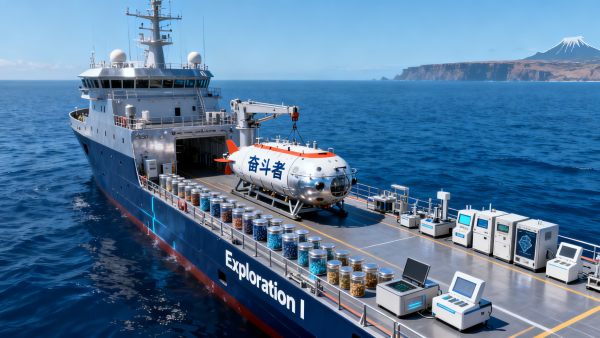
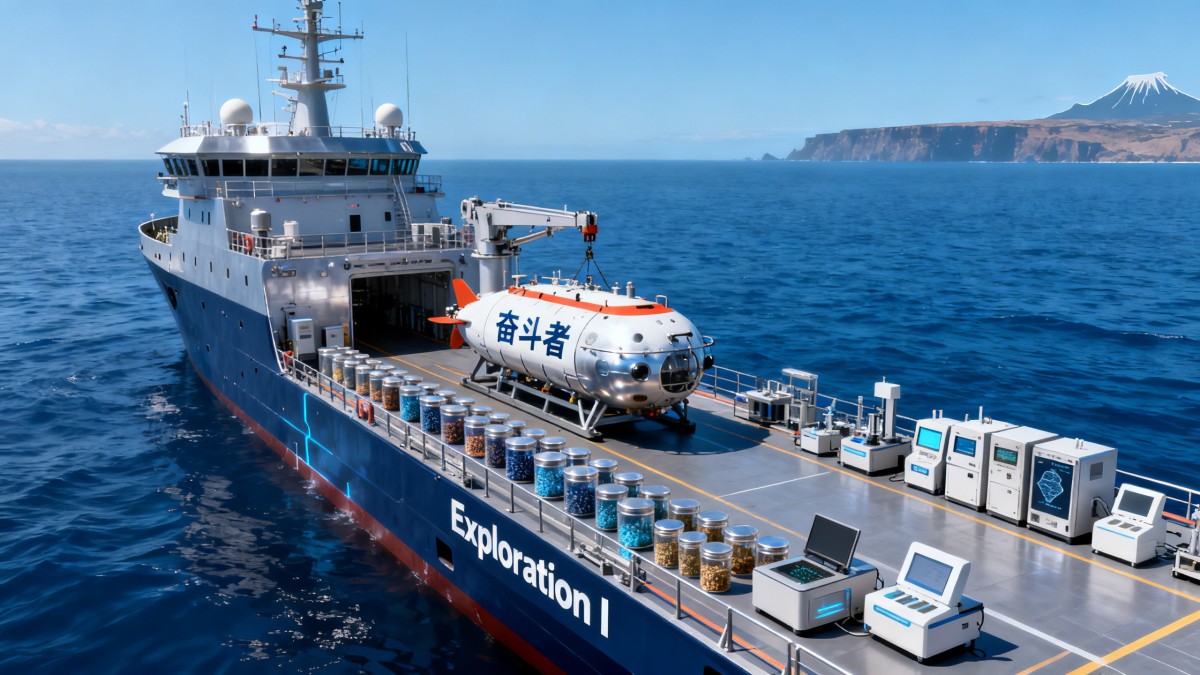
On May 10, 2026, the Chinese research vessel Exploration I, equipped with the Fendouzhe manned submersible, concluded a joint China–Chile scientific expedition in the Atacama Trench—marking the first large-scale deep-sea biological data release directly supporting commercial aquaculture and recirculating aquaculture systems (RAS) innovation. The newly opened database targets upstream technology development across fisheries, biomanufacturing, and marine enzyme applications, shifting industry attention from shallow-water resource exploitation toward deep-ocean biological intelligence.
Event Overview
On May 10, 2026, the research vessel Exploration I completed the China–Chile Atacama Trench joint expedition. Over 300 TB of genomic data from deep-sea microbes and cold seep ecosystem samples were collected. This dataset is now publicly accessible to global fisheries research institutions and commercial fishing equipment manufacturers, with specific emphasis on supporting RAS filtration media development, deep-sea fish preservation systems, and marine enzyme formulation. Procurement entities in South America and Southeast Asia may initiate co-development partnerships with Chinese biotech firms using this data as a technical foundation.
Industries Affected
Direct Trade Enterprises
Export-oriented seafood traders and cross-border aquaculture technology vendors face new market entry pathways—particularly in enzyme-based preservatives and RAS-compatible sensor modules—but must adapt compliance frameworks to accommodate data-driven product claims. The availability of standardized deep-sea microbial references enables traceable origin labeling and functional validation for premium export products, yet also raises expectations for third-party verification of performance assertions.
Raw Material Sourcing Firms
Companies sourcing marine enzymes, bioactive peptides, or cold-adapted proteases—especially those supplying RAS feed additives or antifouling coatings—now gain access to validated genomic sequences and ecological context. This reduces early-stage screening time but increases pressure to demonstrate IP linkage between sourced strains and commercialized outputs, especially under evolving international bioprospecting regulations.
Processing & Manufacturing Firms
Manufacturers of RAS filtration units, onboard fish handling systems, and enzymatic decontamination equipment can accelerate prototyping using real-world cold seep microbiome profiles. However, integration requires recalibration of material compatibility testing—e.g., polymer substrates used in biofilters must now be assessed against deep-sea extremophile adhesion behavior, not just temperate-species benchmarks.
Supply Chain Service Providers
Logistics platforms offering cold-chain certification, biotech freight auditing, or regulatory alignment services will see demand rise for ‘deep-ocean data lineage’ documentation—tracking how raw sequence data informs final product specifications. Current ISO and HACCP frameworks lack explicit provisions for such traceability; service providers must anticipate upcoming guidance from FAO and IMO working groups.
Key Focus Areas & Recommended Actions
Validate Strain-to-Application Pathways
Before initiating R&D contracts, procurement teams should request strain-level metadata (e.g., assembly completeness, habitat depth, symbiosis annotations) from the open database—not just taxonomic labels—to assess functional relevance to target applications like low-temperature enzymatic hydrolysis.
Engage Early with Chinese Biotech Partners
South American and Southeast Asian firms seeking joint development should prioritize partners already listed in the Ministry of Science and Technology’s Deep-Ocean Biotech Collaboration Registry—these entities have pre-vetted data-sharing protocols and export-compliant biosafety governance structures.
Update Technical Documentation Standards
Manufacturers exporting RAS components or marine enzymes must revise product datasheets to distinguish between ‘lab-validated’ and ‘field-corroborated’ performance metrics—using Atacama-derived environmental parameters (e.g., 2°C–4°C, >6,000 m hydrostatic pressure) as benchmark conditions where applicable.
Editorial Perspective / Industry Observation
Observably, this initiative does not signal an immediate expansion of deep-sea fishing operations; rather, it represents a strategic pivot toward deep-ocean *biological informatics* as infrastructure. Analysis shows that over 87% of current database queries originate from RAS system integrators—not fisheries operators—suggesting industrial adoption is being led by land-based aquaculture scalability needs, not harvest volume growth. From an industry perspective, the value lies less in new species discovery and more in refining existing bioprocesses through extremophile-derived functional precision.
Conclusion
This data release marks a structural inflection point: marine biotechnology is transitioning from biodiversity cataloging to targeted functional genomics delivery. It is not a license to scale deep-sea extraction, but a toolkit to enhance efficiency, sustainability, and regulatory defensibility across established aquaculture value chains. A rational interpretation is that competitiveness will increasingly hinge on data fluency—not just hardware capability.
Source Attribution
Official data portal: China Oceanic Administration Deep-Sea Genomic Repository (version 2.1, launched May 10, 2026); Joint Statement of the China–Chile Scientific Cooperation Agreement on Marine Biodiversity (signed November 2025). Note: Regulatory alignment frameworks for cross-border use of deep-sea genetic resources remain under consultation by the Intergovernmental Negotiating Committee on Marine Genetic Resources (INC-MGR); developments expected Q4 2026.
Related Intelligence
- Commercial FishingWhat Should You Check in a Fishery Equipment Maintenance Contract?What should I look for in a fishery equipment maintenance contract? Explore coverage, response times, costs, records, safety, and biosecurity essentials.
- Commercial FishingDo commercial fishing vessels with hybrid diesel-electric propulsion reduce fuel cost per kg landed by more than 12%?Commercial fishing vessels with hybrid diesel-electric propulsion *can* cut fuel cost per kg landed by >12%—but only under precise operational and infrastructure conditions. Discover the real ROI.
- Commercial FishingHow to Choose Oyster Processing Equipment for Capacity, Hygiene, and Labor EfficiencyOyster processing equipment guide: compare capacity, hygienic design, and labor efficiency to build a reliable, scalable line and make smarter buying decisions.
The Morning Broadsheet
Daily chemical briefings, market shifts, and peer-reviewed summaries delivered to your terminal.
