

The Authority in Global Agricultural Chemistry & Bio-Resources
China Mobile Launches National Integrated Computing Power Network
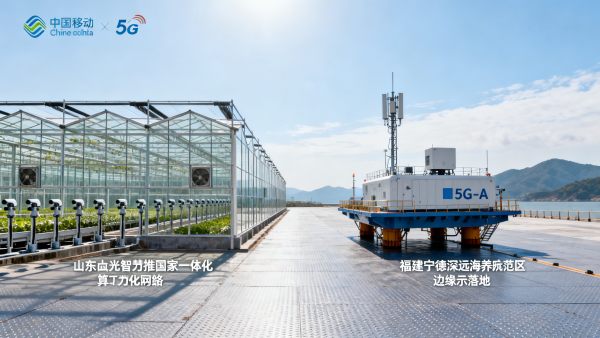
On May 8, 2026, China Mobile unveiled its ‘National Integrated Computing Power Network Technical Innovation System’, a policy-aligned infrastructure initiative designed to reshape real-time control capabilities across precision agriculture and aquaculture sectors. The rollout signals a material shift in how latency-sensitive industrial IoT systems are architected, deployed, and evaluated — particularly for global integrators and engineering contractors assessing Chinese technology suppliers’ operational readiness.
Event Overview
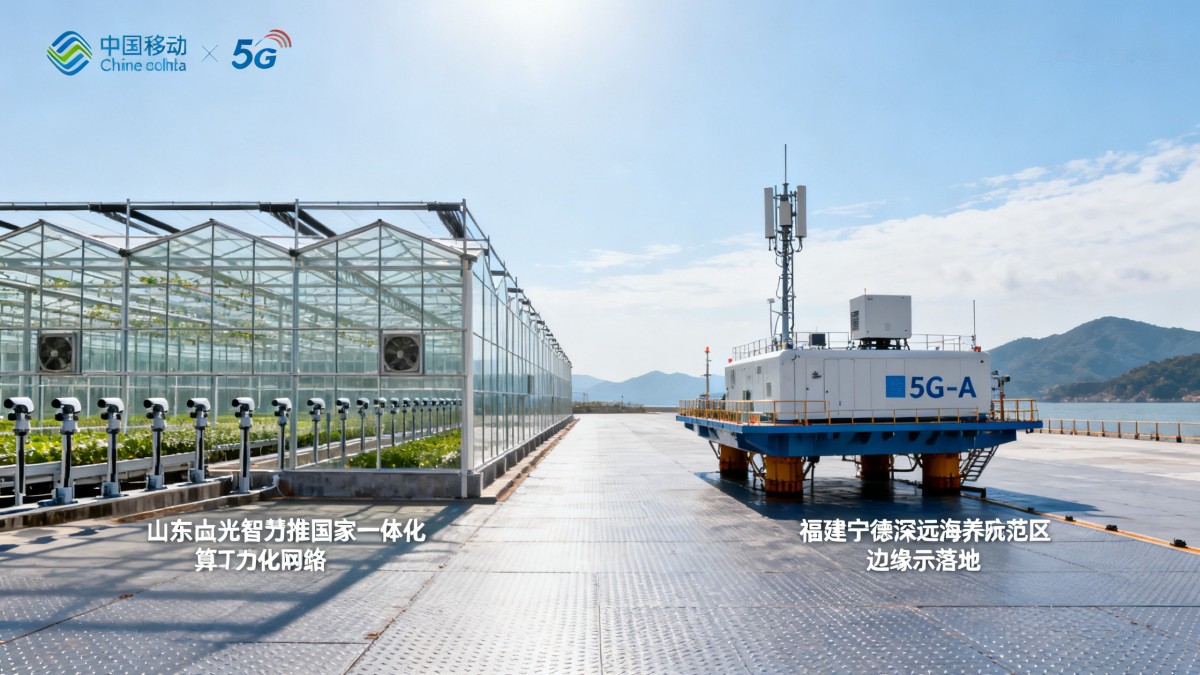
On May 8, 2026, China Mobile officially launched the ‘National Integrated Computing Power Network Technical Innovation System’. The system enables coordinated scheduling between low-latency edge nodes and centralized cloud resources. Pilot deployments are underway in the Shouguang smart greenhouse cluster (Shandong Province) and the Ningde deep-sea aquaculture demonstration zone (Fujian Province), achieving sub-80ms response time for environmental control commands and raising water quality anomaly detection accuracy to 99.2%. Overseas Smart Greenhouse integrators and RAS (Recirculating Aquaculture Systems)总承包 firms may now benchmark Chinese suppliers’ real-time control performance and system redundancy levels against this national-scale reference architecture.
Industries Affected
Direct Trade Enterprises
Export-oriented system integrators and turnkey solution providers face revised technical due diligence requirements. Buyers in Europe and North America increasingly reference domestic infrastructure benchmarks — such as China Mobile’s edge-cloud coordination latency and failover metrics — when evaluating supplier capability statements. This raises the bar for contractual SLA definitions, especially around command-response guarantees and fault recovery timelines.
Raw Material Procurement Enterprises
Suppliers of industrial-grade sensors, edge gateways, and ruggedized actuators must align product specifications with the network’s interoperability framework (e.g., time-synchronized data ingestion, deterministic packet delivery). Demand is shifting from generic IoT components toward modules certified for integration within the national computing power network’s security and timing protocols — potentially compressing margins for non-compliant vendors.
Manufacturing Enterprises
OEMs producing climate control hardware, automated feeding systems, or water treatment units now encounter upstream specification changes. For example, firmware must support dynamic load-balancing instructions issued by the central orchestration layer. Manufacturing lead times may extend as validation cycles incorporate network-level stress testing (e.g., simulated edge node failure under concurrent command bursts).
Supply Chain Service Providers
Logistics and commissioning service firms supporting cross-border deployment must adapt to new site-readiness criteria. Pre-installation audits now include verification of local 5G-Advanced coverage maps, edge node co-location feasibility, and time synchronization infrastructure (e.g., PTP-capable switches). These add procedural steps — and associated cost — to project handover workflows.
Key Focus Areas and Recommended Actions
Validate Edge-Cloud Interoperability Early in Design Phase
Integrators should request formal conformance reports from Chinese hardware vendors against China Mobile’s published API specifications for distributed task scheduling. Do not rely solely on vendor white papers; insist on third-party test logs from pilot sites like Shouguang or Ningde.
Update SLA Language for Latency-Critical Functions
Contracts governing remote operation of greenhouse or RAS systems should explicitly define response thresholds (e.g., ‘command-to-actuation ≤75ms at 95th percentile’) and clarify whether measurement includes wireless uplink delay — a factor now standardized in the national network’s monitoring dashboard.
Assess Redundancy Architecture Against Real-World Failure Modes
Rather than assuming N+1 hardware backup, evaluate how the supplier’s system handles cascading failures — e.g., loss of one edge node while two others undergo firmware update. China Mobile’s pilot documentation notes that automatic re-routing occurs within 120ms; verify whether your application stack supports stateful session recovery at that speed.
Editorial Perspective / Industry Observation
Observably, this is not merely an infrastructure upgrade — it represents a de facto standardization vector. Unlike prior regional smart-agriculture pilots, this initiative carries national policy weight, interconnects with the ‘East Data West Compute’ strategy, and introduces mandatory telemetry reporting formats for participating operators. Analysis shows that overseas RAS and greenhouse integrators are beginning to treat China Mobile’s architecture as a proxy for regulatory maturity — not just technical capability. From an industry perspective, the real impact lies less in raw performance numbers and more in how it reshapes procurement logic: capability is now assessed relative to a live, government-orchestrated reference system, not isolated lab tests.
Conclusion
This launch marks a structural inflection point — one where sovereign digital infrastructure begins directly influencing international B2B technical evaluation criteria. It does not replace existing certification regimes (e.g., CE, UL), but adds a new, context-specific dimension of trust: verifiable integration within a nationally scaled, real-time operational environment. A rational interpretation is that competitive differentiation will increasingly hinge on demonstrable alignment with such infrastructures — not just compliance with static standards.
Source Attribution
Official announcement: China Mobile Group Press Release, May 8, 2026 (ID: CM-CPN-20260508). Technical parameters confirmed via Shouguang Municipal Agricultural Digitalization Office field report (Q2 2026) and Ningde Deep-Sea Aquaculture Tech Task Force interim assessment (April 2026). Note: Full API documentation and edge node certification criteria remain pending publication; industry observers recommend monitoring China Mobile’s OpenLab portal for updates through Q3 2026.
Related Intelligence
- Smart GreenhouseSelecting Greenhouse Propagation Equipment for Hot, Humid Southeast Asian NurseriesGreenhouse propagation equipment Southeast Asia: discover how to select resilient irrigation, ventilation, benches, and automation for hot, humid nurseries.
- Smart GreenhouseWhat Are the Biggest Challenges in Agri-Tech Adoption in 2026?What are the biggest challenges in agri tech adoption for 2026? Explore cost, data, connectivity, skills, compliance, and ROI barriers.
- Smart GreenhouseHow Does Compact Greenhouse Technology Improve Yield in Space-Limited Growing Environments?Compact greenhouse technology improves yield in space-limited environments through better climate uniformity, vertical efficiency, precise irrigation, and repeatable crop performance.
The Morning Broadsheet
Daily chemical briefings, market shifts, and peer-reviewed summaries delivered to your terminal.
