

The Authority in Global Agricultural Chemistry & Bio-Resources
China Launches World’s First Shield Tunnel 'Tri-Mix Gas' Life Support System
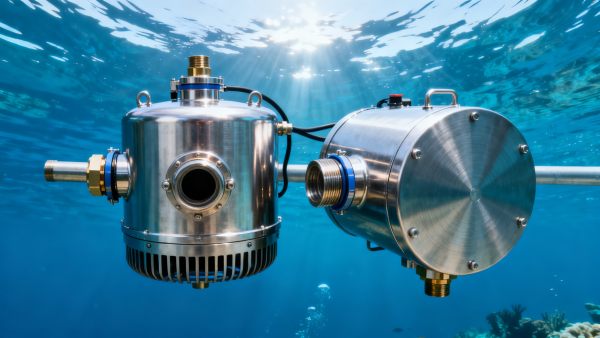
On May 8, 2026, China deployed the world’s first domestically developed shield tunneling hyperbaric ‘tri-mix gas’ life support system at the Jintang Subsea Tunnel of the Ningbo–Zhoushan Railway. The system enables precise gas blending and closed-loop purification under 4.8 MPa pressure. Its sealing and corrosion-resistant technologies have been transferred to commercial deep-sea aquaculture equipment by Aeration & Water Tech — particularly deep-water oxygenation pumps and submerged aeration units. This advancement is relevant for offshore aquaculture equipment manufacturers, deep-sea cage system integrators, and export-oriented marine technology suppliers, especially those engaged with salmon-producing markets such as Norway and Chile.
Event Overview
On May 8, 2026, China commissioned its independently developed global first-of-its-kind hyperbaric ‘tri-mix gas’ life support system for shield tunneling operations at the Jintang Subsea Tunnel. The system operates stably at 4.8 MPa pressure, delivering accurate gas mixture ratios (oxygen, helium, nitrogen) and continuous air purification. Concurrently, the system’s high-pressure sealing and anti-corrosion technologies have been adapted for use in Aeration & Water Tech’s deep-sea net-pen aeration equipment. As reported, this transfer extends service life by 40% for deep-water oxygenation pumps and submerged aeration units under equivalent operational conditions.
Industries Affected
Deep-Sea Aquaculture Equipment Exporters
Exporters supplying aeration systems or subsea infrastructure to Norway, Chile, and other cold-water salmon farming regions may face shifting technical expectations. Buyers in these markets increasingly benchmark equipment durability against ultra-high-pressure engineering standards — previously limited to civil infrastructure. The 40% extended service life claim, if verified in field deployment, could influence tender criteria and lifecycle cost calculations in procurement processes.
OEM Component Suppliers for Marine Aeration Systems
Suppliers of seals, pressure housings, corrosion-resistant alloys, or gas-distribution manifolds may see revised material and testing specifications from system integrators. The migration of tunnel-grade sealing and corrosion resistance into aquaculture hardware suggests demand for higher-grade materials (e.g., duplex stainless steels, ceramic-coated interfaces) and validation protocols aligned with hyperbaric industrial standards — not just marine-grade certifications.
Subsea Cage System Integrators
Integrators designing or deploying deep-water net-pen systems — especially those operating below 50 m depth — may reassess maintenance intervals and spare-part stocking strategies. A 40% increase in rated service life for core aeration units implies longer mean time between failures (MTBF), potentially altering OPEX models and service contract terms offered to farm operators.
What Relevant Enterprises or Practitioners Should Monitor and Do Now
Track official technical documentation and third-party verification reports
While the system has entered operation, independent validation of the 40% service-life extension under real-world aquaculture conditions — including biofouling exposure, cyclic loading, and long-term helium-permeation resistance — remains pending. Enterprises should monitor publications from China Academy of Railway Sciences or certification bodies such as DNV or ABS for test summaries.
Review procurement specifications for deep-water aeration units in key export markets
Buyers in Norway and Chile are beginning to reference hyperbaric engineering thresholds (e.g., 4.0+ MPa equivalent static pressure rating) in RFPs for next-generation offshore cages. Exporters should audit current product datasheets against emerging minimum requirements for seal integrity, material traceability, and gas-compatibility testing.
Distinguish between technology transfer announcement and commercial scalability
The reported technology migration is confirmed, but volume production timelines, supply chain localization (e.g., helium-compatible diaphragms, helium-recycling modules), and compatibility with existing control architectures (e.g., integration with SCADA-based farm management systems) are not yet disclosed. Procurement teams should avoid premature re-specification until scalability is publicly confirmed.
Engage early with Chinese OEM partners on joint validation pathways
For non-Chinese integrators seeking to adopt or co-certify the transferred technologies, initiating dialogue with Aeration & Water Tech or its domestic manufacturing partners on shared testing frameworks — e.g., accelerated corrosion trials per ISO 15156 or pressure-cycling endurance per EN 13445-3 — may help align qualification efforts ahead of formal market entry.
Editorial Perspective / Industry Observation
Observably, this development signals a cross-sectoral convergence of ultra-high-pressure civil engineering standards and commercial aquaculture hardware design — not merely a product upgrade. Analysis shows that the transfer of shield tunnel life-support sealing and corrosion mitigation techniques reflects a broader trend: marine infrastructure technologies are increasingly serving as technical baselines for offshore food production systems. It is more appropriately understood as an early-stage signal — rather than an immediate market shift — because field performance data across diverse oceanic environments (e.g., North Atlantic vs. Pacific fjords) remains unreported. The industry should therefore treat it as a leading indicator of tightening durability expectations, especially where deep-water deployment depth and operational uptime are becoming competitive differentiators.
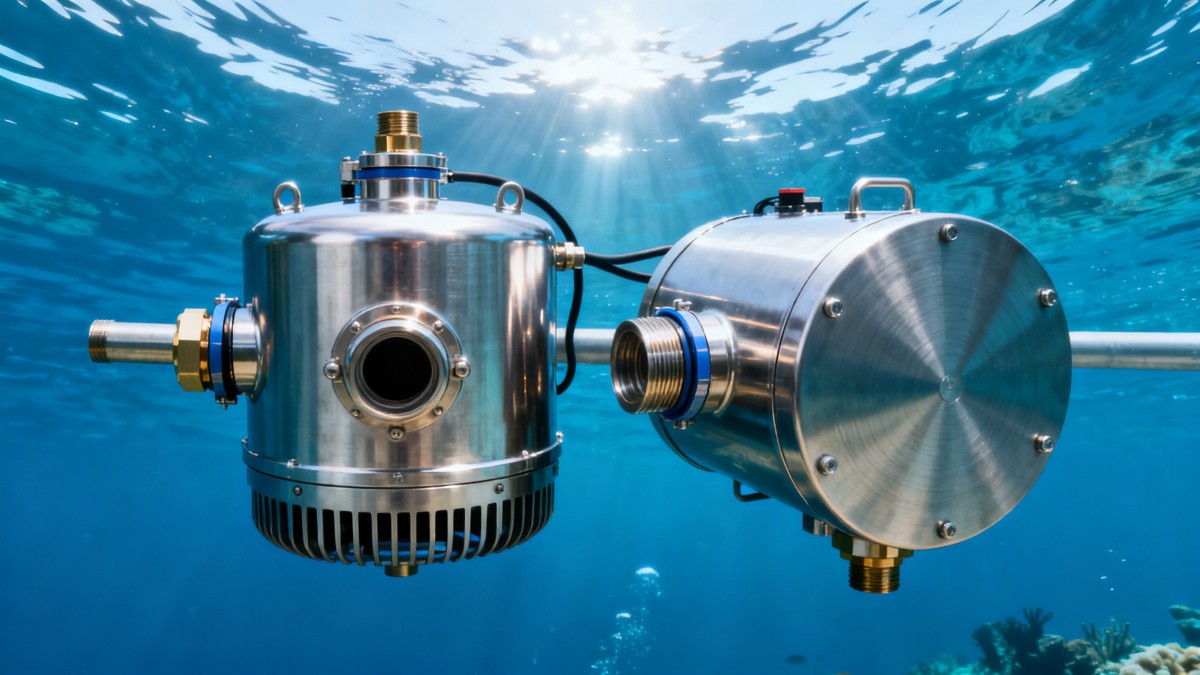
In summary, the deployment of China’s tri-mix gas life support system and its technology transfer to deep-sea aeration equipment marks a step toward harmonizing reliability benchmarks across infrastructure and aquaculture sectors. It does not represent an immediate disruption, but rather a recalibration point for durability standards in deep-water marine equipment. Current interpretation should focus on its role as a technical reference — not a de facto specification — until real-world validation data becomes available across international operating conditions.
Source: Public announcement by China State Railway Group Co., Ltd., May 8, 2026; technical parameters confirmed via press release issued by Zhejiang Provincial Department of Transport. Field performance data for Aeration & Water Tech equipment under commercial aquaculture conditions remains pending and is subject to ongoing observation.
Related Intelligence
- Aeration & Water TechSelecting Solids Filtration for Aquaculture: Flow Rates, Loading, and Fish WelfareSolids filtration aquaculture guide: compare flow rates, peak loading, capture performance, maintenance, and fish welfare to choose a reliable system.
- Aeration & Water TechWhat RO water treatment systems deliver consistent 98% salt rejection at 25°C with feed TDS over 3,000 ppm?RO water treatment systems that deliver proven 98% salt rejection at 25°C with >3,000 ppm TDS—engineered for API synthesis, aquaculture & grain processing.
- Aeration & Water TechCan pond aeration systems maintain dissolved oxygen above 5 mg/L during summer stratification in catfish ponds?Pond aeration systems can sustain >5 mg/L DO during summer stratification—when engineered for mixing *and* oxygen transfer. See field-proven data & design essentials.
The Morning Broadsheet
Daily chemical briefings, market shifts, and peer-reviewed summaries delivered to your terminal.
