

The Authority in Global Agricultural Chemistry & Bio-Resources
Singapore Launches Smart Greenhouse Export Accelerator
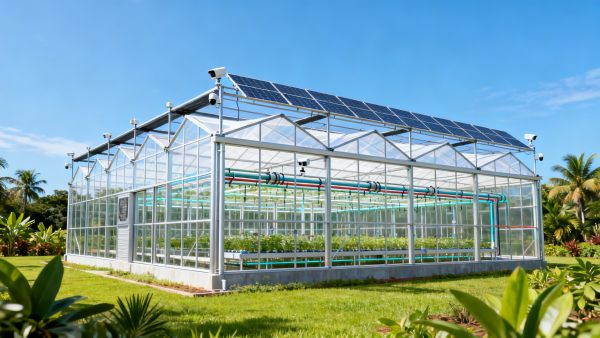
Singapore’s Enterprise Development Board (EnterpriseSG) launched the ‘Smart Greenhouse Export Accelerator’ initiative on 3 May 2026. The program targets Chinese turnkey smart greenhouse export projects that comply with ISO 22000 and Singapore’s SPRING Green Building Standard. It introduces a pre-inspection and green-channel customs clearance framework — reducing customs inspection time to under 24 hours, accelerating phytosanitary certificate issuance by 50%, and granting access to Singapore’s Agri-Tech Park as a joint testing site. This development is particularly relevant for agri-tech exporters, modular construction firms, food safety-certified system integrators, and cross-border supply chain service providers.
Event Overview
On 3 May 2026, EnterpriseSG officially commenced the ‘Smart Greenhouse Export Accelerator’. The initiative applies exclusively to Chinese-origin turnkey smart greenhouse export projects meeting two technical benchmarks: compliance with ISO 22000 (food safety management systems) and alignment with Singapore’s SPRING Green Building Standard. Confirmed operational provisions include: (1) pre-inspection arrangements prior to shipment; (2) customs inspection turnaround capped at 24 hours; (3) 50% reduction in processing time for official phytosanitary certificates; and (4) eligibility for joint validation and pilot deployment at Singapore’s Agri-Tech Park.
Industries Affected
Turnkey Exporters & System Integrators
Companies delivering end-to-end smart greenhouse solutions from China are directly eligible for the program’s streamlined clearance and testing benefits. Impact arises from reduced port dwell time, faster regulatory sign-off, and early-stage validation opportunities in Singapore’s controlled agricultural environment — all of which lower market-entry risk for new deployments.
Modular Construction & Prefab Component Manufacturers
Firms supplying structural, climate-control, or automation subsystems integrated into certified turnkey projects may face stricter upstream documentation requirements. As the program ties eligibility to full-system compliance, component-level traceability, ISO 22000-aligned process records, and conformity with SPRING’s sustainability metrics become critical for inclusion in approved project bids.
Agri-Tech Equipment Suppliers
Vendors of sensors, irrigation controllers, AI-driven monitoring hardware, or energy-efficient HVAC units embedded in qualifying greenhouses will experience indirect but tangible impact. Their integration into certified projects triggers demand for third-party verification of interoperability and environmental performance — potentially shifting procurement preferences toward vendors with Singapore-recognized test reports or local certification partnerships.
Cross-Border Logistics & Compliance Service Providers
Freight forwarders, customs brokers, and regulatory consultants supporting China–Singapore agri-tech shipments must adapt to new procedural expectations: pre-shipment verification coordination, tighter documentation windows for phytosanitary applications, and familiarity with SPRING Green Building Standard interpretation. Failure to align with these workflow changes risks delays even for otherwise compliant consignments.
What Stakeholders Should Monitor and Do Now
Track Official Guidance on Eligibility Criteria
EnterpriseSG has not yet published detailed checklists for ‘turnkey project’ verification or SPRING Green Building Standard interpretation for greenhouse-specific applications. Stakeholders should monitor updates from EnterpriseSG and Singapore’s Building and Construction Authority (BCA), especially regarding modular assembly methods, material sustainability thresholds, and data security requirements for connected systems.
Confirm Alignment with Both ISO 22000 and SPRING Standards
ISO 22000 certifies food safety processes — not physical infrastructure. SPRING Green Building Standard evaluates building performance. Companies must verify whether their greenhouse design, materials, energy systems, and operational protocols collectively satisfy both frameworks. Dual compliance cannot be assumed from one certification alone.
Distinguish Between Policy Signal and Operational Readiness
The program is active as of 3 May 2026, but implementation depends on capacity at Singapore’s Agri-Tech Park and customs inspection nodes. Early adopters should treat the first quarter post-launch as a calibration period — expecting possible adjustments in document review timelines or on-site validation scheduling.
Prepare Joint Testing Documentation in Advance
Access to Singapore’s Agri-Tech Park requires formal application and technical scoping. Exporters planning to use this facility should compile system architecture diagrams, sensor calibration logs, environmental control algorithms, and energy consumption baselines before initiating engagement — as these are likely prerequisites for joint testing approval.
Editorial Perspective / Industry Observation
Observably, this initiative functions less as a broad trade liberalization measure and more as a targeted regulatory sandbox for high-integrity agri-tech exports. Its emphasis on pre-inspection, dual-standard compliance, and co-development infrastructure signals Singapore’s intent to position itself as a trusted validation hub — not merely a destination market. Analysis shows the program prioritizes quality assurance over volume facilitation: eligibility hinges on verifiable system-level conformance, not individual component certifications. From an industry perspective, it reflects a growing global trend where food safety, climate resilience, and digital traceability converge as non-negotiable conditions for market access in advanced economies. Current relevance lies in its role as an early indicator of tightening technical gateways for agrifood infrastructure exports — especially where IoT-enabled systems intersect with regulated food production environments.
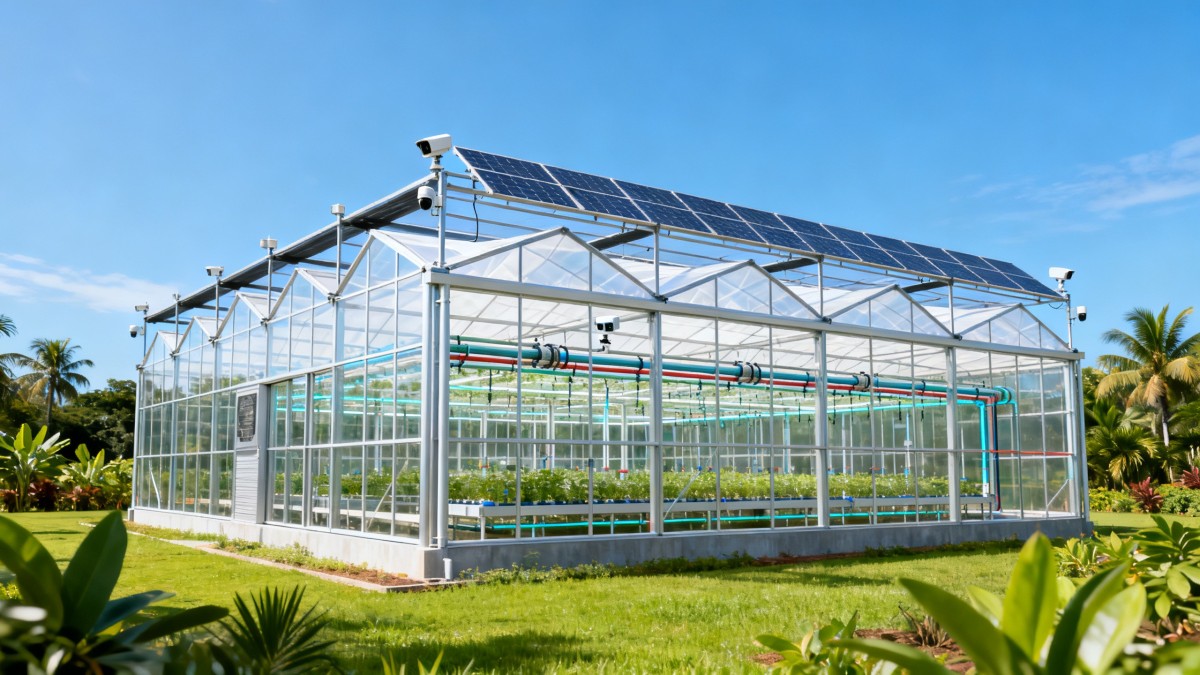
Conclusion: The ‘Smart Greenhouse Export Accelerator’ is best understood not as a general tariff or logistics improvement, but as a structured pathway for technically robust, standards-aligned agri-tech exports to undergo accelerated regulatory acceptance in Singapore. Its immediate value is procedural efficiency for qualified projects; its longer-term significance lies in setting precedent for how integrated food-tech infrastructure may be evaluated across other ASEAN and OECD markets. At present, it is more accurately interpreted as a standards-based access mechanism than a blanket trade facilitation tool.
Source: Enterprise Singapore (EnterpriseSG) official announcement, 3 May 2026.
Noted for ongoing observation: Specific eligibility assessment procedures, SPRING Green Building Standard annexes applicable to controlled-environment agriculture, and Agri-Tech Park joint testing capacity allocation criteria.
Related Intelligence
- Smart GreenhouseSelecting Greenhouse Propagation Equipment for Hot, Humid Southeast Asian NurseriesGreenhouse propagation equipment Southeast Asia: discover how to select resilient irrigation, ventilation, benches, and automation for hot, humid nurseries.
- Smart GreenhouseWhat Are the Biggest Challenges in Agri-Tech Adoption in 2026?What are the biggest challenges in agri tech adoption for 2026? Explore cost, data, connectivity, skills, compliance, and ROI barriers.
- Smart GreenhouseHow Does Compact Greenhouse Technology Improve Yield in Space-Limited Growing Environments?Compact greenhouse technology improves yield in space-limited environments through better climate uniformity, vertical efficiency, precise irrigation, and repeatable crop performance.
The Morning Broadsheet
Daily chemical briefings, market shifts, and peer-reviewed summaries delivered to your terminal.
