

The Authority in Global Agricultural Chemistry & Bio-Resources
ECHA Extends Nanocarrier Review to Food-Grade Enzymes
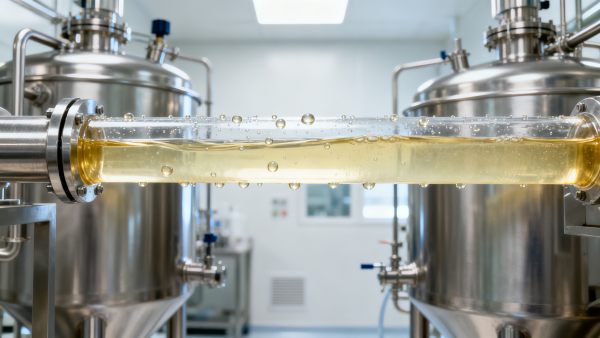
On 9 May 2026, the European Chemicals Agency (ECHA) announced an expansion of its ongoing专项 review of botanical extracts used as nanocarriers to include food-grade enzyme preparations. This development directly affects exporters of food-grade enzymes—particularly those from China with ISO 22000 or FSSC 22000 certification—and signals a tightening of regulatory scrutiny on nanoscale delivery systems in food-related applications.
Event Overview
On 9 May 2026, ECHA formally extended its existing targeted assessment of botanical extract-based nanocarriers to cover food-grade enzyme products containing nanoscale carriers or delivery systems. Under the updated requirement, all exporters of such enzymes must submit a complete toxicological data package—including 90-day subchronic toxicity studies, digestive stability assessments, and bioaccumulation evaluations—effective from 1 October 2026.
Which Subsectors Are Affected
Direct Exporters (EU-bound Enzyme Suppliers)
These companies are subject to the new submission obligation. The requirement applies specifically to products placed on the EU market that incorporate nanoscale carriers—even if the enzyme itself is conventional—making compliance mandatory for market access.
Manufacturers Using Enzymes in Final Food Products
While not directly responsible for the toxicological dossier, food producers incorporating these enzymes may face upstream supply chain disruptions or delays if suppliers fail to meet the deadline. Ingredient traceability and documentation readiness become critical for their own EU food safety audits.
Ingredient Sourcing & Contract Manufacturing Firms
Firms sourcing or blending enzymatic ingredients for export must now verify whether carrier systems in supplied enzymes fall under ECHA’s expanded scope. Absence of clarity on nanoscale formulation may trigger requalification or reformulation needs.
Regulatory & Compliance Service Providers
Consultancies and testing labs supporting enzyme exporters will see increased demand for nanotoxicology study coordination, digestive stability method validation, and dossier compilation aligned with ECHA guidance—notably for non-animal test strategies where applicable.
What Relevant Companies or Practitioners Should Focus On — And How to Respond Now
Monitor official ECHA guidance updates and timeline confirmations
ECHA has not yet published detailed technical annexes or accepted test guideline references for digestive stability or bioaccumulation assessments specific to enzyme-nanocarrier combinations. Stakeholders should track ECHA’s ‘Nanomaterials’ section and upcoming CLH (Classification, Labelling and Hazard) opinions for alignment signals.
Identify and document carrier system specifications across current enzyme SKUs
Many food-grade enzymes use plant-derived excipients (e.g., lecithin, gum arabic, or cyclodextrin complexes) that may unintentionally form nanostructures under processing conditions. Exporters should audit formulation data sheets—not just active ingredient declarations—to determine whether particle size distribution falls below 100 nm in relevant matrices.
Distinguish between regulatory signal and enforceable obligation
The 1 October 2026 deadline applies only to new or renewed product registrations under REACH Annex VII–X frameworks—not retroactively to already placed-on-market batches. However, customs or market surveillance authorities may request evidence of compliance upon import, meaning documentation readiness is operationally urgent even if formal registration is not yet triggered.
Initiate internal cross-functional alignment and supplier engagement now
Companies should convene R&D, regulatory affairs, QA/QC, and procurement teams to map affected SKUs, assess feasibility of alternative non-nano carriers, and initiate dialogue with third-party labs capable of generating required studies. Given typical study durations (e.g., 90-day rodent trials), early scoping avoids bottlenecks ahead of Q3 2026.
Editorial Perspective / Industry Observation
Observably, this extension reflects ECHA’s broader shift toward functional definition—focusing on the presence and behavior of nanoscale structures in final-use contexts, rather than solely on intentional nanomaterial synthesis. Analysis shows it is less a sudden enforcement action and more a procedural escalation within an evolving risk-assessment framework for food-contact biocatalysts. From an industry perspective, the move signals growing convergence between chemical safety governance (REACH) and food safety oversight (EFSA), particularly where delivery technologies blur traditional boundaries between ‘additive’, ‘enzyme’, and ‘carrier’. Current attention should therefore focus on how EFSA may align its evaluation criteria with ECHA’s toxicological expectations—especially regarding digestibility endpoints.
Conclusion
This update marks a material step in the regulatory treatment of advanced delivery systems within food enzymology. It does not introduce a ban or prohibition but establishes a mandatory evidentiary threshold for continued market access. For affected enterprises, the most appropriate interpretation is not alarm—but structured preparation: the requirement is specific, time-bound, and technically scoped. Its significance lies not in novelty, but in operational consequence: compliance hinges on precise characterization, not broad reformulation.
Information Sources
Primary source: European Chemicals Agency (ECHA) official notice, published 9 May 2026.
Note: ECHA’s technical guidance documents specifying acceptable test methods and dossier format remain pending; stakeholders should monitor ECHA’s Nanomaterials webpage for updates. No third-party or industry association statements have been confirmed at time of publication.
Related Intelligence
- Food Grade EnzymesIs There a Global Standard for Biochemical Engineering Product Quality?Is there a global standard for biochemical engineering product quality? Explore GMP, ISO, traceability, and supplier checks for confident global sourcing.
- Food Grade EnzymesHow Enzymes for Cracker Formulation Improve Texture and Shelf LifeEnzymes for cracker formulation can enhance dough handling, crisp texture, and shelf life. Explore targeted enzyme strategies for consistent, high-quality crackers.
- Food Grade EnzymesWhat to Look for in Enzyme Blend Ingredients for Food and Supplement FormulasExplore enzyme blend ingredients for food and supplement formulas—learn how to assess activity, stability, compliance, and performance for smarter sourcing.
The Morning Broadsheet
Daily chemical briefings, market shifts, and peer-reviewed summaries delivered to your terminal.
