

The Authority in Global Agricultural Chemistry & Bio-Resources
AI Terminal Standard for Climate Control Devices Takes Effect
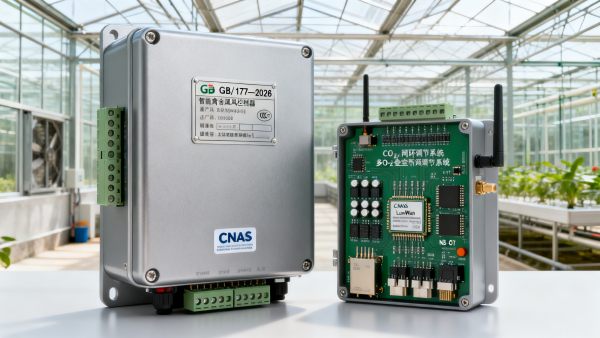
On May 8, 2026, China’s Ministry of Industry and Information Technology (MIIT) and two other national departments jointly issued the Guideline for Intelligence Grading of Artificial Intelligence Terminals (GB/Z 177—2026). This marks the first time agricultural environmental control equipment—including intelligent poultry house ventilation controllers and greenhouse CO₂ closed-loop regulation systems—has been formally included under the regulatory scope of AI terminals. The standard introduces mandatory intelligence grading certification for export-oriented climate control and ventilation devices, directly affecting manufacturers, exporters, and supply chain stakeholders serving key Middle Eastern markets.
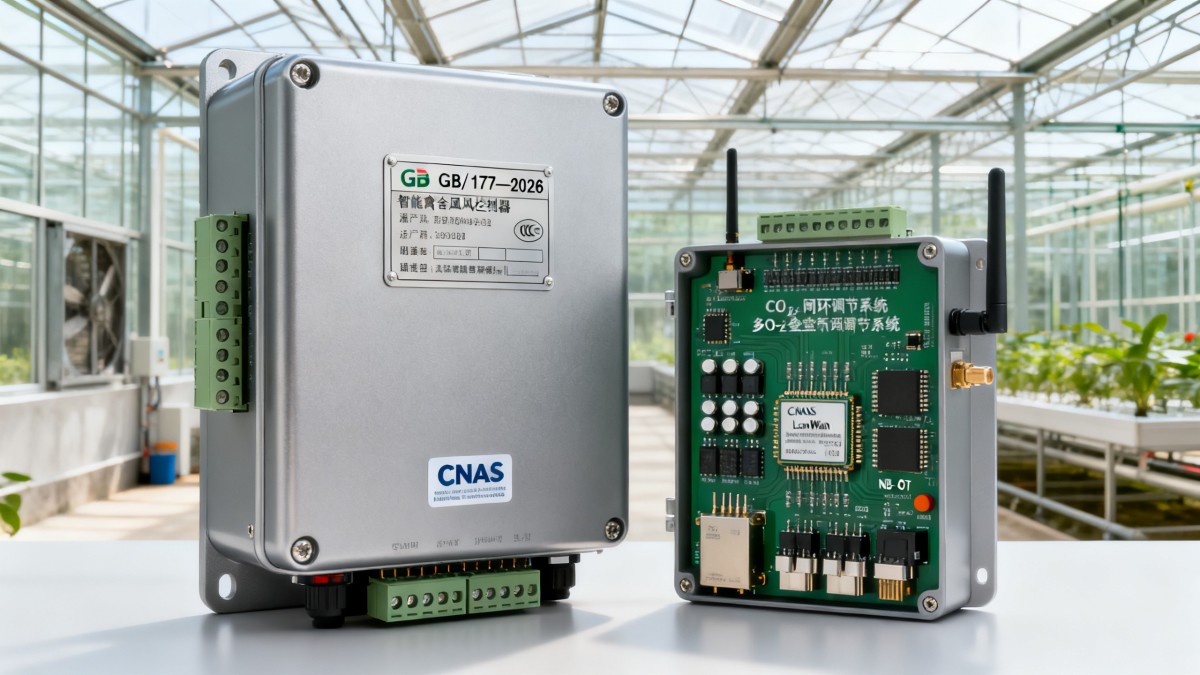
Event Overview
On May 8, 2026, MIIT, the State Administration for Market Regulation (SAMR), and the Ministry of Agriculture and Rural Affairs jointly released GB/Z 177—2026. The guideline defines three foundational capabilities required for AI-enabled climate control and ventilation terminals intended for export: environmental perception, autonomous strategy generation, and self-diagnosis of anomalies. Compliance must be verified through third-party testing at CNAS-accredited laboratories. Saudi Arabia and the United Arab Emirates have explicitly adopted this standard as a prequalification requirement for tenders under their national Smart Greenhouse initiatives.
Industries Affected
Direct trading enterprises: Exporters of climate control and ventilation equipment face new market access barriers in Gulf Cooperation Council (GCC) countries. Certification is now a prerequisite—not just a competitive advantage—for participation in public-sector greenhouse modernization projects. Lead times for certification may delay shipment schedules, while non-compliant legacy models risk exclusion from upcoming tenders.
Raw material procurement enterprises: Suppliers of embedded sensors (e.g., multi-parameter air quality modules), edge AI chips, and certified communication modules (e.g., LoRaWAN or NB-IoT with local data processing capability) are seeing revised technical specifications in procurement requests. Demand is shifting toward components that support real-time inference and on-device model retraining—capabilities previously optional in industrial-grade environmental hardware.
Manufacturing enterprises: OEMs and ODMs producing ventilation controllers, fan arrays, and CO₂ dosing systems must redesign firmware architecture to integrate rule-based decision engines and anomaly detection logic. Hardware revisions may include adding local compute units (e.g., NPU-enabled microcontrollers) and expanding memory for model storage—impacting BOM cost and time-to-market.
Supply chain service enterprises: Logistics providers, customs brokers, and certification consultants now need to verify documentation alignment between device labeling, test reports, and GCC tender annexes. Notably, some UAE procurement portals now require digital submission of CNAS-issued grading certificates alongside CE and SASO markings—introducing new verification checkpoints in the export workflow.
Key Focus Areas and Recommended Actions
Confirm device eligibility under GB/Z 177—2026’s scope definition
Not all ventilation products qualify as “AI terminals.” Enterprises should cross-check whether their product meets the standard’s functional threshold—specifically, whether it performs closed-loop control using real-time sensor input without cloud dependency. Standalone timers or manually scheduled controllers fall outside the scope.
Prioritize CNAS-accredited labs with GCC-recognized test protocols
While CNAS accreditation is mandatory, not all accredited labs currently offer the full suite of GB/Z 177—2026 grading tests (Levels 1–3). Firms should select labs that have published validation reports for environmental perception latency, strategy adaptability under variable load, and false-positive rates in self-diagnosis—metrics referenced in recent UAE tender evaluations.
Update technical documentation for GCC regulatory submissions
Certification reports must accompany device manuals translated into Arabic and annotated with traceable references to each of the three required capabilities. For example, the manual section on “ventilation mode switching” must explicitly cite the corresponding clause in the test report covering autonomous strategy generation under changing CO₂ and humidity thresholds.
Editorial Perspective / Industry Observation
Observably, this standard does not represent a standalone compliance hurdle—but rather the first institutional signal of a broader shift toward performance-based regulation for smart agri-tech exports. Analysis shows that the inclusion of agricultural HVAC equipment reflects an emerging consensus: environmental control is no longer viewed as mechanical infrastructure but as an intelligent subsystem within digital farm operating systems. From an industry perspective, the linkage between domestic standardization and foreign procurement policy—particularly in GCC states investing heavily in food security—suggests a growing trend where Chinese technical guidelines gain de facto international influence through bilateral project frameworks. Current evidence does not yet indicate harmonization with EU AI Act requirements; however, the emphasis on on-device autonomy and explainable decision logic may ease future alignment efforts.
Conclusion
This standard signals a structural evolution—not merely a procedural update—in how climate control technologies are evaluated for global deployment. Rather than treating ventilation as a utility function, regulators and buyers now assess it as an adaptive node in intelligent agriculture ecosystems. A rational conclusion is that competitiveness in this space will increasingly depend less on unit cost and more on verifiable, localized intelligence performance—making early investment in grading-aligned R&D and documentation infrastructure a strategic priority, not a compliance afterthought.
Source Attribution
Official sources: GB/Z 177—2026, issued by MIIT, SAMR, and MOA on May 8, 2026; UAE Ministry of Climate Change and Environment (MOCCAE) Tender Notice No. SGH-2026-042 (published April 12, 2026); Saudi Authority for Accredited Conformity Assessment Bodies (SAACAB) Circular SAACAB/STD/2026/017. Note: Implementation timelines for Level 2 and Level 3 grading in GCC public tenders remain subject to further notice—monitoring recommended.
Related Intelligence
- Climate Control & VentilationHow to Specify Modular Control Panels for Poultry House Ventilation SystemsModular control panels for poultry ventilation: learn how to specify reliable I/O, sensors, alarms, variable-speed fans, and future-ready expansion.
- Climate Control & VentilationWhat Variable Speed Insights Matter Most When Optimizing Greenhouse Ventilation?Variable speed insights reveal how fan speed affects humidity, airflow, stability, and energy use in greenhouse ventilation. Learn what to adjust first for smarter, more reliable climate control.
- Climate Control & VentilationPoultry Ventilation for Broilers: How to Balance Airflow, Temperature, and Litter QualityPoultry ventilation for broilers made practical: learn how to balance airflow, temperature, humidity, and litter quality to improve flock health, growth, and house performance.
The Morning Broadsheet
Daily chemical briefings, market shifts, and peer-reviewed summaries delivered to your terminal.
