

The Authority in Global Agricultural Chemistry & Bio-Resources
China's Shipbuilding Q1 Orders Up 195% — Fishing Vessel Equipment Export Capacity Strained
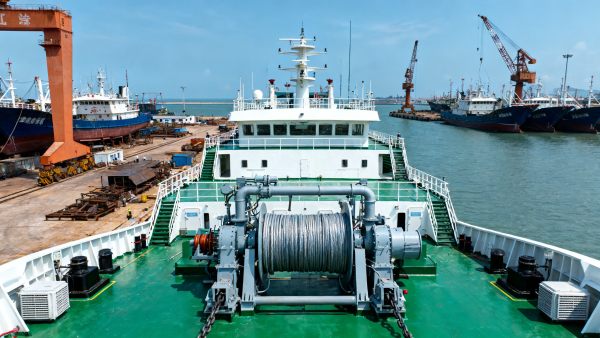
On 2026-05-12, industry data revealed a sharp surge in China’s shipbuilding new orders for Q1 2026 — up 195.2% year-on-year — with significant implications for global commercial fishing equipment supply chains. The spike is driven largely by strong demand for远洋 fishing vessels, tightening delivery capacity for specialized marine equipment and reshaping procurement strategies across Asia-Pacific fisheries.
Event Overview
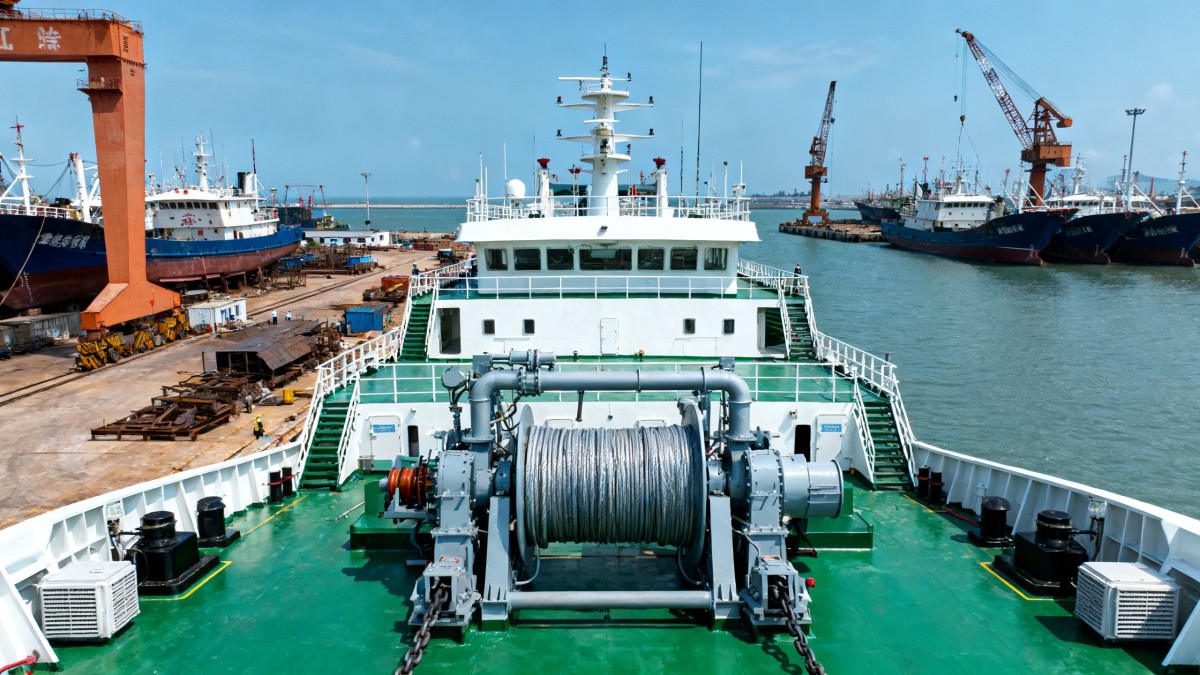
In Q1 2026, China’s shipbuilding industry secured 59.53 million deadweight tons (DWT) of new orders, a 195.2% increase YoY. Orders for远洋 fishing vessels — including offshore fish processing ships and purse seine vessels — accounted for 34% of the total. Lead times at major marine equipment manufacturers have extended to Q2 2027; delivery timelines for Commercial Fishing–specific systems — such as hydraulic purse seine winches and fish hold low-temperature recirculation systems — now range from 6 to 8 months. Meanwhile, fisheries operators in Southeast Asia are increasingly adopting CIF + technical supervision contracts to secure production slots.
Industries Affected
Direct Trade Enterprises: Exporters of fishing vessel equipment face mounting pressure to honor commitments amid extended lead times. Contractual penalties, customer re-negotiations, and loss of market share to non-Chinese suppliers (e.g., South Korean or European OEMs with shorter backlogs) are emerging risks — particularly for firms without buffer inventory or multi-source agreements.
Raw Material Procurement Enterprises: Suppliers of high-grade stainless steel, marine-grade aluminum alloys, and refrigeration-grade copper tubing report rising order volumes and tighter allocations. Price volatility has intensified, with spot premiums for cryogenic-grade components up 12–18% since early 2026. Procurement teams must now engage earlier in design cycles and pre-book material batches to avoid line stoppages.
Manufacturing Enterprises: Tier-1 and Tier-2 marine equipment makers — especially those specializing in hydraulic systems and integrated cold-chain solutions — are operating at >110% nominal capacity. Overtime costs, subcontractor dependency, and quality control strain are increasing. Notably, firms lacking certified ISO 8501–3 surface prep and ASME Section VIII compliance face delays in third-party certification required for vessel class approval.
Supply Chain Service Enterprises: Freight forwarders and maritime logistics providers report surging demand for consolidated container shipments from Jiangsu and Guangdong to Vietnam, Indonesia, and the Philippines. However, vessel space for oversized equipment (e.g., 8-m-long winch assemblies) remains constrained on regional feeder routes. Customs brokers note increased scrutiny of dual-use export documentation under updated MOCAR (Ministry of Commerce & Regulation) guidelines effective April 2026.
Key Considerations and Response Measures
Adopt phased delivery and modular commissioning
Given 6–8-month system lead times, buyers should negotiate split deliveries — e.g., structural frames and control cabinets shipped first, followed by commissioned subsystems — to accelerate vessel integration and reduce idle yard time.
Prioritize technical supervision clauses in contracts
As confirmed by Southeast Asian buyer behavior, incorporating third-party technical oversight (e.g., ABS or DNV-certified inspectors) during factory acceptance tests helps mitigate risk of rework or non-compliance — especially for temperature stability validation and hydraulic pressure cycling protocols.
Reassess sourcing geography for non-core subassemblies
While core systems remain China-dependent, firms are shifting procurement of ancillary components (e.g., PLCs, marine-grade sensors, insulation panels) to ASEAN-based contract manufacturers — where lead times average 10–12 weeks — to compress overall build schedules.
Editorial Perspective / Industry Observation
Analysis shows this is not merely a cyclical backlog but a structural inflection point: China’s dominance in fishing vessel construction has exposed latent bottlenecks in high-precision, low-volume marine equipment manufacturing — a segment historically underserved relative to bulk propulsion or hull fabrication. Observably, the 34% fishing-vessel order share reflects both policy support (e.g., MOFCOM’s 2025 Blue Economy Export Incentive Scheme) and fleet modernization mandates in ASEAN coastal states. From an industry perspective, the current strain favors vertically integrated suppliers with in-house R&D and certification capabilities — rather than pure assemblers reliant on fragmented subcontractors.
Conclusion
This surge underscores a broader shift: commercial fishing infrastructure is becoming a strategic export category, not just a niche marine engineering segment. Rather than signaling overheating, the extended lead times reflect growing alignment between national maritime industrial policy and regional food security priorities. A rational interpretation is that capacity constraints today are accelerating investment in automation, cross-border certification harmonization, and tiered supplier development — laying groundwork for more resilient, globally interoperable fishing vessel supply chains beyond 2027.
Source Attribution
Data sourced from China Association of the National Shipbuilding Industry (CANSI), Q1 2026 Statistical Bulletin (released May 10, 2026); supplementary field reports from DNV Marine Equipment Lead Time Survey (Q2 2026); MOFCOM Export Licensing Registry updates (April 2026). Note: Final classification approvals for new fishing vessel designs remain pending with CCS (China Classification Society); outcomes to be monitored closely through Q3 2026.
Related Intelligence
- Commercial FishingWhat Should You Check in a Fishery Equipment Maintenance Contract?What should I look for in a fishery equipment maintenance contract? Explore coverage, response times, costs, records, safety, and biosecurity essentials.
- Commercial FishingDo commercial fishing vessels with hybrid diesel-electric propulsion reduce fuel cost per kg landed by more than 12%?Commercial fishing vessels with hybrid diesel-electric propulsion *can* cut fuel cost per kg landed by >12%—but only under precise operational and infrastructure conditions. Discover the real ROI.
- Commercial FishingHow to Choose Oyster Processing Equipment for Capacity, Hygiene, and Labor EfficiencyOyster processing equipment guide: compare capacity, hygienic design, and labor efficiency to build a reliable, scalable line and make smarter buying decisions.
The Morning Broadsheet
Daily chemical briefings, market shifts, and peer-reviewed summaries delivered to your terminal.
