

The Authority in Global Agricultural Chemistry & Bio-Resources
Petrochemical Industry's '15th Five-Year' Digitalization Guideline Requires Carbon-Efficiency Monitoring for Aeration & Water Tech Exports
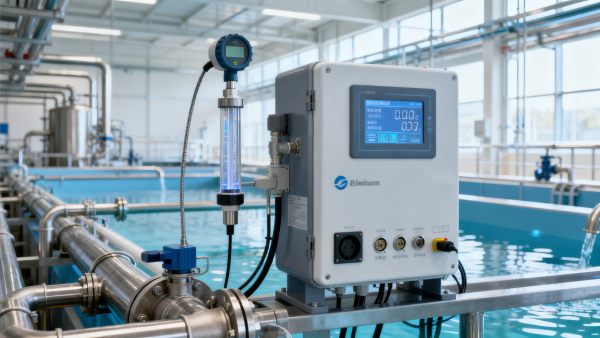
On May 15, 2026, China’s newly released Petrochemical Industry '15th Five-Year' Digitalization Development Guideline introduced mandatory carbon-efficiency monitoring requirements for aeration and water treatment equipment exported to aquaculture and irrigation markets. This development directly affects manufacturers and exporters of water quality management technologies — particularly those serving emerging markets such as Vietnam and Egypt — where tender documents have already begun referencing the Guideline in technical evaluation criteria.
Event Overview
On May 15, 2026, the Petrochemical Industry '15th Five-Year' Digitalization Development Guideline was officially issued. It specifies that aeration and water treatment equipment intended for aquaculture and irrigation applications must integrate three functional capabilities: real-time energy consumption metering, coupled dissolved oxygen–electrical conductivity analysis, and automated carbon emission factor calculation. Tender documents from Vietnam and Egypt have cited this Guideline, assigning the carbon-efficiency module a 15% weight in technical scoring. Chinese manufacturers of aeration and water treatment equipment are required to complete firmware upgrades and obtain MCERTS certification within six months.
Which Subsectors Are Affected
Export-Oriented Manufacturing Enterprises
These enterprises produce aeration blowers, diffusers, and integrated water treatment units for overseas aquaculture and irrigation projects. They are affected because the Guideline establishes new technical compliance thresholds for export shipments — not merely as voluntary best practices but as binding conditions in international tenders. Impact manifests in revised product design cycles, firmware validation timelines, and certification dependencies before market access.
Technology Integration & System Integrators
Firms supplying control systems, IoT platforms, or digital twin solutions for water infrastructure are impacted due to the requirement for embedded sensor fusion (e.g., DO + conductivity) and carbon accounting logic. The Guideline mandates on-device or edge-level computation of carbon intensity metrics — shifting integration responsibilities from cloud-based post-processing to hardware-embedded functionality.
Export Compliance & Certification Service Providers
Organizations supporting MCERTS (Monitoring Certification Scheme) application, testing, and documentation face increased demand for verification of carbon-efficiency modules. The six-month implementation window compresses lead times for test planning, calibration traceability, and emissions factor mapping — especially for non-standardized local grid factors used in Vietnam and Egypt.
What Relevant Enterprises or Practitioners Should Focus On and How to Respond
Monitor official interpretations and supplementary technical specifications
The Guideline references carbon emission factor calculation but does not specify default methodologies or regional grid emission factors for target markets. Enterprises should track announcements from China’s Ministry of Ecology and Environment and the Standardization Administration of China for any forthcoming technical annexes clarifying calculation protocols and acceptable sensor accuracy tolerances.
Assess firmware upgrade feasibility for current product lines
Manufacturers should audit existing embedded firmware architectures to determine whether real-time energy metering and coupled sensor analytics can be implemented via software update alone — or whether hardware revisions (e.g., adding current sensors, dual-parameter probes) are required. Prioritization should focus first on SKUs most frequently deployed in Vietnamese and Egyptian irrigation tenders.
Engage early with MCERTS-accredited testing laboratories
Given the six-month deadline, firms should initiate pre-submission consultations with laboratories authorized under China’s MCERTS framework to confirm scope alignment — especially regarding verification of automatic carbon factor lookup (e.g., dynamic selection between Vietnamese national grid and provincial sub-grid emission intensities).
Distinguish policy signal from procurement enforcement
While Vietnam and Egypt have referenced the Guideline in recent tenders, adoption remains project-specific and not yet codified in national procurement regulations. Enterprises should treat early references as indicative signals rather than universal mandates — verifying inclusion of the carbon-efficiency module clause on a tender-by-tender basis before committing engineering resources.
Editorial Perspective / Industry Observation
Observably, this Guideline functions less as an immediate regulatory enforcement tool and more as a coordination mechanism across domestic standards, export competitiveness, and climate-aligned infrastructure financing. Its inclusion in third-country tender documents suggests growing alignment between Chinese industrial policy and multilateral green infrastructure agendas — particularly where development finance institutions emphasize operational carbon intensity in water-related projects. Analysis shows that the 15% technical weighting is high enough to influence bid rankings but low enough to allow flexibility in implementation pathways. From an industry perspective, this reflects an emerging pattern: climate performance is being operationalized not through standalone environmental certifications, but by embedding measurement logic directly into industrial equipment firmware — turning hardware into data-generating compliance assets.
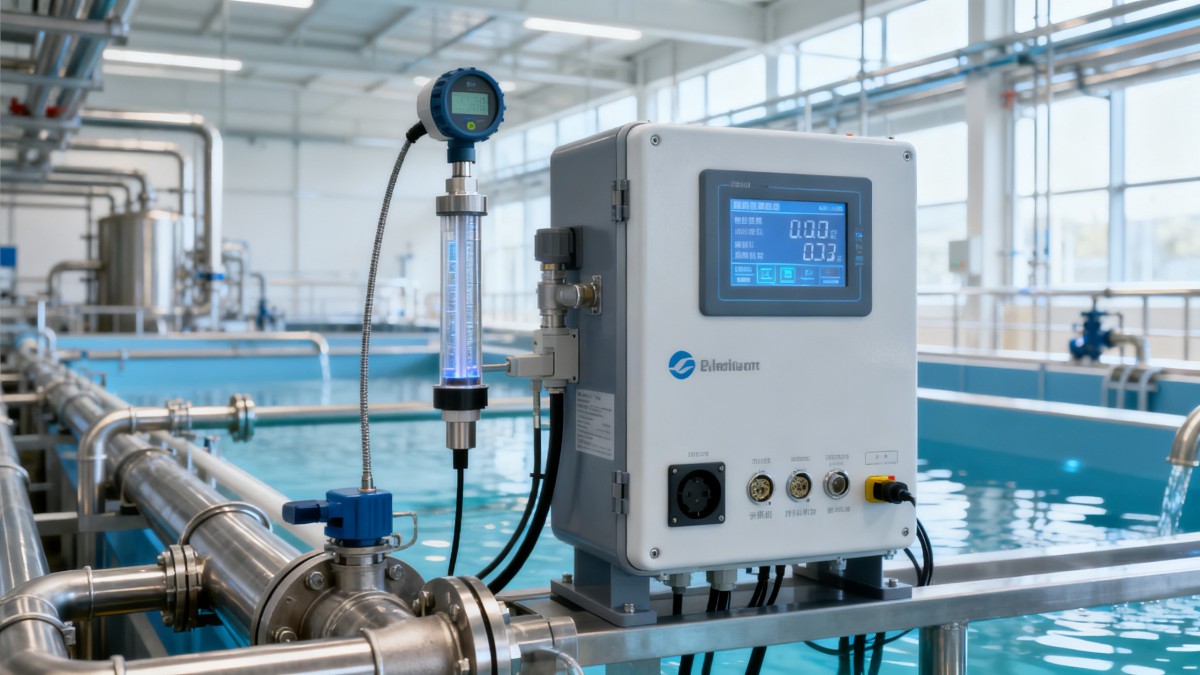
Overall, this Guideline signals a shift toward granular, device-level carbon accountability in water technology exports — one that converges industrial digitalization goals with cross-border climate transparency expectations. It does not yet constitute a global standard, nor does it replace existing water quality or safety certifications; rather, it layers a new dimension of performance reporting onto established product categories.
Current understanding is best framed as follows: the Guideline is a formalized policy signal — not yet a de facto trade barrier, but increasingly a competitive differentiator in select emerging markets. Its practical impact will depend less on its text alone and more on how consistently tendering authorities apply its technical scoring provisions over the next 12–18 months.
Source: Official release of the Petrochemical Industry '15th Five-Year' Digitalization Development Guideline, issued May 15, 2026; publicly available tender documents from Vietnam’s Department of Agriculture and Rural Development and Egypt’s Ministry of Irrigation and Water Resources (Q1 2026).
Note: Ongoing observation is warranted regarding updates to MCERTS implementation guidelines and country-specific carbon factor databases referenced in tender evaluations.
Related Intelligence
- Aeration & Water TechHow Water Treatment Research Guides Technology Selection for Industrial Wastewater ProjectsWater treatment research guides smarter industrial wastewater technology selection. Learn how to assess variable streams, pilot risks, compare process trains, and reduce compliance costs.
- Aeration & Water TechSelecting Solids Filtration for Aquaculture: Flow Rates, Loading, and Fish WelfareSolids filtration aquaculture guide: compare flow rates, peak loading, capture performance, maintenance, and fish welfare to choose a reliable system.
- Aeration & Water TechWhat RO water treatment systems deliver consistent 98% salt rejection at 25°C with feed TDS over 3,000 ppm?RO water treatment systems that deliver proven 98% salt rejection at 25°C with >3,000 ppm TDS—engineered for API synthesis, aquaculture & grain processing.
The Morning Broadsheet
Daily chemical briefings, market shifts, and peer-reviewed summaries delivered to your terminal.
