

The Authority in Global Agricultural Chemistry & Bio-Resources
China's Aeration Tech Firms Land €320M SalMar Deal
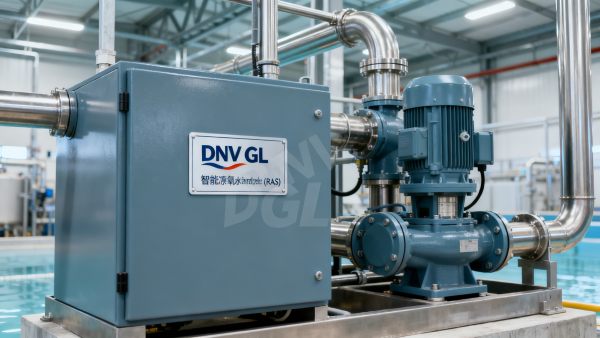
Global recirculating aquaculture systems (RAS) demand is surging, and a landmark cross-border equipment agreement signals accelerating international recognition of Chinese advanced aquaculture technology. On 14 May 2026, Norwegian salmon farming giant SalMar AS announced a three-year framework agreement with two leading Chinese manufacturers specializing in aeration and water treatment systems — a deal valued at €320 million. The contract reflects tightening global regulatory expectations for RAS sustainability, energy efficiency, and digital traceability, and underscores how policy-driven market shifts in Europe are reshaping procurement strategies across the aquaculture supply chain.
Event Overview
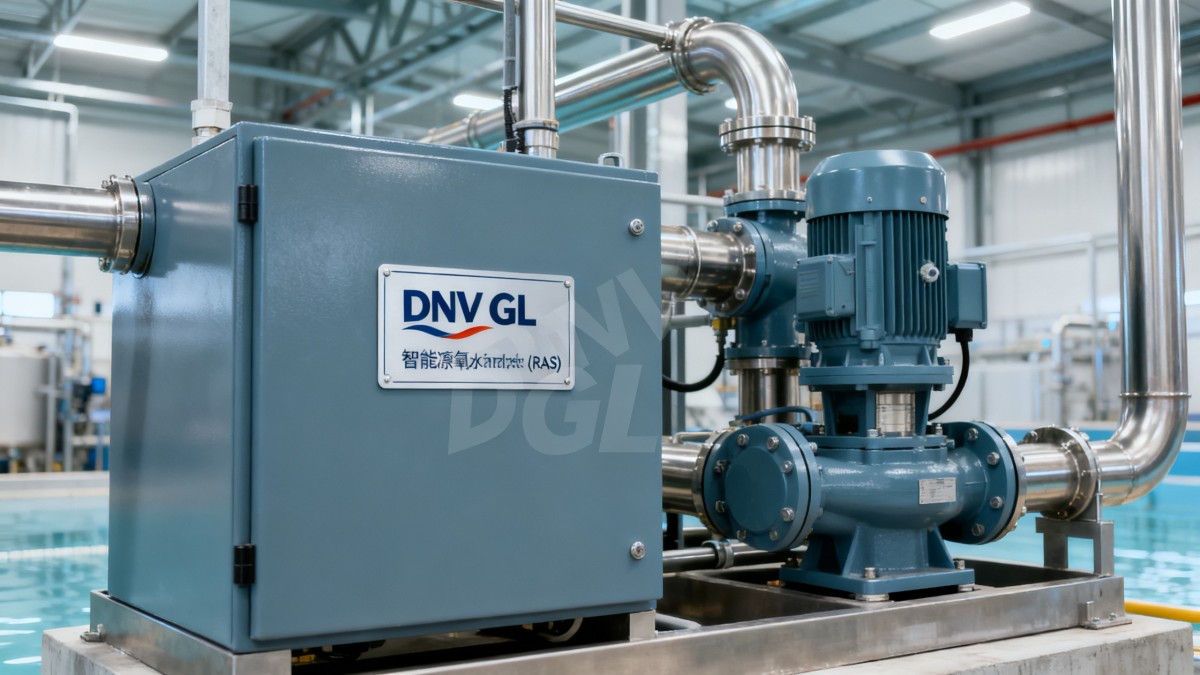
On 14 May 2026, SalMar AS — the world’s largest land-based salmon producer — confirmed it had signed a three-year framework agreement with two China-based aeration and water technology manufacturers. The total value is €320 million. The scope includes intelligent dissolved oxygen control systems, low-disturbance recirculation pump assemblies, and AI-powered water quality prediction modules. All equipment must comply with DNV GL Marine Certification standards and support over-the-air (OTA) remote firmware updates.
Industries Affected
Direct Export-Oriented Trading Enterprises: These firms act as channel partners or OEM integrators for Chinese tech manufacturers. The SalMar deal validates their ability to meet stringent European marine certification requirements — potentially unlocking access to other EU-based RAS operators subject to the EU Aquaculture Strategic Guidelines 2024–2030. Impact manifests in higher margin opportunities, longer-term contractual visibility, and increased pressure to strengthen technical documentation and after-sales service infrastructure.
Raw Material Procurement Enterprises: Suppliers of high-grade stainless steel, corrosion-resistant polymers, and precision sensors face rising demand for certified, traceable inputs. The DNV GL requirement implies stricter material test reporting, batch-level compliance tracking, and potential lead-time compression — especially for components requiring marine-grade validation (e.g., submersible motor housings, optical pH/DO sensor lenses). This elevates sourcing risk but also incentivizes vertical integration among tier-2 suppliers.
Equipment Manufacturing Enterprises: Domestic manufacturers now confront dual pressures: scaling production capacity to meet multi-year volume commitments while maintaining zero-defect delivery against marine-certified tolerances. The OTA upgrade clause further necessitates embedded software development capability — a domain historically underdeveloped in China’s industrial hardware sector. This may accelerate M&A activity or joint ventures with European software firms focused on aquaculture IoT platforms.
Supply Chain Service Providers: Logistics providers, marine certification consultants, and customs brokers with expertise in EU dual-use export controls and maritime equipment classification (e.g., ISO 19901-7, IEC 60092) are seeing renewed demand. Notably, the requirement for DNV GL certification introduces complexity in pre-shipment conformity assessment — particularly for modular systems assembled across multiple Chinese facilities before final integration and testing.
Key Focus Areas & Recommended Actions
Align product documentation with EU marine certification workflows
DNV GL Marine Certification requires full traceability from raw material mill certificates to final functional testing reports. Exporters should audit internal QA documentation practices — especially version control for firmware, calibration logs for sensors, and environmental stress test records — ahead of third-party audits.
Invest in field-deployable remote diagnostics infrastructure
The OTA upgrade mandate implies robust secure boot architecture, encrypted update channels, and rollback functionality. Manufacturers must treat embedded software not as an add-on, but as a regulated medical-device-like component — with documented change control, vulnerability disclosure protocols, and periodic penetration testing.
Develop localized technical support networks in Northern Europe
SalMar operates major RAS facilities in Norway and Scotland. Post-installation commissioning, real-time troubleshooting, and predictive maintenance require regionally based engineering talent fluent in both technical English and local operational norms. Firms without such presence risk service delays that could trigger contractual penalties under SLA clauses.
Editorial Insight / Industry Observation
This agreement is not merely a commercial win — it marks a structural inflection point in global aquaculture equipment governance. Observably, the EU’s increasing emphasis on “digital aquaculture” (as codified in Regulation (EU) 2023/2657 on automated monitoring in intensive aquaculture) is shifting procurement power toward vendors capable of integrating hardware, data analytics, and regulatory compliance into a single stack. Analysis shows that Chinese manufacturers’ success here stems less from cost advantage and more from rapid iteration in AI-model training using real-world RAS datasets — a capability increasingly difficult for legacy Western OEMs to replicate due to fragmented facility ownership and data silos.
Conclusion
The SalMar deal confirms that Chinese aquaculture technology has crossed a threshold: from component supplier to certified system partner in mission-critical marine environments. However, broader adoption hinges not on isolated contracts, but on consistent replication of this certification-readiness, service responsiveness, and software maturity across multiple export markets. A rational interpretation is that this represents the beginning of a multi-year consolidation phase — where only those firms embedding regulatory intelligence into core engineering workflows will sustain global scale.
Source Attribution
Official announcement: SalMar AS Press Release, 14 May 2026 (salmar.com/news/20260514-china-framework); DNV GL Marine Certification Handbook, Issue 5.2 (2025); EU Commission Communication on Sustainable Aquaculture in the EU (COM/2024/189 final). Note: Implementation timelines for SalMar’s phased deployment schedule, and potential expansion to include Chinese battery-integrated UPS modules for blackout resilience, remain under observation.
Related Intelligence
- Aeration & Water TechSelecting Solids Filtration for Aquaculture: Flow Rates, Loading, and Fish WelfareSolids filtration aquaculture guide: compare flow rates, peak loading, capture performance, maintenance, and fish welfare to choose a reliable system.
- Aeration & Water TechWhat RO water treatment systems deliver consistent 98% salt rejection at 25°C with feed TDS over 3,000 ppm?RO water treatment systems that deliver proven 98% salt rejection at 25°C with >3,000 ppm TDS—engineered for API synthesis, aquaculture & grain processing.
- Aeration & Water TechCan pond aeration systems maintain dissolved oxygen above 5 mg/L during summer stratification in catfish ponds?Pond aeration systems can sustain >5 mg/L DO during summer stratification—when engineered for mixing *and* oxygen transfer. See field-proven data & design essentials.
The Morning Broadsheet
Daily chemical briefings, market shifts, and peer-reviewed summaries delivered to your terminal.
