

The Authority in Global Agricultural Chemistry & Bio-Resources
RCEP Green Agro-Channel Launches, Cutting SE Asia Export Time by 40%
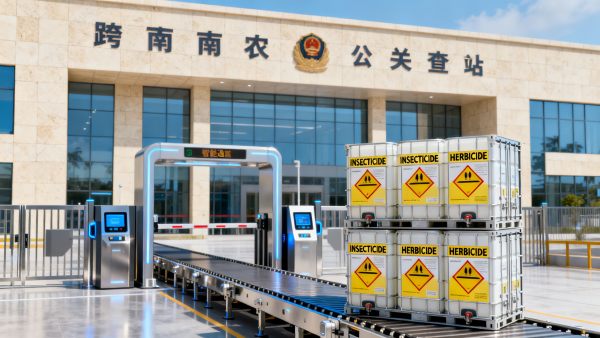
On May 14, 2026, the RCEP Secretariat and customs authorities of the ten ASEAN member states jointly launched the ‘Green Agro-Channel’—a dedicated fast-track clearance mechanism for agrochemical exports. This initiative directly impacts the global agrochemical supply chain, particularly Chinese exporters targeting Southeast Asian markets, by significantly accelerating customs processing through standardized regulatory alignment and procedural streamlining.
Event Overview
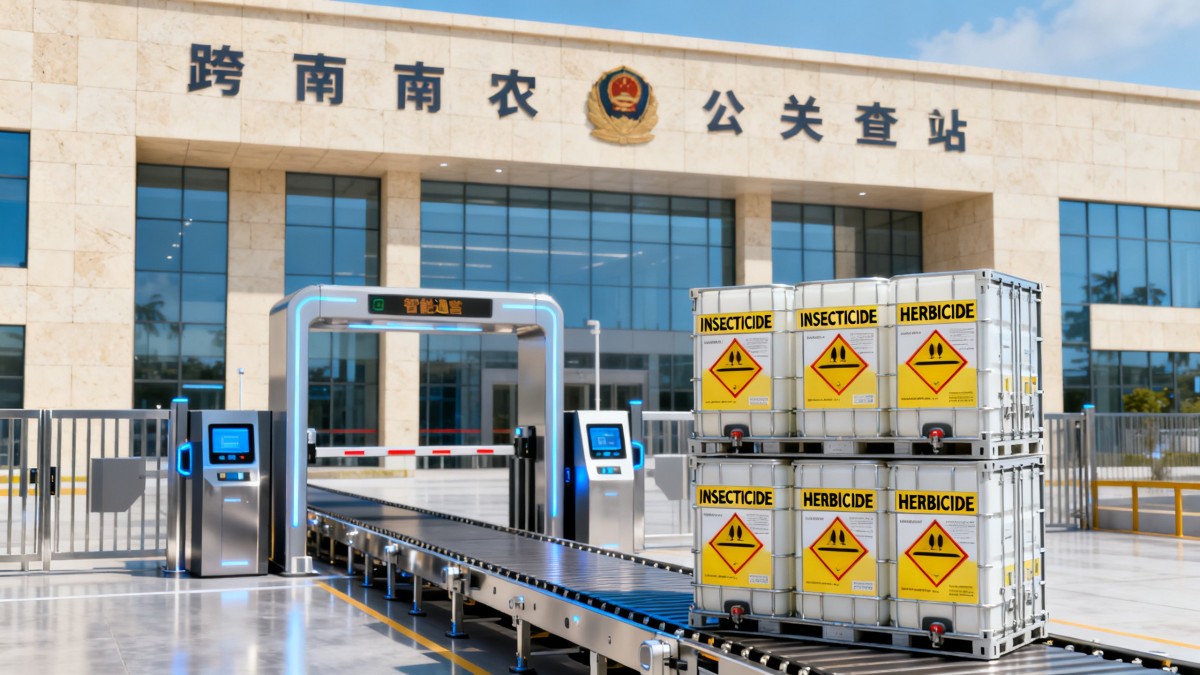
On May 14, 2026, the RCEP Secretariat and the customs administrations of all ten ASEAN countries officially activated the ‘Green Agro-Channel’ for agrochemical products. The channel covers major categories including insecticides, herbicides, and plant growth regulators. Eligible Chinese exporters may access expedited clearance upon submission of an RCEP Certificate of Origin and proof of compliance with the Globally Harmonized System (GHS) labeling requirements. Benefits include priority document examination, a 72% exemption rate from physical inspection, and an average customs clearance time of 2.3 working days—40% faster than pre-implementation benchmarks.
Industries Affected
Direct Trading Enterprises
Export-oriented agrochemical trading firms are the most immediate beneficiaries. Faster clearance reduces demurrage costs, improves order fulfillment predictability, and strengthens competitiveness in price-sensitive ASEAN markets. However, eligibility hinges on strict documentation adherence—particularly GHS label verification—which raises operational demands for documentation management and cross-border compliance coordination.
Raw Material Procurement Enterprises
Suppliers of active pharmaceutical ingredients (APIs), solvents, and formulation adjuvants face indirect but growing pressure. As downstream exporters accelerate shipment cycles, demand for just-in-time raw material delivery increases. Delays or inconsistencies in upstream GHS-compliant packaging or safety data sheet (SDS) issuance may now cascade into export bottlenecks—making traceability and regulatory readiness more critical in procurement contracts.
Formulation & Manufacturing Enterprises
Domestic formulators producing ready-to-use agrochemical products must ensure full GHS labeling alignment—not only for final products but also for intermediate batches entering the green channel supply chain. Non-compliant labeling triggers automatic exclusion, meaning manufacturing QA/QC processes must now integrate real-time GHS verification as a gatekeeping step before release to export logistics.
Supply Chain Service Providers
Cargo agents, customs brokers, and third-party compliance auditors see both opportunity and complexity. Demand is rising for bundled services covering RCEP origin certification, GHS label validation, and ASEAN-specific customs advisory support. Yet service differentiation will increasingly depend on technical fluency—not just procedural knowledge—with emphasis on interpreting ASEAN national implementation variations (e.g., Malaysia’s phased GHS adoption vs. Vietnam’s stricter SDS formatting rules).
Key Considerations and Recommended Actions
Verify GHS Label Compliance Against ASEAN-Specific Requirements
RCEP-wide GHS alignment does not eliminate national differences. Exporters must confirm that labels meet each destination country’s language, pictogram sizing, hazard statement wording, and precautionary phrase requirements—not just China’s GB 30000 series. A single misaligned label can void green channel eligibility for the entire consignment.
Integrate RCEP Origin Certification into Order Fulfillment Workflows
Origin declarations must be issued prior to shipment—not retroactively—and linked to specific B/L or air waybill numbers. Firms should embed automated origin certificate generation within ERP or TMS platforms, with built-in checks for tariff shift rules applicable to multi-step formulations (e.g., whether blending in China satisfies sufficient transformation criteria).
Conduct Pre-Submission Mock Audits for High-Volume SKUs
Given the 72% inspection exemption rate, customs authorities are likely focusing scrutiny on outlier patterns—such as sudden volume spikes, inconsistent valuation, or frequent re-labeling. Proactive internal audits of top 20 export SKUs (covering labeling, SDS, origin declaration, and packaging integrity) help identify systemic gaps before first submission.
Editorial Perspective / Industry Observation
Observably, the Green Agro-Channel is less a standalone policy shift and more a signal of deepening ASEAN-China regulatory convergence—particularly around chemical classification and trade facilitation infrastructure. Analysis shows that its success will hinge not on speed alone, but on interoperability: whether China’s GHS enforcement system can reliably interface with ASEAN national databases for real-time label verification. From an industry perspective, this initiative is better understood as a stress test for end-to-end regulatory digitization across borders—not merely a customs efficiency tool.
Conclusion
The launch marks a concrete step toward harmonized agrochemical trade governance in the RCEP region. While the 40% reduction in clearance time delivers tangible commercial benefit, its broader significance lies in institutionalizing mutual recognition of compliance standards. A rational interpretation is that this channel sets a precedent—not just for agrochemicals, but potentially for other regulated sectors such as veterinary medicines and industrial biocides—where safety assurance and trade fluidity have historically been treated as competing priorities.
Source Attribution
Official announcement issued jointly by the RCEP Secretariat and the ASEAN Customs Directors-General Meeting (ACDGM), May 14, 2026. Implementation guidelines published by the ASEAN Centre for Energy and the China National Institute of Standardization (CNIS). Note: National rollout timelines and minor procedural adaptations (e.g., digital signature acceptance in Indonesia vs. Thailand) remain under observation and subject to update by mid-2026.
Related Intelligence
- AgrochemicalsWhat Are the Main Risks of Non-Transparent Agricultural Supply Chains?what are the main risks of non transparent agri supply chains? Explore traceability, compliance, contamination, disruption, and cost risks—plus practical controls.
- AgrochemicalsGrain Production: Key Practices for Improving Yield While Protecting Soil HealthGrain production strategies to improve yield, protect soil health, manage nutrients, reduce compaction, and build resilient fields for lasting results.
- AgrochemicalsHow Do New FDA Rules Affect Agri-Chemical Sourcing Strategies?How do new FDA rules impact agri chemical sourcing strategies? Explore practical supplier screening, traceability, contaminant control, and risk-based compliance steps.
The Morning Broadsheet
Daily chemical briefings, market shifts, and peer-reviewed summaries delivered to your terminal.
