

The Authority in Global Agricultural Chemistry & Bio-Resources
Global RAS Orders Surge: China's Aeration & Water Tech Secures €320M Framework with SalMar
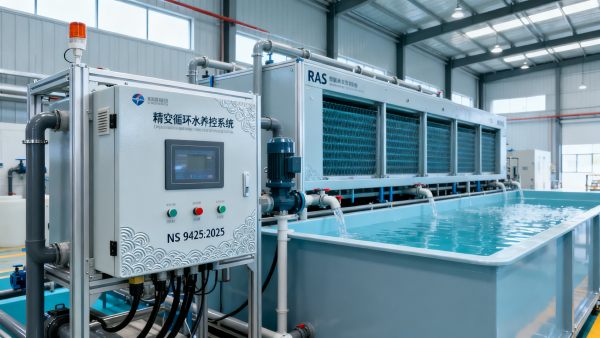
On May 15, 2026, a Chinese aeration and water treatment technology provider signed a three-year framework agreement with Norwegian salmon farming major SalMar—valued at €320 million—amid an 89% year-on-year increase in global land-based recirculating aquaculture system (RAS) orders in Q1 2026. This development signals accelerating international adoption of high-specification, digitally integrated RAS infrastructure—and warrants close attention from equipment exporters, filtration module manufacturers, IoT platform integrators, and marine acoustic compliance service providers.
Event Overview
On May 15, 2026, a Chinese aeration and water technology enterprise entered into a three-year framework agreement with Norway’s SalMar. The agreement covers supply of intelligent dissolved oxygen control units, modular biological filter systems, and remote operations SaaS services. The total value is €320 million. All supplied equipment must comply with the Norwegian standard NS 9425:2025 for underwater acoustics, and must be pre-integrated with SalMar’s proprietary IoT platform interface.
Industries Affected by This Development
Export-oriented RAS equipment manufacturers: Directly impacted by tightening technical gateways. Compliance with NS 9425:2025—a relatively new standard governing underwater noise emissions from submerged equipment—introduces new design, testing, and certification requirements for aerators, pumps, and flow-regulated units intended for salmon RAS facilities in Norway and other Nordic markets.
Biological filtration system suppliers: Face increased demand for modular, plug-and-play biofilter units that support rapid deployment and interoperability with third-party control platforms. The specification of ‘modular’ units in the agreement suggests preference for standardized interfaces and factory-tested performance data—not just custom-engineered solutions.
IOT platform integration and SaaS service providers: Must now accommodate pre-defined API-level compatibility with SalMar’s proprietary platform. This reduces flexibility for standalone platform vendors and elevates the importance of documented, auditable interface specifications—even for non-SalMar projects where similar integration expectations are emerging.
Marine acoustic compliance and certification service providers: See growing demand for NS 9425:2025 verification—particularly for submersible or semi-submerged mechanical components used in RAS tanks. As this standard gains traction beyond Norway (e.g., via EU Blue Economy alignment), third-party test labs and notified bodies may need to expand underwater acoustic measurement capacity.
What Relevant Enterprises or Practitioners Should Monitor and Do Now
Track official updates on NS 9425:2025 implementation timelines
The standard was published in 2025; however, its enforcement scope—especially regarding grandfathering of existing installations or phased rollout for export equipment—is not yet publicly detailed. Companies supplying to Nordic RAS operators should monitor announcements from the Norwegian Directorate of Fisheries and accredited conformity assessment bodies.
Assess exposure to SalMar-linked procurement channels
SalMar operates multiple RAS ventures—including its joint venture SalMar Ocean Farming—and influences technical specifications across affiliated contractors and engineering partners. Firms engaged in tender processes for European RAS projects should verify whether NS 9425:2025 compliance and SalMar IoT interface readiness are becoming de facto bid requirements—even outside direct SalMar contracts.
Distinguish between platform interface specification and full platform dependency
The agreement requires pre-installation of SalMar’s IoT platform interface—not full migration to it. Suppliers retaining their own monitoring dashboards can still meet the requirement if they deliver documented, version-controlled API endpoints and authentication protocols. Clarity on interface scope avoids unnecessary architectural overhauls.
Review subassembly sourcing for underwater acoustic risk
NS 9425:2025 applies to the final installed unit—not just the main chassis. Bearings, impellers, motor housings, and even mounting brackets may contribute to cumulative noise signatures. Manufacturers should initiate acoustic contribution mapping for critical subassemblies, especially those sourced externally.
Editorial Perspective / Industry Observation
Observably, this agreement functions less as an isolated commercial win and more as a technical benchmarking event: it confirms that top-tier RAS operators are shifting from evaluating discrete hardware performance to enforcing system-level interoperability and environmental compliance—both digital and physical. Analysis shows that the €320 million figure reflects multi-year volume commitments rather than a one-off order, suggesting sustained procurement rhythm tied to SalMar’s RAS expansion pipeline through 2029. From an industry perspective, the inclusion of remote SaaS services alongside core hardware signals maturation of operational outsourcing models in land-based aquaculture—where uptime, predictive maintenance, and regulatory audit trails carry increasing contractual weight. It is currently more accurate to interpret this as a signal of converging technical thresholds across leading RAS markets, rather than evidence of immediate broad-scale policy adoption.
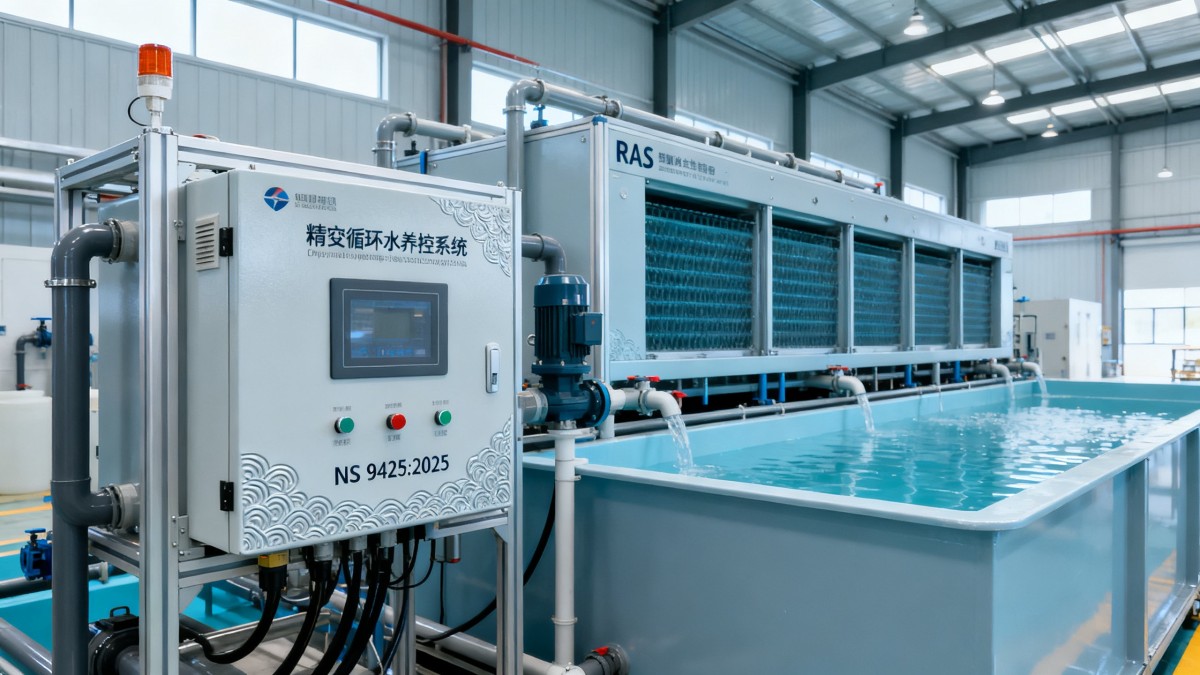
In summary, this framework agreement underscores a structural shift: RAS infrastructure procurement is increasingly governed by cross-domain standards—spanning acoustics, software integration, and service delivery—not just hydraulic efficiency or material durability. For stakeholders, the priority is not scaling production volume alone, but aligning product development, supply chain validation, and interface documentation to these layered, interdependent requirements. At present, the development is best understood as a forward-looking indicator of technical convergence in high-intensity RAS markets—not yet a universal mandate, but a tangible reference point for near-term capability planning.
Source: Public announcement by SalMar (May 15, 2026); NS 9425:2025 standard documentation (Norwegian Standards Institute, 2025). Note: Ongoing observation is warranted regarding implementation guidance for NS 9425:2025 in export contexts and potential alignment with upcoming EU Marine Strategy Framework Directive reporting requirements.
Related Intelligence
- Aeration & Water TechHow Water Treatment Research Guides Technology Selection for Industrial Wastewater ProjectsWater treatment research guides smarter industrial wastewater technology selection. Learn how to assess variable streams, pilot risks, compare process trains, and reduce compliance costs.
- Aeration & Water TechSelecting Solids Filtration for Aquaculture: Flow Rates, Loading, and Fish WelfareSolids filtration aquaculture guide: compare flow rates, peak loading, capture performance, maintenance, and fish welfare to choose a reliable system.
- Aeration & Water TechWhat RO water treatment systems deliver consistent 98% salt rejection at 25°C with feed TDS over 3,000 ppm?RO water treatment systems that deliver proven 98% salt rejection at 25°C with >3,000 ppm TDS—engineered for API synthesis, aquaculture & grain processing.
The Morning Broadsheet
Daily chemical briefings, market shifts, and peer-reviewed summaries delivered to your terminal.
