

The Authority in Global Agricultural Chemistry & Bio-Resources
When does a block ice machine for fishery pay off

For finance approvers in commercial fishing and aquaculture, the key question is not just cost but return. A block ice machine for fishery pays off when lower ice procurement expenses, reduced spoilage, and more reliable cold-chain control translate into measurable operating savings.
That decision matters across integrated seafood operations, landing sites, processing yards, pond harvest systems, and transport hubs. This article explains when a block ice machine for fishery becomes financially justified, which variables shape payback, and how to assess risk before capital is committed.
Financial baseline for a block ice machine for fishery
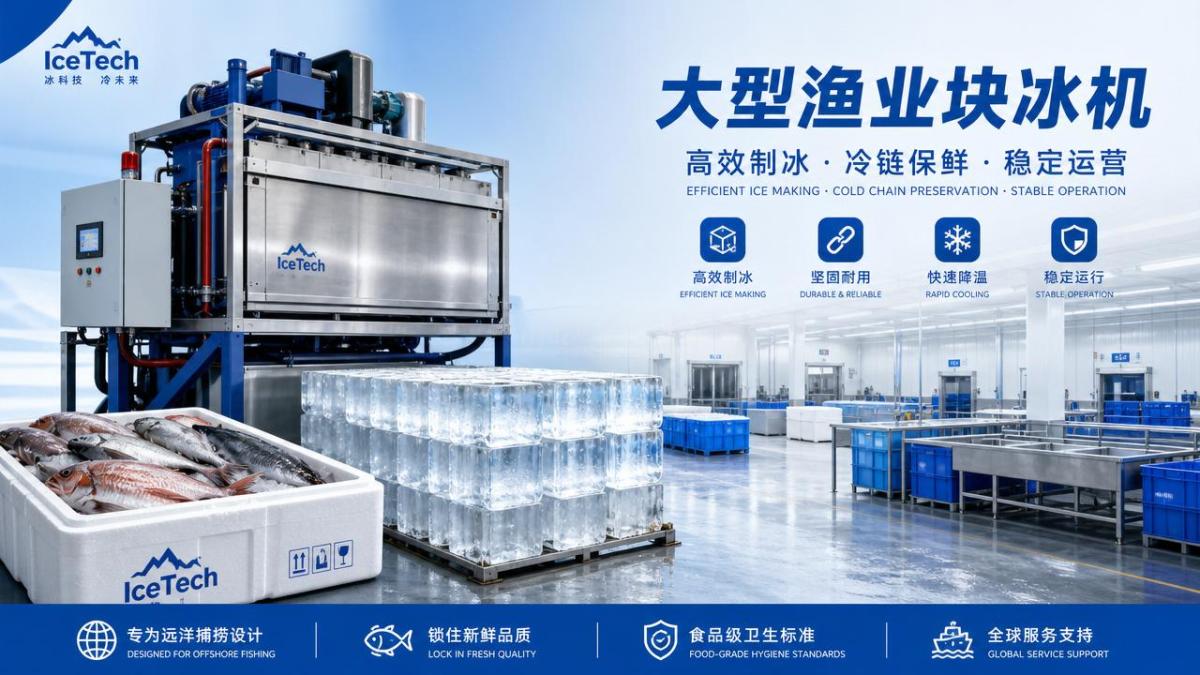
A block ice machine for fishery produces solid ice blocks for chilling catch, preserving harvested fish, and stabilizing product temperature during handling. It is common where durable ice, rough transport, and delayed processing require slower melting performance.
Payoff starts with replacing purchased ice. If outside ice is expensive, inconsistent, distant, or limited by delivery schedules, on-site production can create immediate savings. The machine may also reduce hidden losses that rarely appear in a simple equipment quotation.
Those hidden losses often include quality downgrades, delayed loading, labor spent breaking and moving purchased blocks, and emergency purchases during peak landings. A block ice machine for fishery is usually evaluated correctly only when both direct and indirect costs are counted.
A practical baseline includes five figures:
- Current delivered cost per ton of ice
- Average daily and seasonal ice consumption
- Power, water, labor, and maintenance cost on-site
- Spoilage, downgrade, or rejection loss linked to temperature control
- Capital cost, installation cost, and financing terms
Once these values are available, payback becomes measurable. In many fisheries, the break-even point is not driven by equipment cost alone. It is driven by how often poor ice access damages margin during the busiest operating periods.
Industry conditions shaping investment timing
The seafood supply chain has become more sensitive to temperature assurance, logistics disruption, and compliance pressure. That makes a block ice machine for fishery more relevant in locations where cold-chain control is weak or outsourced supply is volatile.
Several market signals often indicate that investment timing is improving:
In integrated aquaculture, timing also depends on harvest planning. If fish are collected in concentrated batches, a block ice machine for fishery often protects margin better than spot-market ice purchases, especially where harvest windows cannot move.
How operating savings create payback
The most obvious return comes from the difference between the delivered purchase price of ice and the internal production cost per ton. If purchased ice costs far more than internal ice, the savings are straightforward.
However, many operations underestimate additional benefits. A block ice machine for fishery can preserve texture, appearance, and shelf life. Even small improvements in saleable quality may materially affect realized price across high-volume shipments.
Savings typically come from four channels:
- Lower unit ice cost compared with delivered third-party ice
- Reduced spoilage and fewer downgraded batches
- Less downtime from waiting for deliveries
- Lower emergency logistics and handling inefficiency
A simple payback formula can be used: total installed cost divided by annual net savings. Net savings should subtract electricity, water treatment, labor, preventive maintenance, and spare parts from annual avoided purchase and quality-loss costs.
For example, if annual avoided outside ice cost is substantial and spoilage falls modestly, a block ice machine for fishery may repay itself within a commercially acceptable window. Where utilization is low, the same machine may struggle to justify its capital burden.
Utilization is often the decisive variable
A machine that runs consistently during the season spreads fixed cost efficiently. A machine used occasionally may still add resilience, but purely financial payback becomes weaker unless outside ice is very costly or unreliable.
This is why capacity sizing matters. Oversizing a block ice machine for fishery can extend payback by loading the project with underused capital, excess power demand, and unnecessary maintenance exposure.
Typical operating scenarios and payoff patterns
Not every fishery operation sees the same return. Payoff depends on catch profile, distance to ice suppliers, local utilities, and the commercial value of freshness retention.
The strongest cases usually combine high ice consumption, poor third-party availability, and meaningful quality sensitivity. In those settings, a block ice machine for fishery acts as both a cost asset and a continuity asset.
Risk factors that can delay or weaken returns
A good investment case can still fail if supporting conditions are weak. Reliable power, acceptable water quality, skilled maintenance, and sensible plant layout all influence whether forecast savings become real.
Common risk factors include:
- Unstable electricity causing downtime or compressor stress
- Poor water treatment leading to scaling or sanitation issues
- Insufficient storage and handling space for finished ice
- Underestimated labor for loading, breaking, and distribution
- Weak service support or slow spare-part access
Financing structure also matters. A block ice machine for fishery funded under high borrowing costs may require a faster operational gain to remain attractive. Leasing, staged installation, or modular expansion may improve project resilience.
Do not ignore compliance and hygiene
Ice contacts food directly. Water standards, sanitation routines, and equipment cleanliness affect product safety and brand risk. A low-cost installation can become expensive if it creates contamination exposure or audit failures.
Practical evaluation framework before investment
Before approving a project, build a decision model using actual seasonal data rather than annual averages only. Peak days often determine whether a block ice machine for fishery protects revenue more effectively than outsourced supply.
A disciplined review should include the following steps:
- Measure daily ice demand by season, species, and harvest method
- Compare delivered ice cost with projected internal cost per ton
- Quantify spoilage, downgrade, and delay losses from poor ice access
- Verify utility stability, drainage, water treatment, and sanitation controls
- Stress-test the model against low utilization and repair downtime
- Set a target payback window and minimum acceptable internal rate of return
If the resulting case depends only on optimistic assumptions, the project should be reconsidered. If savings remain solid under conservative assumptions, a block ice machine for fishery is more likely to deliver dependable economic value.
Operational conclusion and next-step assessment
A block ice machine for fishery pays off when it cuts delivered ice dependence, improves temperature discipline, and reduces quality loss enough to offset ownership cost within an acceptable timeframe. The best returns usually appear in high-volume or supply-constrained environments.
The decision should be based on site-specific numbers, not generic equipment promises. Actual utility cost, seasonal utilization, spoilage reduction, and supplier risk determine whether the investment is strategic or premature.
The practical next step is to build a twelve-month ice-cost and quality-loss model, then compare it against a realistic operating plan for a block ice machine for fishery. That approach turns a broad capital question into a clear financial decision.
Related Intelligence
- Commercial FishingWhat Should You Check in a Fishery Equipment Maintenance Contract?What should I look for in a fishery equipment maintenance contract? Explore coverage, response times, costs, records, safety, and biosecurity essentials.
- Commercial FishingDo commercial fishing vessels with hybrid diesel-electric propulsion reduce fuel cost per kg landed by more than 12%?Commercial fishing vessels with hybrid diesel-electric propulsion *can* cut fuel cost per kg landed by >12%—but only under precise operational and infrastructure conditions. Discover the real ROI.
- Commercial FishingHow to Choose Oyster Processing Equipment for Capacity, Hygiene, and Labor EfficiencyOyster processing equipment guide: compare capacity, hygienic design, and labor efficiency to build a reliable, scalable line and make smarter buying decisions.
The Morning Broadsheet
Daily chemical briefings, market shifts, and peer-reviewed summaries delivered to your terminal.
