

The Authority in Global Agricultural Chemistry & Bio-Resources
How aquaculture & fishery profits are shifting in 2026
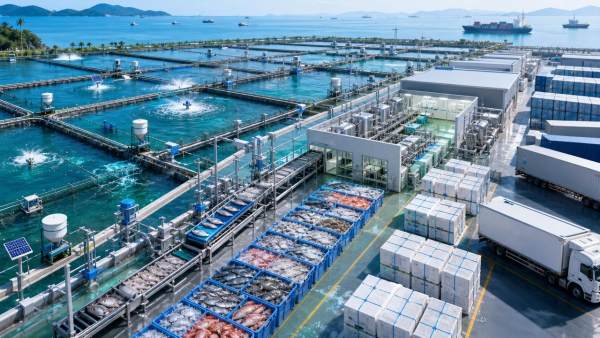
In 2026, aquaculture & fishery profit models are being reshaped by feed volatility, compliance pressure, technology adoption, and shifting export demand. For enterprise decision-makers, understanding where margins are expanding—and where costs are quietly eroding returns—is now essential. This analysis explores how aquaculture & fishery operators, processors, and equipment stakeholders can respond with smarter capital allocation, supply chain discipline, and data-driven growth strategies.
Why are aquaculture & fishery margins shifting faster in 2026?
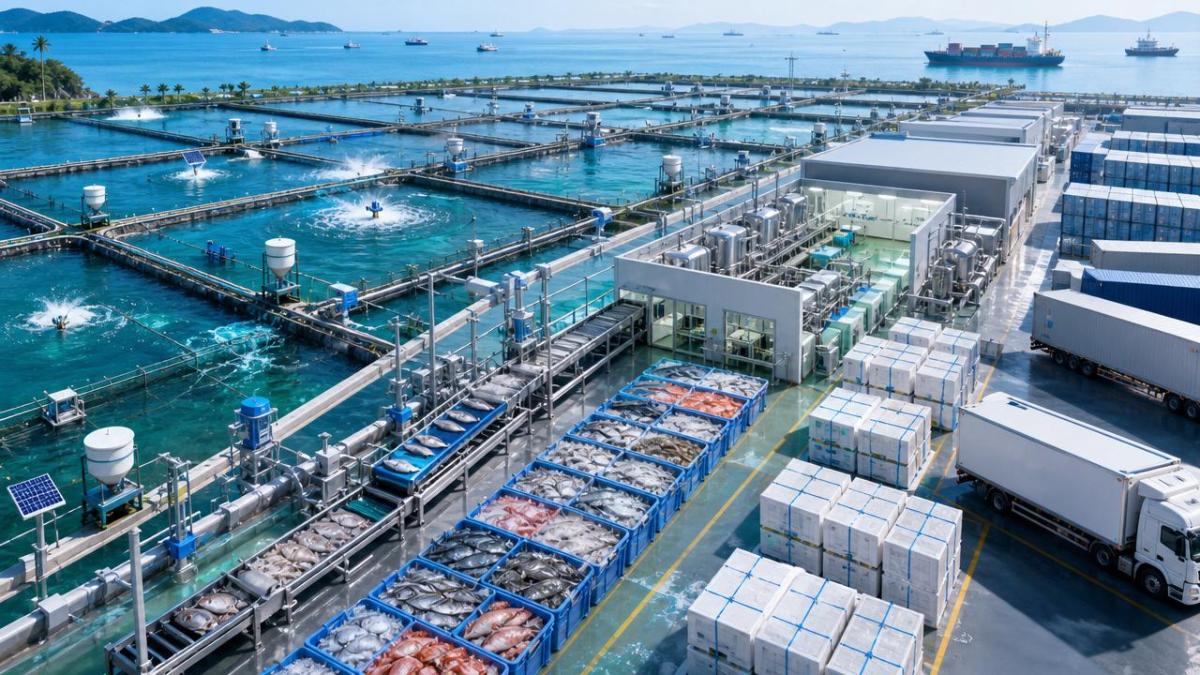
The economics of aquaculture & fishery are no longer driven by harvest volume alone. Enterprise profitability now depends on how efficiently operators convert feed into biomass, manage mortality, reduce energy intensity, meet export standards, and defend pricing against market oversupply.
For decision-makers across integrated farms, processors, cold-chain handlers, and equipment suppliers, 2026 is defined by margin divergence. Well-instrumented operations are protecting EBITDA through tighter biological control and procurement discipline, while less adaptive players are losing returns through hidden operational leakage.
The four forces reshaping profit pools
- Feed and ingredient volatility is compressing farm-level margins, especially where soy, fishmeal, oils, vitamins, and premix inputs remain exposed to international supply swings.
- Regulatory scrutiny is increasing operating cost. Water discharge, traceability, residue controls, and documentation requirements now influence market access as much as production performance.
- Technology is creating a widening gap between operators. Sensors, automated feeding, aeration control, and production analytics can improve yield quality, but only when matched with disciplined implementation.
- Export demand is fragmenting. Some species and formats are benefiting from premium retail and foodservice channels, while commodity volumes face price pressure from regional competition and logistics costs.
This is where specialist market intelligence matters. AgriChem Chronicle tracks aquaculture & fishery alongside feed processing, biochemical inputs, machinery, and compliance trends, giving executives a more complete view of where profits are migrating across the value chain.
Where are profits expanding across the aquaculture & fishery value chain?
Not every segment is under equal pressure. In many markets, profitability is shifting away from undifferentiated production and toward controlled, value-added, and compliance-ready operating models. The table below highlights where aquaculture & fishery margins are typically strengthening or weakening.
The strongest gains are often appearing in operations that control more than one margin layer: feed strategy, water quality, processing yield, branded specification, and buyer compliance. In aquaculture & fishery, fragmented operators may still grow volume while losing economic quality.
What this means for enterprise planning
Boards and procurement teams should stop evaluating projects only on output expansion. The more useful question is whether a capital decision improves margin resilience under variable feed, energy, and regulatory conditions. ACC’s cross-sector coverage is valuable here because profit shifts in aquaculture & fishery often originate upstream in chemicals, feed inputs, and equipment availability.
Which hidden costs are eroding aquaculture & fishery returns?
Many operators track feed cost and sale price but underestimate secondary costs that quietly reduce profitability. In 2026, hidden cost control is becoming one of the clearest differences between average operators and top-quartile aquaculture & fishery businesses.
Most overlooked margin leaks
- Suboptimal feed timing and dispersion, which raises feed conversion ratio and produces inconsistent growth classes at harvest.
- Energy overconsumption in aeration, pumping, chilling, and ice systems due to poor equipment tuning or outdated motors.
- Rejection losses caused by weak traceability records, residue concerns, or incomplete batch documentation for export buyers.
- Processing loss from poor grading, delayed chilling, or low recovery of by-products such as trimmings, oils, and meal streams.
- Unplanned mortality events linked to water quality swings, stocking stress, pathogen introduction, or delayed intervention.
These issues are not isolated farm problems. They affect contract credibility, inventory planning, working capital, and buyer retention. For larger groups, margin erosion often appears first as planning variance, not as an obvious production failure.
How should executives compare investment priorities in aquaculture & fishery?
When budgets are limited, leadership teams need a structured way to decide whether to fund expansion, automation, processing upgrades, or compliance systems. The comparison below can help aquaculture & fishery buyers evaluate investment categories by margin impact and execution complexity.
The key is sequencing. In aquaculture & fishery, technology projects create the best financial outcomes when biological control, staff training, and input quality are already stable. Buying advanced equipment into a poorly disciplined operation rarely produces the projected return.
A practical capital allocation rule
- Protect existing margin first by reducing mortality, feed loss, and compliance risk.
- Increase recovery next through processing, grading, and cold-chain optimization.
- Pursue volume expansion only after unit economics remain stable under stress-tested assumptions.
What procurement teams should verify before signing suppliers or systems
Procurement in aquaculture & fishery is increasingly technical. The decision is not just about initial price. Buyers need clarity on maintenance, documentation, environmental performance, spare parts support, input compatibility, and the supplier’s ability to operate under regulated trade conditions.
Procurement checklist for enterprise buyers
- Request performance evidence linked to your species, stocking density, climate, and production scale rather than relying on generic brochures.
- Verify documentation readiness for audits, including technical sheets, material contact declarations where relevant, and maintenance records.
- Check total cost of ownership, especially energy use, consumables, downtime exposure, local support availability, and replacement intervals.
- Assess whether the vendor understands market access implications, including EPA, FDA, GMP-linked documentation culture where applicable across the wider supply chain.
This is one reason ACC’s editorial model is useful for buyers. Its coverage connects technical equipment, biochemical inputs, compliance frameworks, and primary processing economics, helping procurement leaders compare options beyond a narrow purchase price lens.
How do standards and compliance now affect aquaculture & fishery profitability?
Compliance is no longer just a defensive function. In 2026, it is a commercial filter. Importers, processors, and institutional buyers are increasingly screening suppliers for environmental discipline, traceability, residue management, and process documentation before they discuss volume growth.
For aquaculture & fishery operators, the practical impact is clear: weak compliance creates delayed shipments, discounting, buyer hesitancy, and higher working capital risk. Strong compliance supports repeat contracts, premium channels, and more stable negotiations.
Core compliance areas to monitor
- Water quality and discharge controls, especially where local permits or export-facing environmental reviews are becoming stricter.
- Feed ingredient traceability and additive control, which affect both biological performance and market confidence.
- Residue and contamination management in harvesting, storage, transport, and processing environments.
- Documented operating procedures that support inspections, batch review, and buyer due diligence.
Leaders who treat compliance as an integrated profit tool rather than a cost center are better positioned to scale. This is especially true where aquaculture & fishery intersects with feed, ingredients, and processing systems influenced by broader primary-industry regulation.
What strategic moves are most likely to improve returns in 2026 and beyond?
The next wave of profit growth in aquaculture & fishery will likely come from disciplined integration rather than simple expansion. Operators that align production, processing, buyer requirements, and data visibility are in a stronger position to withstand feed swings and demand fragmentation.
High-probability strategies
- Move toward contract-backed production where species, size, timing, and quality specifications are agreed in advance.
- Develop by-product monetization pathways through oils, proteins, ingredients, or feed-linked streams where technically viable.
- Use digital monitoring to tighten feed conversion and mortality response, but adopt only where teams can act on the data.
- Diversify market exposure by balancing domestic volume outlets with regulated export channels that reward reliability and specification discipline.
Enterprise leaders should also track adjacent sectors. Changes in fine chemicals, feed additives, machinery lead times, and primary processing regulations often signal future cost and margin movements in aquaculture & fishery before they become obvious at farm level.
FAQ: what are enterprise buyers asking about aquaculture & fishery profits?
How should we judge whether an automation project is worth it?
Start with measurable pain points: feed loss, growth inconsistency, labor variability, aeration cost, or delayed response to water events. If those losses are already quantified, automation can be modeled against current leakage. If not, the project may need a baseline assessment first.
Which aquaculture & fishery businesses are most exposed to margin compression?
Commodity producers with weak differentiation, limited traceability, and high exposure to purchased feed are generally more vulnerable. So are processors with poor cold-chain control or inconsistent yield recovery. Margin pressure rises when a business lacks either pricing power or cost visibility.
What should procurement prioritize when comparing suppliers?
Beyond unit price, compare operating cost, documentation quality, spare parts access, environmental suitability, compliance readiness, and after-sales responsiveness. In aquaculture & fishery, the cheapest supplier can become the most expensive if downtime or rejection risk increases.
How important is traceability to profitability now?
It is increasingly central. Traceability supports buyer confidence, audit speed, recall readiness, and export continuity. It also helps internal management identify where loss occurs across lots, sites, and species. In regulated markets, weak traceability can directly reduce realized selling price.
Why work with AgriChem Chronicle for strategy, supplier visibility, and market intelligence?
Aquaculture & fishery decisions now intersect with feed and grain processing, biochemical inputs, machinery, compliance systems, and global trade conditions. AgriChem Chronicle is built for that reality. Its editorial focus spans connected industrial disciplines, helping enterprise buyers and operators evaluate risk, technical fit, and commercial timing with greater precision.
If your team is reviewing aquaculture & fishery expansion, equipment selection, ingredient sourcing, or export-readiness strategy, ACC can support sharper evaluation through sector intelligence and technically grounded content. Relevant discussion areas include parameter confirmation, product or system selection, delivery timelines, custom operating scenarios, certification expectations, sample support pathways, and quotation alignment for institutional procurement.
For decision-makers facing margin pressure in 2026, the advantage will not come from reacting faster to headlines. It will come from reading the full industrial picture earlier, comparing options more rigorously, and committing capital where profit resilience is strongest.
Related Intelligence
- Commercial FishingWhat Should You Check in a Fishery Equipment Maintenance Contract?What should I look for in a fishery equipment maintenance contract? Explore coverage, response times, costs, records, safety, and biosecurity essentials.
- Commercial FishingDo commercial fishing vessels with hybrid diesel-electric propulsion reduce fuel cost per kg landed by more than 12%?Commercial fishing vessels with hybrid diesel-electric propulsion *can* cut fuel cost per kg landed by >12%—but only under precise operational and infrastructure conditions. Discover the real ROI.
- Commercial FishingHow to Choose Oyster Processing Equipment for Capacity, Hygiene, and Labor EfficiencyOyster processing equipment guide: compare capacity, hygienic design, and labor efficiency to build a reliable, scalable line and make smarter buying decisions.
The Morning Broadsheet
Daily chemical briefings, market shifts, and peer-reviewed summaries delivered to your terminal.
