

The Authority in Global Agricultural Chemistry & Bio-Resources
How should you choose feed machinery for poultry farms?
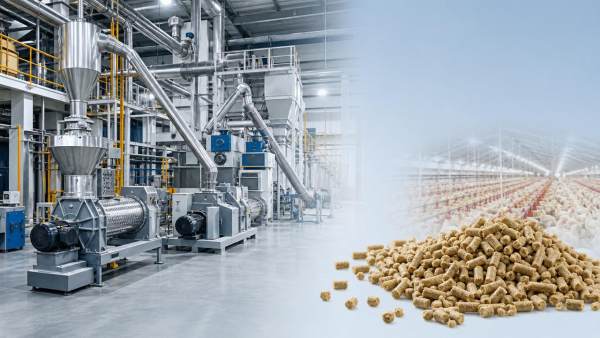
How should you choose feed machinery for poultry farms?
Choosing the right feed machinery for poultry farms directly affects feed consistency, flock performance, operating costs, and long-term production resilience.
The decision should not start with price alone. Capacity, hygiene, automation, safety, maintenance, and supplier reliability all shape total value.
This guide answers practical questions about feed machinery for poultry farms and helps define a reliable specification for modern poultry feed processing.
What does feed machinery for poultry farms usually include?
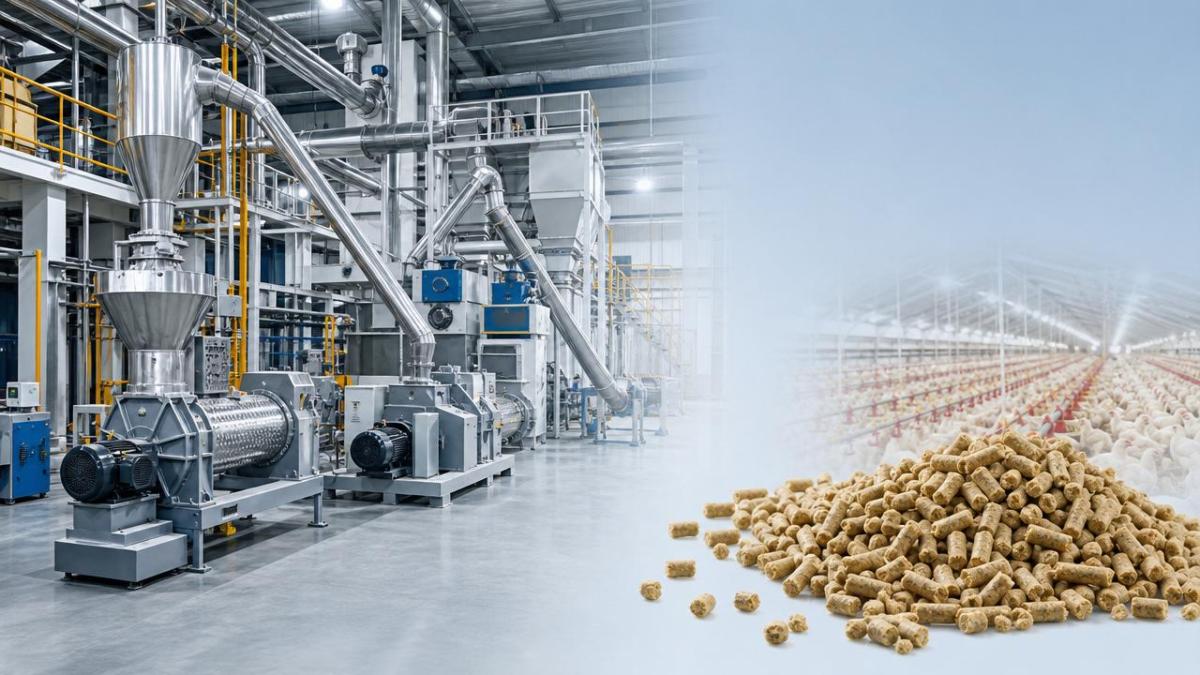
Feed machinery for poultry farms is not one single machine. It is a connected processing system designed to turn ingredients into uniform feed.
A basic line may include raw material receiving, cleaning, grinding, batching, mixing, pelleting, cooling, screening, conveying, and packing equipment.
For small operations, a grinder and mixer may be enough. Larger farms usually need automated dosing, pellet mills, and digital control systems.
The core purpose is stable nutrition delivery. Birds perform better when particle size, pellet durability, and ingredient distribution remain consistent.
Good feed machinery for poultry farms also reduces waste. Accurate mixing and controlled pelleting limit fines, segregation, and nutrient variation.
Common equipment in a poultry feed line
- Hammer mill or crusher for grain size reduction.
- Batching scales for accurate ingredient dosing.
- Mixer for uniform distribution of nutrients and additives.
- Pellet mill for compact, digestible, and transportable feed.
- Cooler and screener for stable finished pellets.
- Conveyors, elevators, bins, and packing systems.
The best configuration depends on flock size, formulation complexity, available space, labor conditions, and future expansion plans.
How much production capacity is needed?
Capacity is the first technical filter when selecting feed machinery for poultry farms. Oversized lines waste energy and capital.
Undersized equipment creates production delays, inconsistent feeding schedules, and emergency dependence on external feed sources.
Start by calculating daily feed demand. Consider broilers, layers, breeders, growth stages, mortality assumptions, and seasonal flock changes.
Then convert daily demand into hourly output. Include realistic working hours, cleaning time, maintenance windows, and formulation changeovers.
For example, a farm needing 20 tons daily should not simply buy a 2.5-ton hourly line for eight hours.
Downtime, raw material delays, die changes, and operator shifts can reduce practical output below nameplate capacity.
Capacity planning checklist
- Calculate peak feed demand, not only average demand.
- Allow reserve capacity for flock expansion.
- Check whether all machines match the same throughput.
- Confirm pellet mill capacity with the intended formula.
- Include cleaning and preventive maintenance time.
Balanced feed machinery for poultry farms should avoid bottlenecks. A powerful pellet mill cannot compensate for slow batching or poor cooling.
Which feed form is most suitable for poultry production?
Feed form determines equipment selection. Mash, crumble, and pellets each require different processing intensity and machinery investment.
Mash feed needs accurate grinding and mixing. It is simpler, but segregation can occur during conveying, storage, or manual distribution.
Pelleted feed improves handling, density, and intake uniformity. It requires conditioning, pelleting, cooling, and screening equipment.
Crumble feed is common for young birds. It usually requires a pellet mill followed by a crumbler and grading screen.
When comparing feed machinery for poultry farms, match the line to bird age, feeding system, formula type, and market expectations.
The right feed machinery for poultry farms should protect feed structure while maintaining digestibility, palatability, and nutrient precision.
How should quality, hygiene, and feed safety be evaluated?
Feed safety is a technical requirement, not an optional feature. Equipment design must reduce contamination, residue, and uncontrolled moisture.
Look for smooth contact surfaces, accessible inspection points, effective dust control, and cleaning-friendly layouts.
In modern feed machinery for poultry farms, sanitation design is increasingly linked with traceability and regulatory expectations.
Ingredient carryover is a common risk. It matters especially when using medicated additives, enzymes, pigments, or specialty premixes.
Mixing uniformity should be verified with documented test methods. Claimed performance should be supported by measurable coefficients of variation.
Key hygiene and safety questions
- Can the mixer, conditioner, and conveyors be inspected easily?
- Are contact materials corrosion-resistant and suitable for feed processing?
- Does the system limit dust accumulation and pest attraction?
- Can batches be traced by formula, time, and ingredient lot?
- Are safety guards and emergency stops properly integrated?
High-quality feed machinery for poultry farms should support HACCP principles, GMP-style documentation, and practical cleaning routines.
What level of automation is worth the investment?
Automation reduces human error, improves batch repeatability, and provides useful production records. However, excessive complexity can create maintenance pressure.
The best automation level depends on daily output, formula variety, labor availability, and the need for traceable production data.
Basic feed machinery for poultry farms may use manual ingredient loading and semi-automatic mixing cycles.
Advanced systems can include PLC controls, recipe management, automatic dosing, alarm logs, remote monitoring, and energy data tracking.
Automation should simplify decisions. Operators need clear interfaces, reliable sensors, and maintenance support for control components.
When selecting feed machinery for poultry farms, automation should be evaluated through lifecycle savings, not only installation cost.
How do energy use and maintenance affect total cost?
The purchase price is only one part of the cost. Energy, wearing parts, downtime, and repairs often define long-term economics.
Grinding and pelleting are usually major power consumers. Motor efficiency, screen selection, die design, and conditioning control influence consumption.
Reliable feed machinery for poultry farms should provide stable output without excessive amperage spikes or frequent stoppages.
Maintenance access is also essential. Bearings, belts, screens, dies, rollers, seals, and lubrication points should be easy to service.
Spare parts availability can determine whether a production issue lasts two hours or several days.
Cost factors to compare before purchase
- Installed motor power and expected kilowatt-hours per ton.
- Wear rate of hammers, screens, dies, and rollers.
- Recommended service intervals and maintenance skills required.
- Local availability of critical replacement parts.
- Warranty terms, commissioning support, and training scope.
Feed machinery for poultry farms should be assessed through total cost per ton, not headline equipment price.
What supplier evidence should be checked before ordering?
A capable supplier should provide more than brochures. Technical drawings, process flow diagrams, capacity data, and reference projects are important.
Ask for performance data related to similar poultry formulas. Different raw materials can change grinding behavior and pellet output.
For feed machinery for poultry farms, supplier experience in layout design can reduce installation problems and material flow losses.
Check whether the proposal includes foundation requirements, electrical load, dust collection, compressed air demand, and control cabinet conditions.
Commissioning and operator training should be clearly defined. A good line still underperforms if startup support is weak.
This evidence-based approach makes feed machinery for poultry farms easier to compare across different suppliers and technical proposals.
What mistakes should be avoided when selecting feed machinery for poultry farms?
One common mistake is choosing only by lowest price. Low-cost equipment can become expensive through downtime and inconsistent feed quality.
Another mistake is ignoring raw material variability. Corn, wheat, soybean meal, oil, and fiber levels affect machine performance.
Some lines fail because conveying equipment is undersized. Feed machinery for poultry farms must be evaluated as a complete system.
A fourth mistake is underestimating dust control. Dust increases product loss, hygiene issues, fire risk, and workplace discomfort.
Finally, avoid buying equipment without installation planning. Space, foundations, power supply, drainage, and ventilation should be confirmed early.
A practical selection sequence
- Define feed demand by flock type and growth stage.
- Select mash, pellet, or crumble production requirements.
- Set capacity with reserve margin and realistic working hours.
- Check hygiene design, safety systems, and traceability needs.
- Compare energy use, maintenance access, and spare parts support.
- Review supplier evidence, layout drawings, and commissioning scope.
Following this sequence helps align feed machinery for poultry farms with real production needs instead of short-term assumptions.
Conclusion: how to make the final decision
The right feed machinery for poultry farms combines capacity, feed quality, sanitation, automation, serviceability, and cost discipline.
A strong specification should describe formulas, output targets, feed forms, layout limits, energy expectations, and documentation requirements.
Before ordering, compare complete system performance rather than isolated machines. Confirm every section can support stable daily production.
For a dependable investment, request detailed technical proposals, verify comparable references, and calculate total cost per ton.
Well-selected feed machinery for poultry farms improves consistency, protects flock performance, and builds a more resilient feed processing operation.
Related Intelligence
- Feeding & Watering SystemsHow to Size Commercial Farm Feed Systems for Herd Capacity and Feed FlowFarm commercial feed systems: learn how to size storage, conveyors, and feed flow for herd capacity, peak demand, resilience, and efficient farm operations.
- Feeding & Watering SystemsSelecting a Nipple Drinking System for Broiler and Layer HousesNipple drinking system selection guide for broiler and layer houses: compare water flow, pressure control, flushing, durability, and installation needs.
- Feeding & Watering SystemsHow to Select Poultry Feeding Systems for Broiler Farms by Flock Size and Feed WasteFarm poultry feeding systems: learn how to match feeder design to broiler flock size, reduce feed waste, improve uniformity, and control lifecycle costs.
The Morning Broadsheet
Daily chemical briefings, market shifts, and peer-reviewed summaries delivered to your terminal.
