

The Authority in Global Agricultural Chemistry & Bio-Resources
Are aquaculture water test kits accurate enough?
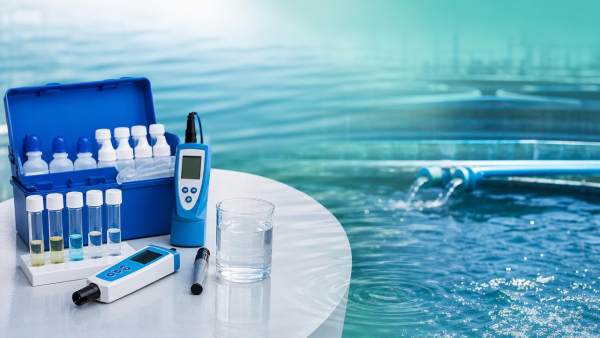
For quality control and safety managers, the accuracy of aquaculture water test kits is not a minor operational detail—it directly affects fish health, regulatory compliance, and production risk.
As aquaculture systems become more intensive and data-driven, rapid testing tools are increasingly used to monitor ammonia, nitrite, pH, dissolved oxygen, and other critical parameters.
But are these kits reliable enough for professional decision-making? Accuracy depends on test chemistry, calibration, sampling discipline, storage, and interpretation.
Are aquaculture water test kits accurate enough for daily farm decisions?
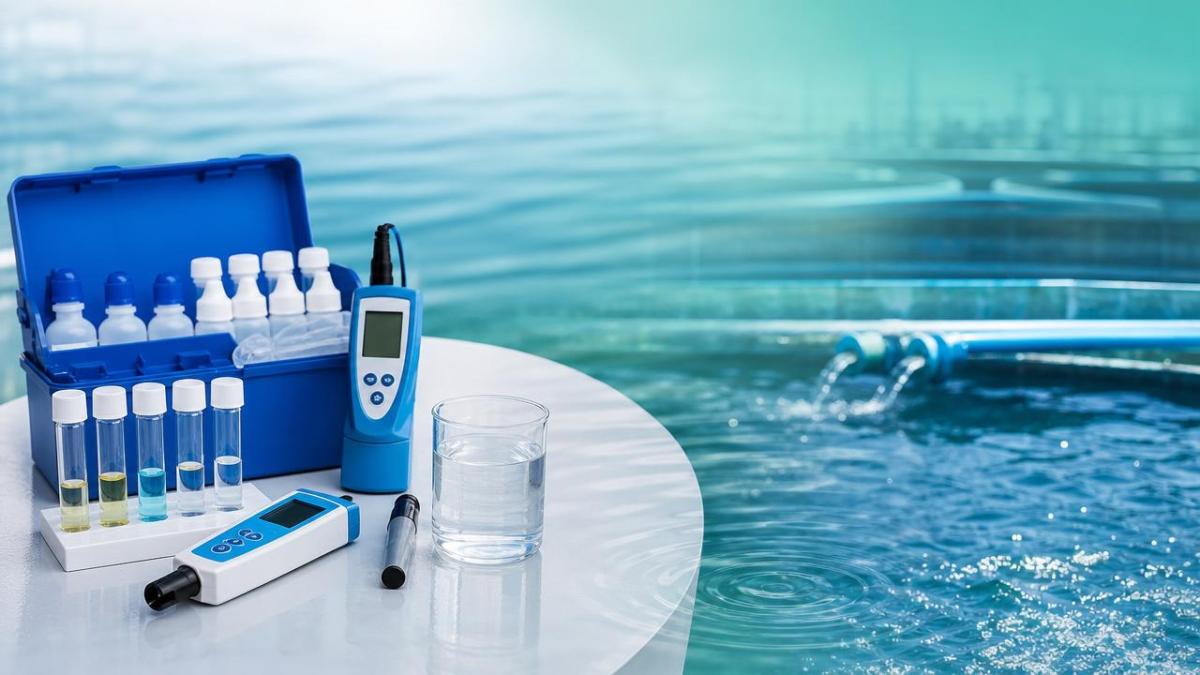
In most daily operating scenarios, aquaculture water test kits are accurate enough to detect trends, trigger responses, and prevent obvious water-quality failures.
They are especially useful when the goal is rapid screening rather than legally defensible laboratory documentation.
However, “accurate enough” depends on the parameter being tested and the consequence of a wrong reading.
For pH, alkalinity, hardness, and nitrate, many commercial kits provide practical guidance when used correctly.
For ammonia, nitrite, dissolved oxygen, and chlorine, small errors can carry greater biological risk.
A reading near a danger threshold should never be treated casually, even if the kit appears simple.
Aquaculture water test kits are best viewed as operational instruments, not universal substitutes for accredited laboratory analysis.
They support fast decisions, but critical events require confirmation, documentation, and sometimes specialist interpretation.
What does accuracy mean in aquaculture testing?
Accuracy is how close a result is to the true value. Precision is how consistently the same result repeats.
A kit can be precise but inaccurate if reagents are degraded or calibration is wrong.
It can also be accurate at mid-range levels but weaker near detection limits.
This matters because fish health responses are often nonlinear. A small ammonia increase can become dangerous under high pH.
Therefore, aquaculture water test kits should be judged against biological risk, not only printed accuracy claims.
Which types of aquaculture water test kits are most reliable?
Reliability varies widely among strips, liquid reagents, colorimeters, photometers, meters, and sensor-based systems.
The best choice depends on frequency, staff skill, budget, record requirements, and the stability of the farming environment.
Test strips are fast and inexpensive, but they are vulnerable to humidity, timing errors, and subjective color matching.
Liquid reagent kits often provide better resolution, especially when procedures are followed exactly.
Digital colorimeters reduce human color judgment, but they still depend on clean vials, fresh reagents, and correct blanking.
Electrochemical meters can be strong for pH, dissolved oxygen, conductivity, and oxidation-reduction potential.
Yet meters require calibration, probe care, membrane maintenance, and temperature compensation.
For intensive recirculating aquaculture systems, aquaculture water test kits are often combined with online monitoring sensors.
This hybrid model balances continuous surveillance with manual verification during abnormal events.
What causes inaccurate results in aquaculture water test kits?
Most inaccurate results come from handling and interpretation, not from the kit chemistry alone.
Expired reagents, warm storage, wet strip containers, dirty cuvettes, and poor lighting can all distort readings.
Sampling errors are equally important. Water should represent the system, not only one calm corner or surface layer.
Biofilm, feed dust, suspended solids, and air bubbles can interfere with some readings.
Timing errors are common. Many color reactions require exact waiting periods before comparison or measurement.
Reading too early may underreport concentration. Reading too late may overdevelop color and exaggerate risk.
Temperature also matters. Dissolved oxygen, pH response, and chemical reaction speed can change with water temperature.
Aquaculture water test kits should be stored dry, sealed, shaded, and within the recommended temperature range.
- Use clean sample containers dedicated to water testing.
- Rinse vials with sample water before testing, unless instructions say otherwise.
- Avoid touching reactive pads, vial interiors, or probe membranes.
- Record time, location, temperature, salinity, and recent feeding events.
- Compare suspicious results with a second method before major intervention.
When are field kits enough, and when is laboratory verification essential?
Field testing is usually sufficient for routine trend monitoring and immediate operational adjustments.
For example, aquaculture water test kits can guide aeration changes, water exchange timing, and biofilter checks.
They are also useful after heavy feeding, rainfall, transport stress, medication, or sudden fish behavior changes.
Laboratory verification becomes essential when readings affect compliance, insurance, certification, dispute resolution, or mortality investigation.
It is also advisable when results are inconsistent with fish behavior or historical system patterns.
A lab can test broader parameters, detect interferences, and provide traceable methods under recognized quality systems.
Laboratory analysis is slower and more expensive, but it reduces uncertainty when decisions carry high consequence.
The strongest approach is a tiered testing protocol. Use aquaculture water test kits daily, then verify critical thresholds periodically.
How should aquaculture water test kits be selected?
Selection should begin with the species, production system, stocking density, salinity, and local reporting requirements.
Shrimp ponds, cage culture, hatcheries, flow-through farms, and recirculating systems do not face identical testing demands.
A hatchery may need high sensitivity for nitrite and pH stability. A grow-out pond may prioritize oxygen and ammonia trends.
Aquaculture water test kits should state measuring range, resolution, interference risks, shelf life, and storage limits.
Clear instructions, accessible reagents, and replacement parts are also important for long-term reliability.
Do not select only by price. A cheap kit that misses early toxicity can become expensive quickly.
For professional programs, consider kits that support batch records, calibration logs, and lot traceability.
Where digital meters are used, check calibration standards, probe lifespan, waterproof rating, and data export options.
- Define the parameters that directly affect animal welfare and compliance.
- Match detection range to real operating conditions, not marketing claims.
- Check whether salinity, turbidity, or color can interfere with the method.
- Confirm reagent availability and expected testing cost per sample.
- Validate new kits against an established method before full deployment.
How can accuracy be improved in daily use?
Accuracy improves when testing becomes a controlled process rather than an informal habit.
Standard operating procedures should define sampling depth, location, time, container type, and retesting rules.
Aquaculture water test kits should be checked against reference standards or laboratory results at planned intervals.
For pH meters, two-point calibration is generally preferable when decisions depend on narrow pH differences.
For dissolved oxygen meters, membrane condition, electrolyte level, and barometric compensation should be monitored.
For colorimetric tests, use consistent lighting or digital reading to reduce visual bias.
Trend charts are more informative than isolated readings. A gradual ammonia rise can reveal biofilter stress early.
Outlier management is equally important. One strange result should trigger retesting, not instant overcorrection.
Aquaculture water test kits work best when paired with disciplined records and clear action thresholds.
FAQ: common questions about aquaculture water test kits
Conclusion: are they accurate enough?
Aquaculture water test kits are accurate enough for many routine decisions when chosen carefully and used under controlled procedures.
They are not perfect, and they should not be treated as infallible evidence during high-risk events.
The practical answer is conditional: use field kits for speed, trends, and early warning.
Use laboratory verification for compliance, unexplained losses, conflicting readings, and decisions with major financial or animal-health impact.
The next step is to audit current testing practices against sampling, calibration, storage, documentation, and verification requirements.
With that discipline, aquaculture water test kits become a reliable part of modern water-quality management.
Related Intelligence
- Aeration & Water TechHow Water Treatment Research Guides Technology Selection for Industrial Wastewater ProjectsWater treatment research guides smarter industrial wastewater technology selection. Learn how to assess variable streams, pilot risks, compare process trains, and reduce compliance costs.
- Aeration & Water TechSelecting Solids Filtration for Aquaculture: Flow Rates, Loading, and Fish WelfareSolids filtration aquaculture guide: compare flow rates, peak loading, capture performance, maintenance, and fish welfare to choose a reliable system.
- Aeration & Water TechWhat RO water treatment systems deliver consistent 98% salt rejection at 25°C with feed TDS over 3,000 ppm?RO water treatment systems that deliver proven 98% salt rejection at 25°C with >3,000 ppm TDS—engineered for API synthesis, aquaculture & grain processing.
The Morning Broadsheet
Daily chemical briefings, market shifts, and peer-reviewed summaries delivered to your terminal.
