

The Authority in Global Agricultural Chemistry & Bio-Resources
APEC Trade Ministers Adopt Suzhou Statement on Green Agri-Tech Standards
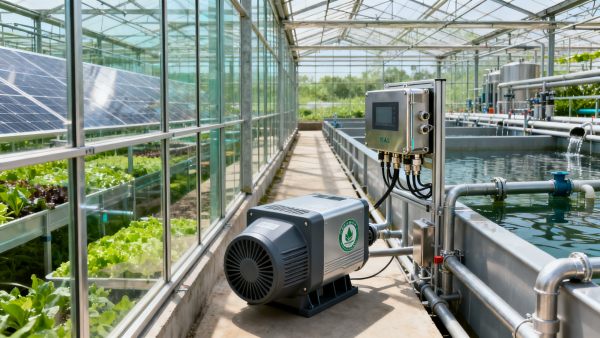
On May 29, 2026, the APEC Trade Ministers’ Meeting in Suzhou issued a joint statement prioritizing mutual recognition of green technology standards for agriculture and aquaculture — specifically covering smart greenhouse energy efficiency certification, EMC compatibility of water quality monitoring modules in Recirculating Aquaculture Systems (RAS), and低碳 manufacturing declarations for aeration and water treatment equipment. This development signals concrete implications for exporters, manufacturers, and supply chain stakeholders operating across APEC economies.
Event Overview
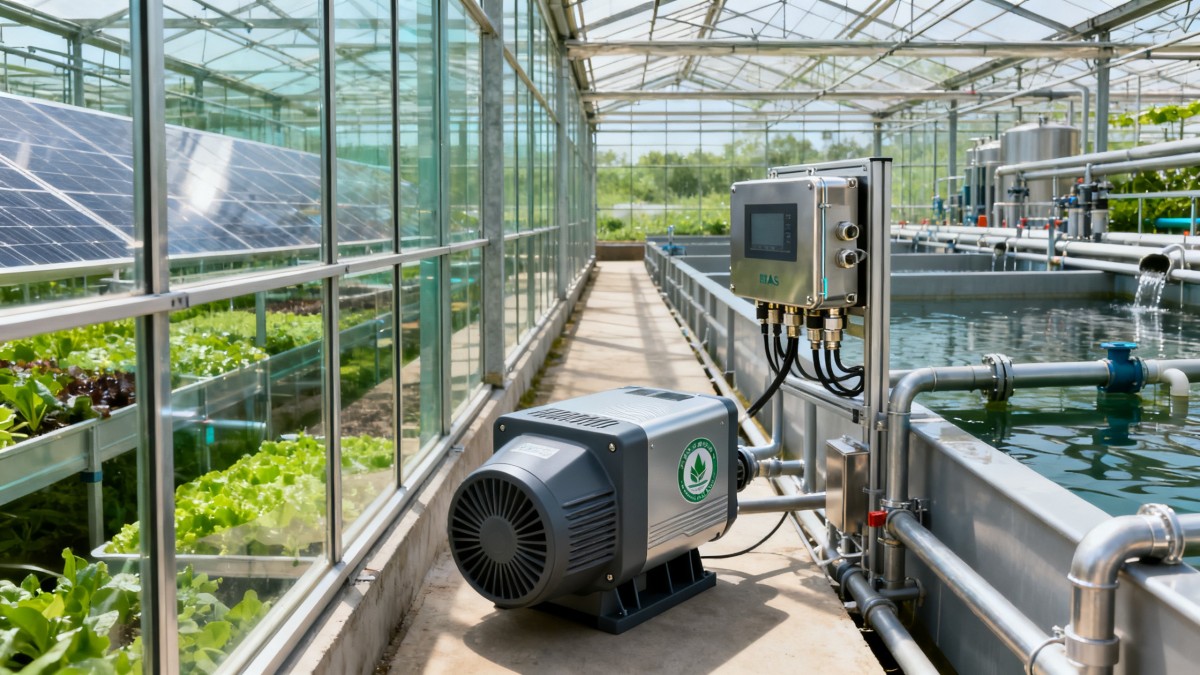
The APEC Suzhou Joint Statement, released on May 29, 2026, identifies ‘mutual recognition of green technology standards for agriculture and aquaculture’ as a priority cooperation area. It explicitly references three technical modules: Smart Greenhouse energy efficiency certification; electromagnetic compatibility (EMC) compliance for water quality monitoring modules used in Recirculating Aquaculture Systems (RAS); and low-carbon manufacturing declarations for aeration and water technology equipment. Twelve APEC member economies have committed to establishing a fast-track mutual recognition pathway, with pilot implementation scheduled to begin in Q3 2026.
Industries Affected
Smart greenhouse equipment manufacturers
Manufacturers of climate-controlled horticultural systems are directly affected because the statement singles out energy efficiency certification as a recognized standard. Compliance with harmonized testing protocols — rather than country-specific requirements — may reduce pre-market approval timelines across participating APEC markets.
RAS system integrators and component suppliers
Suppliers of water quality monitoring modules for recirculating aquaculture face new interoperability expectations. The emphasis on EMC compatibility implies that module-level electromagnetic emissions and immunity performance will be assessed under shared test criteria — potentially affecting design validation workflows and third-party lab engagement.
Aeration and water treatment equipment producers
Producers issuing low-carbon manufacturing declarations must now anticipate standardized disclosure formats and verification thresholds. While the statement does not specify methodology, the inclusion of such declarations as a mutual recognition module suggests future alignment on scope (e.g., Scope 1 & 2 emissions), data sources, and assurance requirements.
Exporters and trade service providers
Companies managing cross-border shipments of green agri-tech hardware will likely encounter revised customs documentation or conformity assessment pathways once the Q3 2026 pilot launches. The ‘fast-track’ designation implies procedural simplification — but only for products covered by the three named modules and certified under agreed frameworks.
What Companies and Practitioners Should Monitor and Do Now
Track official technical annexes and pilot eligibility criteria
The joint statement outlines intent but not technical detail. Stakeholders should monitor APEC’s Committee on Trade and Investment (CTI) and Sub-Committee on Standards and Conformance (SCSC) for forthcoming annexes specifying test methods, accreditation requirements, and scope boundaries for each module.
Verify current certifications against anticipated alignment points
Manufacturers should audit existing energy efficiency reports (for greenhouses), EMC test records (for RAS modules), and carbon footprint disclosures (for aeration equipment) to identify gaps relative to international norms like ISO/IEC 17065, CISPR 11, or GHG Protocol Product Standard — as these are likely reference baselines.
Distinguish policy signal from operational readiness
The commitment to launch pilots in Q3 2026 is a coordination milestone, not an immediate regulatory shift. No new mandatory requirements take effect before pilot outcomes are evaluated. Companies should treat this as a planning horizon — not a compliance deadline.
Engage national standards bodies early on domestic implementation
Since mutual recognition depends on national adoption, companies should consult their home-country standards authorities (e.g., SAC in China, JISC in Japan, ANSI in the U.S.) to understand planned alignment timelines and potential domestic certification upgrades required to access the fast-track pathway.
Editorial Perspective / Industry Observation
Observably, the Suzhou Statement functions primarily as a coordination signal — not an implemented regulatory framework. Its significance lies in the explicit selection of three high-visibility, export-relevant technical domains, suggesting APEC members are coalescing around interoperability priorities where commercial and environmental objectives align. Analysis shows this reflects growing convergence among regulators on measurement-based green claims, especially where energy use, emissions, and electromagnetic reliability intersect with food system resilience. From an industry perspective, it is more accurate to view this as the formalization of a multi-year alignment process — one that lowers long-term market entry friction but requires near-term technical preparation.
Conclusion
The APEC Suzhou Joint Statement marks a procedural step toward harmonizing green technology assessments in agriculture and aquaculture — not an immediate regulatory change. Its practical relevance centers on three defined technical modules and a Q3 2026 pilot timeline. It is better understood as a framework-setting initiative: one that clarifies where alignment efforts are focused, but leaves implementation details, timelines beyond the pilot, and enforcement mechanisms to subsequent working group outputs.
Source Attribution
Main source: Official APEC Trade Ministers’ Joint Statement, Suzhou, May 29, 2026.
Points requiring ongoing observation: Technical annexes, pilot participant list, eligibility rules, and national implementation schedules — all pending publication by APEC’s SCSC and CTI working groups.
Related Intelligence
- Smart GreenhouseGreenhouse Equipment for Vertical Farming: Choosing Lighting and VentilationChoose greenhouse equipment for vertical farming with confidence. Compare lighting, airflow, and moisture control to improve crop uniformity and manage costs. Explore the guide.
- Forestry EquipmentChoosing Compact Forestry Machinery for Small Woodlots and Narrow AccessChoose compact forestry machinery that fits small woodlots and narrow access. Compare payload, turning clearance, safety, and running costs to find the right machine for your site.
- APIs & IntermediatesProcurement Planning: Which Resource Reports Help Prevent Material Shortages?Discover how procurement planning resource reports reveal usable stock, shortage dates, and supplier risks so you can prevent material shortages and keep production on track.
The Morning Broadsheet
Daily chemical briefings, market shifts, and peer-reviewed summaries delivered to your terminal.
