

The Authority in Global Agricultural Chemistry & Bio-Resources
Global Oil Stocks Near 100-Day Threshold; Shipping Costs Surge 18%, Delaying Agri & Water Tech Deliveries
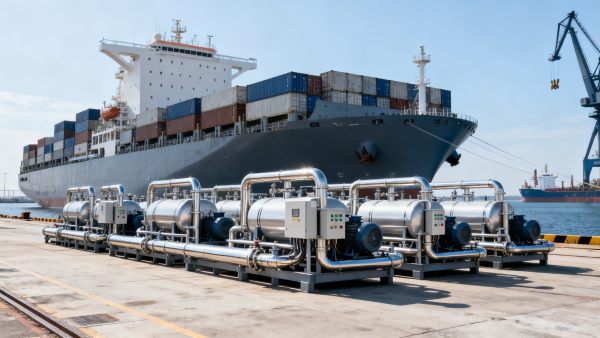
Global commercial crude oil inventories have fallen to a 92-day supply level—approaching the widely monitored 100-day threshold—triggering sharp increases in marine fuel surcharges and container freight rates. The exact event date was not specified, but the development was reported in the financial morning briefing dated 29 May 2026. This dynamic is now affecting delivery timelines for high-value, oversized equipment used in agriculture and water treatment sectors.
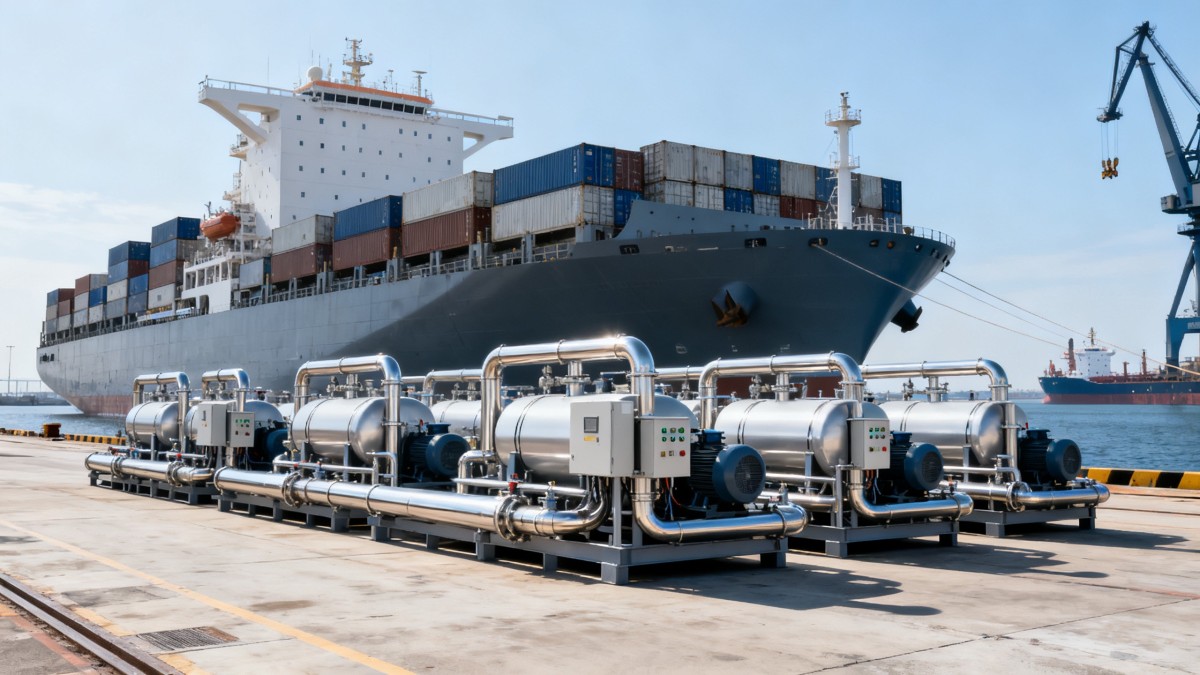
Confirmed Market Developments
According to the 29 May 2026 financial morning briefing, global commercial crude oil stocks stand at 92 days of forward supply, nearing the industry-recognized 100-day警戒线 (‘alert threshold’). This tightening has driven substantial upward adjustments to the Bunker Adjustment Factor (BAF) for VLCCs and container vessels. Spot freight rates on the Asia–Europe trade lane rose by 18% week-on-week. These cost increases have directly impacted export shipments of Heavy Agri Machinery, RAS Systems, and Aeration & Water Tech equipment—categories characterized by large physical dimensions and high unit value. Major ocean carriers have extended booking confirmation lead times to over 14 days.
Impact Across Supply Chain Roles
Export-oriented trading enterprises
These firms face immediate margin pressure due to elevated BAF charges and longer booking cycles. Rate volatility complicates forward pricing, while delayed confirmation windows reduce flexibility in shipment scheduling and contract fulfillment—especially under time-bound delivery clauses.
Raw material procurement organizations
Although not directly exposed to freight surcharges, procurement teams must reassess landed cost models. Rising transport costs for imported components—such as specialized pumps, control modules, or corrosion-resistant alloys—may prompt earlier ordering or alternative sourcing strategies to hedge against schedule slippage.
Equipment manufacturers
Manufacturers of Heavy Agri Machinery and Aeration & Water Tech systems are encountering extended customer lead times. Production planning must now incorporate longer outbound logistics windows, and engineering documentation—including dimensional data, weight certifications, and lashing plans—must be finalized earlier to meet carrier pre-booking requirements.
Logistics and freight forwarding service providers
Forwarders report heightened demand for early cargo readiness verification and enhanced documentation support. Clients increasingly require assistance with BAF-inclusive rate validation, vessel space guarantee coordination, and compliance checks for oversized cargo permits across key ports—including those with restrictive draft or crane capacity limits.
Key Operational Priorities for Enterprises
Reassess delivery timelines in procurement and sales contracts
With confirmed 14+ day booking confirmation periods, firms should revise internal delivery buffers and renegotiate Incoterms where appropriate—particularly shifting from FOB to CFR/CIF arrangements to retain greater control over vessel slot allocation and timing.
Validate technical documentation for oversized cargo compliance
RAS Systems and Aeration & Water Tech units often exceed standard container dimensions. Manufacturers must ensure load diagrams, center-of-gravity reports, and lashing calculation summaries comply with carrier-specific requirements—and submit them at least 10 business days prior to intended booking.
Monitor BAF pass-through mechanisms in long-term agreements
Contracts referencing fixed freight rates or outdated BAF formulas may no longer reflect operational reality. Legal and procurement teams should audit existing agreements for indexation clauses tied to published BAF indices (e.g., Shanghai Containerized Freight Index or Baltic Exchange assessments).
Strengthen coordination with port agents and terminal operators
Extended booking cycles increase reliance on pre-arrival coordination. Early engagement with port agents helps secure berth availability, verify handling equipment compatibility, and avoid demurrage risks—particularly critical for heavy-lift deliveries requiring mobile harbor cranes or roll-on/roll-off ramps.
Industry Perspective: Beyond Short-Term Volatility
Analysis shows that sustained proximity to the 100-day inventory threshold reflects structural shifts—not just cyclical tightness—in global energy logistics. From an industry perspective, this signals a growing need for integrated transport-cost modeling in product lifecycle planning. What deserves closer attention is how rising baseline freight volatility may accelerate adoption of modular design principles—especially in RAS Systems and water aeration platforms—to improve containerization efficiency and reduce dimensional penalties. It is more appropriate to understand this as a catalyst for re-evaluating supply chain resilience metrics, rather than a transient cost spike.
Strategic Implications for Sector Participants
This episode underscores that energy market dynamics—traditionally viewed as external macro factors—are now direct inputs into technical and commercial decision-making for capital equipment exporters. Rational response requires moving beyond reactive cost absorption toward proactive logistics-integrated engineering and contracting practices. Long-term competitiveness will depend less on unit price alone and more on demonstrable delivery predictability, documentation readiness, and cross-border operational agility.
Source Attribution & Ongoing Monitoring
This article synthesizes information provided in the user’s input—including the headline, event summary, and reference to the 29 May 2026 financial morning briefing. Specific official source links were not provided in the input and should be verified continuously. Stakeholders are advised to monitor updates from maritime regulatory bodies (e.g., IMO), international freight indices (e.g., FBX, XSI), carrier BAF announcements, and national customs authorities for evolving implementation guidance on oversized cargo documentation, port surcharge structures, and fuel cost pass-through protocols.
Related Intelligence
- Smart GreenhouseGreenhouse Equipment for Vertical Farming: Choosing Lighting and VentilationChoose greenhouse equipment for vertical farming with confidence. Compare lighting, airflow, and moisture control to improve crop uniformity and manage costs. Explore the guide.
- Forestry EquipmentChoosing Compact Forestry Machinery for Small Woodlots and Narrow AccessChoose compact forestry machinery that fits small woodlots and narrow access. Compare payload, turning clearance, safety, and running costs to find the right machine for your site.
- APIs & IntermediatesProcurement Planning: Which Resource Reports Help Prevent Material Shortages?Discover how procurement planning resource reports reveal usable stock, shortage dates, and supplier risks so you can prevent material shortages and keep production on track.
The Morning Broadsheet
Daily chemical briefings, market shifts, and peer-reviewed summaries delivered to your terminal.
