

The Authority in Global Agricultural Chemistry & Bio-Resources
Korea Launches K-REACH Fast-Track for Supply-Strained Agrochemical Actives
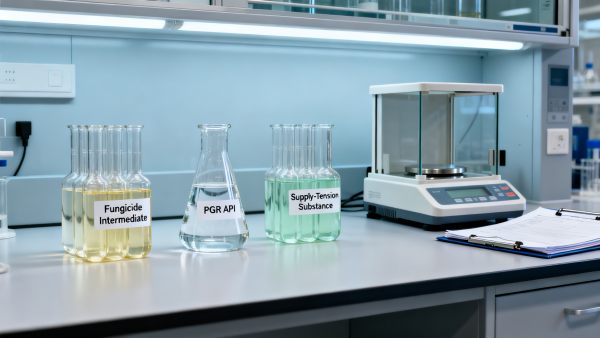
Starting 1 May 2026, South Korea’s Ministry of Environment will implement a special registration pathway under K-REACH for agricultural active ingredients listed on the newly established ‘Supply-Tension Chemicals List’—including certain fungicidal intermediates and plant growth regulator APIs. With an 8-week review timeline and partial waiver of ecotoxicological testing requirements, this measure targets critical raw material shortages faced by domestic formulation manufacturers—and presents a more efficient compliance route for agrochemical exporters, particularly from China.
Event Overview
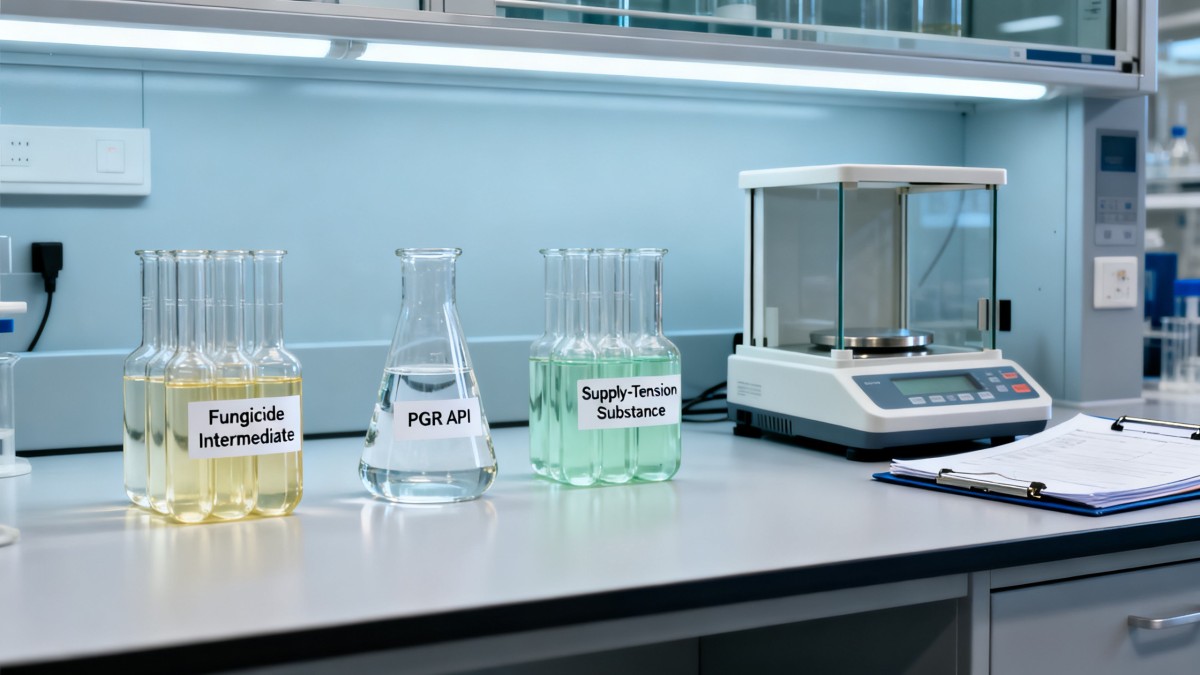
Effective 1 May 2026, the Korean Ministry of Environment has introduced a K-REACH registration exception for chemical substances designated as ‘supply-tension’ in the agricultural sector. Eligible substances include specific active pharmaceutical ingredients (APIs) used in agrochemical formulations—such as certain fungicide intermediates and plant growth regulators. Under this exception, regulatory review is shortened to eight weeks, and selected ecotoxicological studies are waived. The stated objective is to mitigate supply chain disruption risks for local agrochemical formulators.
Industries Affected
Agrochemical Exporters (especially Chinese manufacturers)
These companies directly supply active ingredients to Korean formulators. The fast-track reduces time-to-market and lowers data-generation costs, potentially improving competitiveness in the Korean market—but only for substances formally included on the official list.
Raw Material Procurement Units (within Korean Formulators)
Procurement teams face urgent pressure to secure alternative or backup sources amid ongoing supply instability. The new pathway offers a near-term solution for specific actives, but does not resolve broader sourcing diversification needs.
Contract Manufacturing & Formulation Facilities (in Korea)
Domestic formulators reliant on imported actives may experience reduced production delays and lower regulatory uncertainty—provided their suppliers qualify for and successfully complete the expedited process.
Regulatory & Compliance Service Providers
Firms supporting K-REACH submissions must now differentiate between standard and supply-tension pathways—including updated documentation templates, timing expectations, and scope-of-testing assessments. Capacity planning for accelerated reviews becomes essential.
What Stakeholders Should Monitor and Do Now
Track official updates to the ‘Supply-Tension Chemicals List’
The list is not yet publicly available. Companies should monitor announcements from the Korea Ministry of Environment and the National Institute of Environmental Research (NIER) for initial inclusions, eligibility criteria, and any revision schedule.
Verify substance eligibility before initiating registration
Not all agrochemical actives qualify—even if structurally similar. Confirmation requires cross-checking against the official list and alignment with defined use categories (e.g., fungicide intermediate vs. herbicide API). Premature submission under the fast-track may result in reclassification to standard review.
Distinguish policy intent from operational readiness
The regulation takes effect on 1 May 2026, but implementation capacity—including reviewer training, IT system updates, and guidance documents—may lag. Early applicants should allow buffer time and confirm procedural clarity with NIER prior to filing.
Align procurement and regulatory timelines
Importers should coordinate closely with suppliers to synchronize dossier preparation (including updated hazard classification and exposure scenarios) with purchase orders and logistics planning—ensuring no gap between regulatory clearance and physical delivery.
Editorial Observation / Industry Perspective
Observably, this initiative signals a pragmatic recalibration of K-REACH enforcement—not a relaxation of standards, but a targeted adjustment to address acute industrial bottlenecks. Analysis shows it reflects growing recognition that rigid application of full data requirements can inadvertently amplify supply fragility, especially for niche or low-volume agrochemical intermediates. From an industry perspective, the fast-track is best understood as a temporary, list-based contingency mechanism rather than a structural reform. Its long-term relevance hinges on how frequently the list is updated and whether inclusion triggers follow-on incentives (e.g., fee reductions or extended validity).
Current monitoring priorities include: (1) transparency of list curation methodology; (2) consistency in waiver determinations across substance classes; and (3) whether the 8-week timeline holds under real-world caseloads. These factors will determine whether the exception evolves into a durable feature—or remains a narrow, situational tool.
Conclusion
This K-REACH fast-track is a timely procedural adaptation to localized supply constraints—not a broad regulatory shift. For stakeholders, its immediate value lies in enabling faster, lower-cost market access for specific high-priority actives. However, it does not substitute for robust supply chain resilience planning or long-term regulatory strategy. It is more accurately interpreted as a short-term risk-mitigation instrument, whose utility depends entirely on precise alignment between commercial priorities and the official list’s scope and stability.
Information Sources
Main source: Official announcement issued by the Korean Ministry of Environment (effective date confirmed as 1 May 2026).
Note: The composition of the ‘Supply-Tension Chemicals List’, detailed eligibility conditions, and formal guidance documents remain pending public release and are subject to ongoing observation.
Related Intelligence
- Smart GreenhouseGreenhouse Equipment for Vertical Farming: Choosing Lighting and VentilationChoose greenhouse equipment for vertical farming with confidence. Compare lighting, airflow, and moisture control to improve crop uniformity and manage costs. Explore the guide.
- Forestry EquipmentChoosing Compact Forestry Machinery for Small Woodlots and Narrow AccessChoose compact forestry machinery that fits small woodlots and narrow access. Compare payload, turning clearance, safety, and running costs to find the right machine for your site.
- APIs & IntermediatesProcurement Planning: Which Resource Reports Help Prevent Material Shortages?Discover how procurement planning resource reports reveal usable stock, shortage dates, and supplier risks so you can prevent material shortages and keep production on track.
The Morning Broadsheet
Daily chemical briefings, market shifts, and peer-reviewed summaries delivered to your terminal.
