

The Authority in Global Agricultural Chemistry & Bio-Resources
Vietnam Power Supply Shift Lifts Ventilation Exports

The timing of the event was not specified in the provided information, but the development is clear: Vietnam has allowed coal mining companies to raise output to ease a power generation shortfall, and that policy move is already being reflected in procurement behavior tied to thermal power support systems. For manufacturers, EPC contractors, exporters, and supply-chain service providers connected to Climate Control & Ventilation equipment, the issue is worth attention because it links an energy security decision with faster equipment sourcing, shorter delivery expectations, and a more immediate compliance focus around operating conditions, technical documentation, and project execution.
What the approved production increase is already signaling
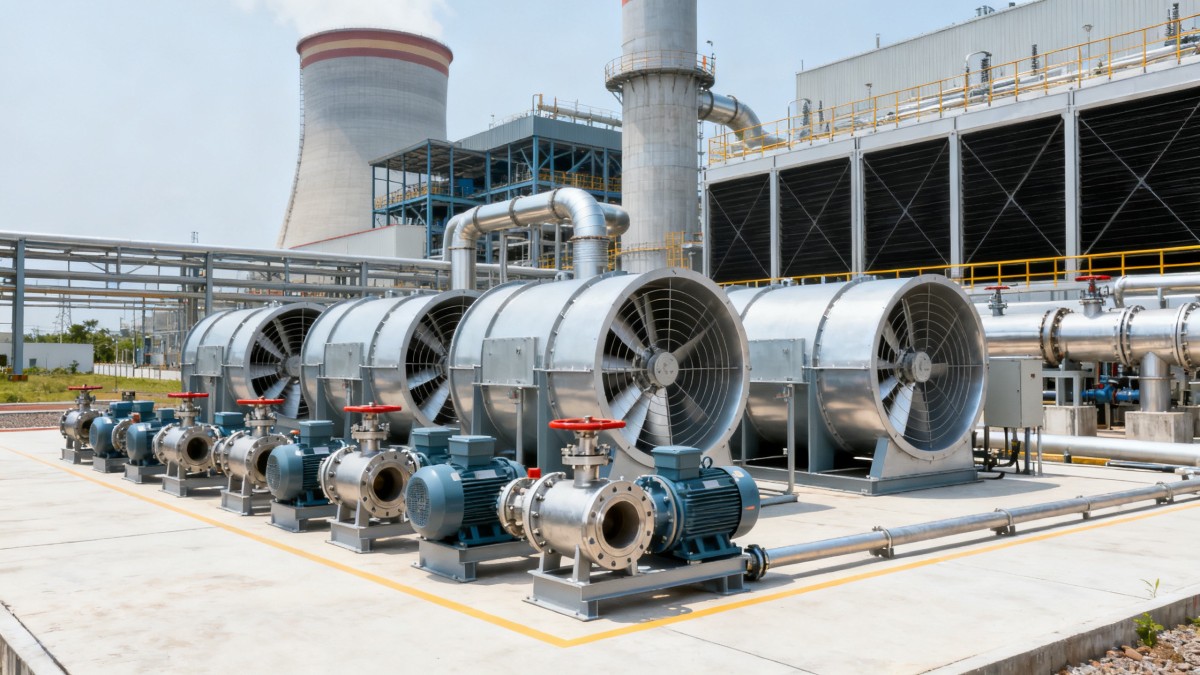
According to the provided summary, the Vietnamese government has approved higher coal output by mining enterprises in order to relieve a power supply gap. In the short term, the expansion of thermal power capacity is expected to drive upgrades to auxiliary facilities at power plants, with particularly strong demand for Climate Control & Ventilation systems designed for high-temperature and corrosion-resistant service conditions.
The same summary states that Chinese manufacturers exporting related equipment to Vietnam have seen average order delivery cycles shorten from 65 days to 42 days. This change is presented as a reflection of faster supporting-equipment procurement by local EPC general contractors. The product categories specifically identified include ventilation units, intelligent temperature-control valve assemblies, and explosion-proof fans.
Where the pressure is moving across procurement and delivery
Export suppliers are facing a tighter execution window
From an industry perspective, exporters are likely to feel the impact first through schedule compression rather than through headline volume alone. A shorter delivery cycle means quotation response, specification confirmation, production planning, packing lists, technical files, and shipment coordination may all need to move faster. What deserves closer attention is whether buyers begin treating shorter lead times as a new practical benchmark in project-linked procurement.
EPC buyers may place more weight on specification readiness
For EPC contractors and project procurement teams, the policy-driven need to secure supporting systems more quickly can shift attention toward suppliers that can align technical documents early. Analysis shows that for ventilation-related packages, the practical bottleneck may not be limited to manufacturing capacity; it may also involve whether bidders can provide complete technical bid alignment, materials information, operating-condition suitability, and product configuration clarity without repeated revisions.
Component makers and integrators may see compliance scrutiny move upstream
Manufacturers of fans, valve groups, and related control assemblies may be affected through customer requests for products suited to high-temperature and corrosion-prone environments. Observably, once purchasing accelerates, downstream buyers often expect upstream suppliers to present clearer evidence of product suitability, quality traceability, and consistency between technical submittals and delivered goods. Even where no new certification rule has been specified in the provided information, the compliance burden in practice can still increase through contract documents and project acceptance requirements.
Logistics and after-sales service providers may need closer project coordination
Supply-chain service firms and after-sales teams may also be affected because compressed procurement often narrows the margin for shipment delays, document discrepancies, and post-delivery adjustments. From an execution standpoint, handover records, spare-parts planning, installation coordination, and service-response arrangements can become more important when projects are being advanced on an accelerated timetable.
Practical checkpoints companies should watch now
Check whether technical files match harsher service conditions
Analysis shows that the demand increase described in the summary is concentrated in equipment expected to perform under high-temperature and corrosion-related conditions. Companies involved in exports or project supply should therefore pay close attention to whether datasheets, material descriptions, performance parameters, and product selection documents are fully consistent with the intended service environment stated by the buyer.
Prepare for faster tender and document turnaround
What deserves closer attention is the reduction in average delivery time from 65 to 42 days, because this suggests less tolerance for slow document circulation. Exporters and supporting suppliers should closely watch tender documents, technical clarification requests, packing and shipping paperwork, and any buyer-side qualification materials that could affect procurement release or delivery scheduling.
Track how buyer requirements are expressed in contract practice
The provided information does not set out detailed implementation rules, so it would be premature to treat the current shift as a fully defined compliance regime. Even so, companies should monitor how requirements begin appearing in RFQs, bid packages, technical annexes, inspection requests, and acceptance conditions, since those documents often show how a policy-driven market change is being executed in practice.
Do not separate delivery speed from quality traceability
Observably, accelerated procurement can increase the risk of mismatches between promised specifications and delivered equipment. For that reason, suppliers should keep document control, testing records, configuration confirmation, and after-sales responsibilities tightly connected, especially for explosion-proof fans, intelligent temperature-control valve assemblies, and ventilation units that may be installed in more demanding plant environments.
Why this looks more like an execution signal than a completed rule change
In editorial observation, this development is better understood as an execution signal linked to energy supply priorities rather than as a fully transparent new regulatory framework. The confirmed facts point to a government-approved output increase and a measurable shortening of export delivery cycles, which together indicate that procurement behavior is changing on the ground.
At the same time, analysis shows that the market still needs to observe how this demand is translated into formal purchasing language, technical standards in bidding documents, and practical acceptance expectations. In other words, the commercial response appears real, but the detailed rule expression still needs continued verification through project documents and market feedback.
How to read the current change rationally
The most balanced reading of this event is that a power-supply policy adjustment is creating a near-term procurement pull for Climate Control & Ventilation equipment tied to thermal power support systems. That matters not only because demand is rising in named product categories, but also because delivery expectations and document readiness appear to be tightening at the same time.
It is more appropriate to understand this as a market-facing implementation development with clear supply-chain implications, rather than as a completed and fully detailed rule settlement. For companies active in export supply, EPC coordination, and equipment support, the practical task now is to watch how buyer requirements, technical documentation, and delivery controls evolve as projects move forward.
Basis of this article and points still requiring verification
This article is generated based on the user-provided news title, event timing, and event summary. The specific official source link was not provided in the input, so it still requires ongoing verification against source types commonly relevant to this kind of development, such as official announcements, regulatory releases, trade or customs information, industry association updates, standard-setting documents, and reporting by authoritative media.
Further observation is still needed on implementation details, the wording used in procurement and tender documents, possible certification or acceptance expectations in project execution, market feedback from buyers and suppliers, and how companies actually adjust delivery, documentation, and after-sales arrangements in response.
Related Intelligence
- Climate Control & VentilationHow to Specify Modular Control Panels for Poultry House Ventilation SystemsModular control panels for poultry ventilation: learn how to specify reliable I/O, sensors, alarms, variable-speed fans, and future-ready expansion.
- Climate Control & VentilationWhat Variable Speed Insights Matter Most When Optimizing Greenhouse Ventilation?Variable speed insights reveal how fan speed affects humidity, airflow, stability, and energy use in greenhouse ventilation. Learn what to adjust first for smarter, more reliable climate control.
- Climate Control & VentilationPoultry Ventilation for Broilers: How to Balance Airflow, Temperature, and Litter QualityPoultry ventilation for broilers made practical: learn how to balance airflow, temperature, humidity, and litter quality to improve flock health, growth, and house performance.
The Morning Broadsheet
Daily chemical briefings, market shifts, and peer-reviewed summaries delivered to your terminal.
