

The Authority in Global Agricultural Chemistry & Bio-Resources
South Korea to Allow Direct ETF Investment by Foreign Investors
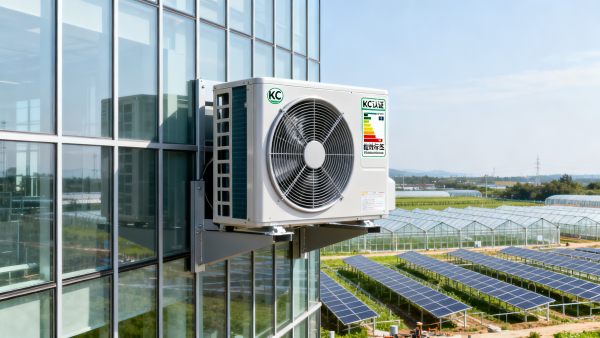
On May 24, 2026, South Korea announced plans to permit foreign investors to directly trade exchange-traded funds (ETFs) starting in the second half of 2026. Concurrently, JD.com’s Joybuy Europe platform has launched dedicated traffic-entry support for Climate Control & Ventilation equipment. This development is poised to influence cross-border procurement dynamics—particularly for green building and smart greenhouse projects in South Korea relying on Chinese temperature-control hardware—and may reshape how overseas engineering contractors allocate capital to secure supply chain commitments.
Event Overview
On May 24, 2026, the South Korean government confirmed its intention to allow foreign investors direct access to domestic ETF trading beginning in H2 2026. Separately, JD.com’s Joybuy Europe platform has gone live with targeted traffic-entry support for Climate Control & Ventilation equipment. No further implementation details, eligibility criteria, or regulatory timelines beyond this announcement have been publicly released.
Industries Affected
Direct Exporters of HVAC Equipment
Chinese manufacturers exporting climate control and ventilation systems to South Korea may face accelerated procurement cycles. With foreign ETF investors able to allocate capital toward infrastructure-linked ETFs—including those potentially tied to green construction or smart agriculture—the visibility and financing pathways for Chinese hardware suppliers could improve. Impact centers on faster tender-to-delivery timelines, especially where overseas EPC contractors use ETF exposure to de-risk equipment sourcing.
Supply Chain Integrators & System Providers
Firms that bundle Chinese HVAC components into turnkey solutions for Korean green building or controlled-environment agriculture projects may benefit from enhanced investor confidence in end-use project viability. ETF accessibility could strengthen the financial signaling around such projects, indirectly supporting upstream integration efforts—but only if ETF structures explicitly reference hardware procurement or supply chain performance metrics.
Export-Oriented Component Manufacturers
Suppliers of core subcomponents—such as variable-frequency drives, smart sensors, or energy-efficient compressors—may see increased downstream demand if Korean green building projects scale more predictably. However, this effect remains contingent on whether ETF inflows translate into actual project execution—not just financial positioning—and does not guarantee direct order volume increases.
Logistics & Trade Facilitation Service Providers
Third-party providers handling customs clearance, certification compliance (e.g., KC mark), and last-mile delivery for HVAC exports to Korea may observe tighter scheduling expectations. Shorter tender-to-delivery cycles implied by ETF-backed procurement could pressure lead times and documentation turnaround—especially for shipments requiring technical verification or local regulatory alignment.
What Stakeholders Should Monitor and Do Now
Track official ETF eligibility frameworks and underlying index composition
Current policy signals do not specify which ETFs will be open to foreign investors, nor whether any will track Korean green infrastructure spending or hardware import volumes. Stakeholders should monitor announcements from the Financial Services Commission (FSC) and Korea Exchange (KRX) for index methodology disclosures—particularly whether equipment procurement or supply chain milestones are included as weighting factors.
Assess traffic-entry terms on Joybuy Europe for Climate Control categories
The nature of ‘traffic-entry support’—including placement priority, duration, fee structure, and conversion tracking—is not defined in the announcement. Exporters should verify whether this initiative includes search ranking enhancements, featured banners, or co-marketing with Korean buyers—and whether it extends to B2B procurement channels or remains consumer-facing.
Distinguish between capital market signaling and operational readiness
ETF accessibility reflects investor interest in Korean green infrastructure themes but does not equate to guaranteed procurement volume. Companies should avoid conflating market sentiment with near-term order flow. Instead, prioritize validating buyer engagement through existing Korean distribution partners or engineering contractors before adjusting production or inventory planning.
Prepare for accelerated documentation and compliance coordination
If tender-to-delivery cycles compress, pre-shipment documentation—including KC certification, energy efficiency labeling, and bilingual technical manuals—must be finalized earlier. Firms without established Korean regulatory representation should consider engaging local technical consultants now, rather than waiting for confirmed orders.
Editorial Observation / Industry Perspective
Observably, this development functions primarily as a policy signal—not an immediate operational shift. The ETF reform targets capital market participation, not trade regulation; Joybuy’s traffic support targets digital visibility, not contractual procurement. From an industry perspective, the combined move better reflects growing institutional attention toward climate-resilient infrastructure supply chains than it does imminent changes in purchasing behavior. Analysis shows that meaningful acceleration in Chinese HVAC equipment adoption in Korean green buildings would still require alignment across three layers: (1) ETF product design linking to hardware procurement, (2) Korean EPC contractors adopting ETF-based budgeting, and (3) consistent regulatory acceptance of imported equipment specifications. Until those align, the impact remains directional—not deterministic.
This announcement underscores how financial infrastructure reforms can intersect with hardware trade flows—but only under specific implementation conditions. It is not yet evidence of scaled procurement shifts, nor does it reduce existing technical or certification barriers. Rather, it marks the early-stage convergence of capital market tools and physical supply chain visibility—a trend worth monitoring, but not yet acting upon as a trigger for strategic repositioning.
Conclusion
The South Korean ETF policy update and Joybuy Europe’s traffic initiative represent emerging touchpoints between financial instruments and cross-border hardware trade—not standalone drivers of volume or timing change. Their significance lies in signaling institutional recognition of climate-control equipment as part of Korea’s green infrastructure value chain. Currently, this is best understood as a preparatory milestone: one that highlights evolving financing pathways, but does not replace the need for proven technical compliance, localized commercial relationships, or project-specific due diligence.
Source Attribution
Main source: Official announcement issued by the South Korean government on May 24, 2026; supplementary notice from JD.com regarding Joybuy Europe’s Climate Control & Ventilation equipment traffic-entry support. Ongoing developments—including ETF index rules, eligibility criteria, and Joybuy’s operational rollout details—remain subject to confirmation and are noted as pending observation.
Related Intelligence
- Climate Control & VentilationHow to Specify Modular Control Panels for Poultry House Ventilation SystemsModular control panels for poultry ventilation: learn how to specify reliable I/O, sensors, alarms, variable-speed fans, and future-ready expansion.
- Climate Control & VentilationWhat Variable Speed Insights Matter Most When Optimizing Greenhouse Ventilation?Variable speed insights reveal how fan speed affects humidity, airflow, stability, and energy use in greenhouse ventilation. Learn what to adjust first for smarter, more reliable climate control.
- Climate Control & VentilationPoultry Ventilation for Broilers: How to Balance Airflow, Temperature, and Litter QualityPoultry ventilation for broilers made practical: learn how to balance airflow, temperature, humidity, and litter quality to improve flock health, growth, and house performance.
The Morning Broadsheet
Daily chemical briefings, market shifts, and peer-reviewed summaries delivered to your terminal.
