

The Authority in Global Agricultural Chemistry & Bio-Resources
Vietnam's New 'Ban + Disclosure' List for Pesticides Takes Effect
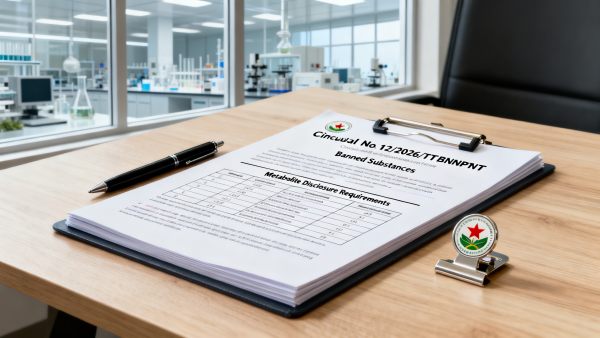
Vietnam has introduced a revised regulatory framework for agrochemical imports, effective May 1, 2026. The update mandates stricter chemical disclosure requirements and expands the list of banned active substances—directly impacting global exporters, especially those in China supplying technical-grade pesticides and formulated products to the Vietnamese market.
Event Overview
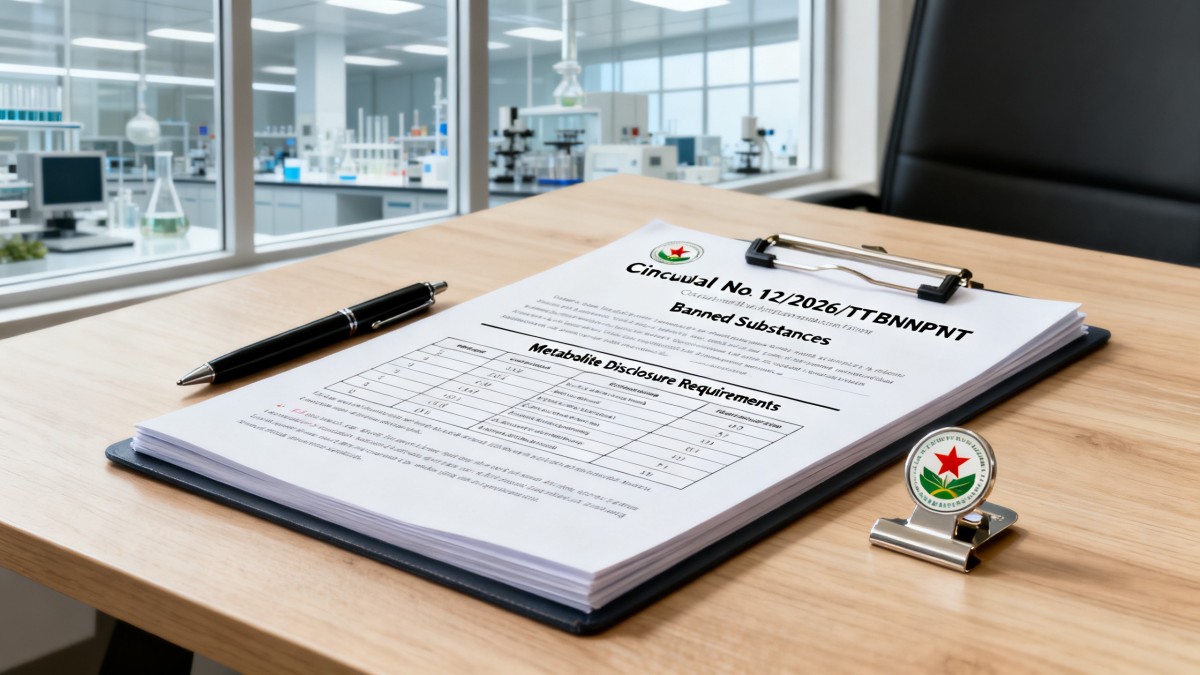
On May 1, 2026, Vietnam’s Ministry of Agriculture and Rural Development (MARD) implemented an updated ‘Ban + Disclosure’ list for insecticides and fungicides. The revision prohibits five additional organophosphate-based fungicides and requires all imported agrochemicals to include, in their Safety Data Sheets (SDS), a dedicated section disclosing the toxicity classification of each active ingredient’s major metabolites. Exporters must link revised SDS documents to their valid Vietnam Pesticide Registration Number (VRP) within 60 days of the effective date—or face suspension of customs clearance.
Industries Affected
Direct Trading Enterprises
Export-oriented trading companies—particularly those acting as intermediaries between Chinese manufacturers and Vietnamese distributors—are directly exposed to compliance risk. Their role in SDS submission, VRP linkage, and documentation verification places them at the front line of customs enforcement. Failure to meet the 60-day deadline may result in shipment holds, demurrage costs, and contractual penalties with local buyers.
Raw Material Sourcing Enterprises
Firms procuring technical-grade active ingredients (e.g., chlorpyrifos-methyl, diazinon derivatives) now face upstream data gaps: many suppliers outside Vietnam do not routinely characterize or classify metabolite toxicity. This forces sourcing enterprises to commission new toxicological assessments or obtain third-party verification—adding lead time and cost before SDS revision can begin.
Formulation & Manufacturing Enterprises
Chinese pesticide formulation plants exporting ready-to-use products must re-evaluate each registered product’s SDS—not only for banned substances but also for metabolite disclosures tied to specific formulation pathways (e.g., hydrolysis or photolysis products). Since metabolite profiles may vary by pH, co-formulants, or storage conditions, batch-level SDS updates may be necessary, challenging standardized documentation practices.
Supply Chain Service Providers
Regulatory consultancies, customs brokers, and SDS authoring services are seeing increased demand for Vietnam-specific compliance support. However, current capacity is constrained: few providers maintain in-house toxicologists certified under Vietnamese regulatory guidance, and VRP-SDS integration tools remain scarce in regional ERP or GHS-compliance platforms.
Key Focus Areas and Recommended Actions
Verify VRP Status and SDS Alignment
Confirm that each exported product holds a valid, non-expired VRP—and that the registration dossier explicitly covers all metabolites now subject to disclosure. Cross-check SDS Section 11 (toxicological information) against MARD’s latest metabolite classification reference table (Circular No. 12/2026/TT-BNNPTNT).
Engage Analytical Toxicology Labs Early
Initiate metabolite identification and OECD 407/422-compliant toxicity grading for priority products. Prioritize formulations containing organophosphates, carbamates, or triazoles—classes most likely to generate acutely toxic metabolites (e.g., oxons, phenols, or triazole alcohols).
Update Internal Documentation Workflows
Integrate VRP validation and metabolite disclosure checks into pre-shipment QA gates. Assign responsibility for SDS revision to a cross-functional team (regulatory affairs, R&D, quality assurance) rather than relying solely on EHS departments—given the scientific nuance required in metabolite profiling.
Editorial Perspective / Industry Observation
Observably, Vietnam’s move reflects a broader regional shift—from hazard-based bans toward exposure-informed regulation. Unlike earlier restrictions targeting only parent compounds, this requirement acknowledges that environmental degradation and human exposure often occur via metabolites, not original actives. Analysis shows this aligns closely with EU CLP Annex VI adaptations and Japan’s recent PMD Act amendments—but Vietnam’s implementation timeline (60 days) is notably compressed compared to the EU’s 18-month transition window. From an industry perspective, this signals growing regulatory sophistication in ASEAN markets; however, it also exposes fragmentation in harmonized testing standards across Asia. Current capacity limitations in local metabolite toxicology labs suggest near-term reliance on EU- or US-accredited facilities—a bottleneck likely to inflate compliance costs for SME exporters.
Conclusion
This regulatory update marks more than a procedural adjustment—it represents a structural recalibration of compliance expectations for agrochemical trade with Vietnam. Rather than viewing the ‘Ban + Disclosure’ list as a one-off filing obligation, stakeholders should treat it as an inflection point: future registrations will increasingly hinge on lifecycle data (including transformation products), not just initial substance characterization. A rational conclusion is that resilience will favor exporters who embed regulatory intelligence—not just document management—into core operational planning.
Source Attribution
Official source: Vietnam Ministry of Agriculture and Rural Development (MARD), Circular No. 12/2026/TT-BNNPTNT, effective May 1, 2026. Published April 15, 2026, on www.mard.gov.vn.
Additional reference: Vietnam Pesticide Registration Portal (VRP-Online), version 3.2 (updated April 2026).
Note: Pending clarification on whether legacy VRPs issued before 2025 require full re-submission of toxicology dossiers, or only targeted SDS addenda. This remains under observation.
Related Intelligence
- AgrochemicalsWhat Are the Main Risks of Non-Transparent Agricultural Supply Chains?what are the main risks of non transparent agri supply chains? Explore traceability, compliance, contamination, disruption, and cost risks—plus practical controls.
- AgrochemicalsGrain Production: Key Practices for Improving Yield While Protecting Soil HealthGrain production strategies to improve yield, protect soil health, manage nutrients, reduce compaction, and build resilient fields for lasting results.
- AgrochemicalsHow Do New FDA Rules Affect Agri-Chemical Sourcing Strategies?How do new FDA rules impact agri chemical sourcing strategies? Explore practical supplier screening, traceability, contaminant control, and risk-based compliance steps.
The Morning Broadsheet
Daily chemical briefings, market shifts, and peer-reviewed summaries delivered to your terminal.
