

The Authority in Global Agricultural Chemistry & Bio-Resources
EU REACH Curbs 3 Agro Adjuvants From July 6
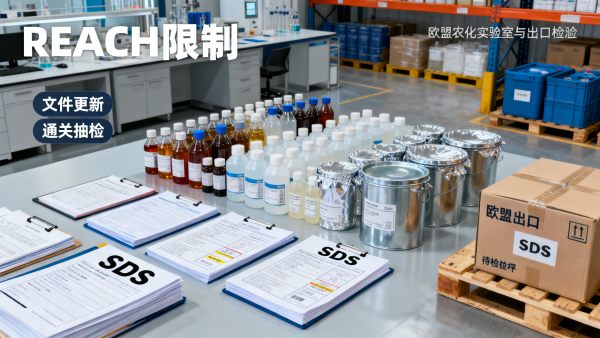
On July 6, 2026, a new REACH restriction took effect in the EU that directly affects agrochemical exports involving certain agricultural adjuvants. The update matters not only because it bans three high-mobility organosilicone surfactants for all uses, but also because it explicitly covers pesticide formulation systems and tank-mix adjuvants, bringing immediate pressure to exporters, formulators, documentation teams, and border clearance processes tied to the EU market.
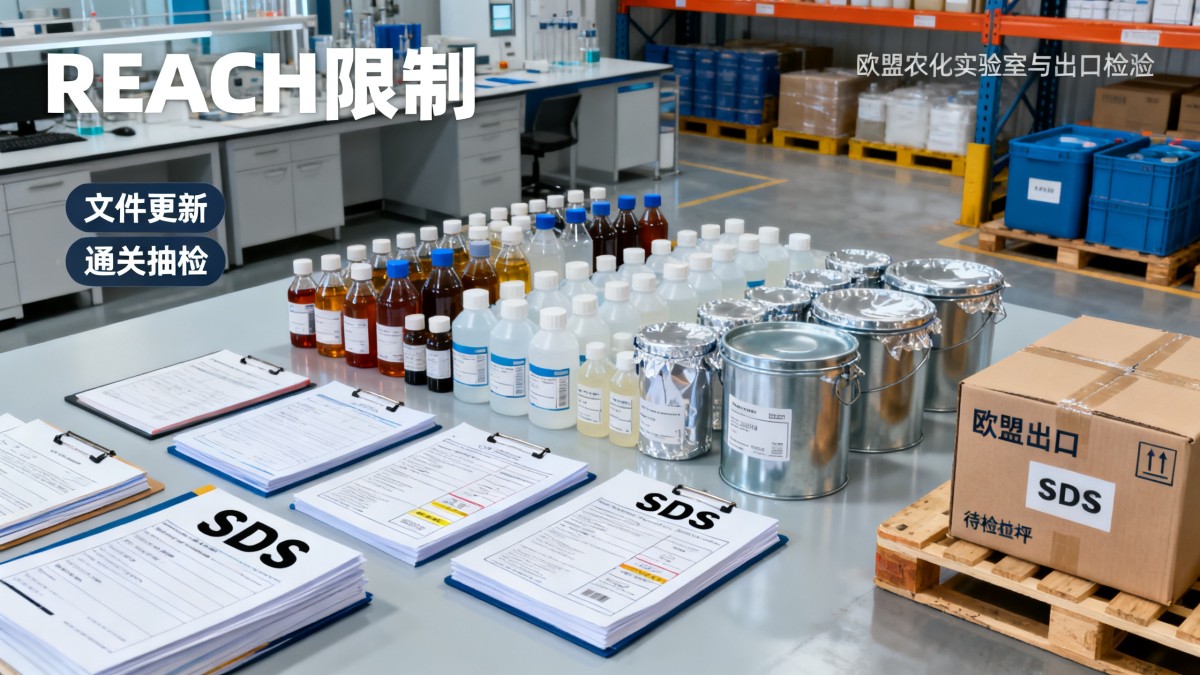
What the rule change confirms
According to the provided event summary, ECHA urgently updated REACH Annex XVII on July 6, 2026. The update imposes a full-use ban on three categories of high-mobility organosilicone surfactants identified by CAS No. 68955-40-4, 68441-17-8, and 1065-35-0.
The restriction is expressly stated to apply to pesticide formulation recipes and tank-mix adjuvants. The same summary states that the measure directly affects Chinese exports to Europe involving agrochemical intermediates, compound adjuvants, and ready-to-use formulations.
The confirmed compliance requirement in the input is that companies must complete SDS and label updates within 72 hours. The summary also states that customs authorities in EU member states will carry out random batch inspections.
Where disruption is likely to appear first
Export shipments already tied to EU customs clearance
From an industry perspective, exporters are the first group likely to feel the impact because the change combines a product-use restriction with immediate documentation expectations and customs sampling. The practical pressure point is no longer limited to product composition review; it extends to shipment release, document consistency, and batch-level inspection exposure.
What deserves closer attention is whether goods prepared for the EU market still reference the restricted substances in SDSs, labels, formulation descriptions, or shipping-related technical files. Even where a product has already been scheduled for delivery, the 72-hour update requirement creates a short compliance window that can affect dispatch timing and customs handling.
Formulation and blending activities linked to adjuvant use
Manufacturers and compounders involved in pesticide formulations and tank-mix adjuvants may face direct formulation review needs because the restriction explicitly names those use scenarios. Analysis shows that the effect is not limited to raw substance trading; it reaches into how finished or semi-finished products are composed and described for the EU market.
The business impact is likely to center on formula screening, internal material mapping, and whether existing product lines contain any of the listed CAS substances. For these operators, compliance work is likely to involve both technical assessment and document alignment rather than only commercial decision-making.
Procurement and supply chain coordination around affected materials
Buyers, sourcing teams, and supply chain service providers may also be affected because the restriction reaches products that move through intermediate, compounded, and ready-to-use stages. Observably, once a substance is restricted across all uses in named applications, procurement decisions become tied to regulatory screening rather than price and lead time alone.
The immediate area to monitor is whether supplier declarations, material specifications, SDS versions, and label texts remain aligned across all shipment documents. Where supply chains serve EU-bound orders, document mismatches may become as important as physical product composition.
Practical points companies should check now
The 72-hour documentation window
Analysis shows that the stated 72-hour deadline for SDS and label updates is one of the most operationally significant parts of this event. Companies exposed to the EU agrochemical market should treat document control as an immediate task, especially where the listed CAS numbers may appear in formulations, adjuvants, or related export files.
Consistency across technical and trade records
What deserves closer attention is the consistency between product identity, formulation records, SDS content, labels, and shipment documents. Where customs authorities are conducting random batch checks, inconsistencies between commercial and technical records may create additional scrutiny even before broader market reactions become clear.
Product screening for the listed CAS substances
For businesses handling agrochemical intermediates, compound adjuvants, or ready-to-use formulations for Europe, the first practical review point is whether any product directly involves CAS No. 68955-40-4, 68441-17-8, or 1065-35-0. This is especially relevant where product portfolios include both formulation components and finished goods aimed at multiple export destinations.
Execution signals from border and market channels
The input confirms random customs batch inspections in EU member states, but it does not provide more detailed enforcement practice. It is therefore more appropriate to understand the current situation as an implemented compliance signal with immediate border relevance, while the finer execution approach in different channels still requires observation.
How this development should be read at this stage
Observably, this is not just a policy discussion point or a distant consultation signal. The restriction is described as effective from July 6, 2026, and it comes with immediate document update requirements and customs inspection implications. That makes it more appropriate to understand this event as a rule already entering execution rather than a preliminary policy direction.
At the same time, analysis shows that the market still needs to watch how the restriction is reflected in downstream compliance practice, including wording in trade documents, customer-side acceptance criteria, and how consistently inspections are applied in actual shipments. The current fact pattern supports caution, but not broader claims beyond the provided summary.
Why the market should stay measured
The core significance of this development is that a REACH update has moved directly into operational consequences for agrochemical trade, especially where formulations, adjuvants, and EU-bound exports intersect. It links substance restriction, document revision, and customs inspection into one near-term compliance issue.
From an industry perspective, the most reasonable reading today is that this is an effective and actionable compliance change, not merely a rule to monitor in principle. At the same time, the full commercial effect on procurement, delivery rhythm, and customer requirements should still be assessed carefully as implementation signals continue to emerge.
Basis of this article and what still needs verification
This article is generated from the user-provided news title, event date, and event summary. For developments of this kind, relevant source categories typically include official announcements, regulatory agency releases, customs or trade authority information, industry association updates, standards-related documents, and reporting by authoritative media.
No specific official source link was provided in the input, so the exact official publication path still requires further verification. What still needs continued monitoring includes any detailed implementation wording, certification or compliance interpretations, changes in tender or procurement documents, market feedback, and how companies are carrying out the stated SDS, labeling, and shipment-related updates.
Related Intelligence
- AgrochemicalsWhat Are the Main Risks of Non-Transparent Agricultural Supply Chains?what are the main risks of non transparent agri supply chains? Explore traceability, compliance, contamination, disruption, and cost risks—plus practical controls.
- AgrochemicalsGrain Production: Key Practices for Improving Yield While Protecting Soil HealthGrain production strategies to improve yield, protect soil health, manage nutrients, reduce compaction, and build resilient fields for lasting results.
- AgrochemicalsHow Do New FDA Rules Affect Agri-Chemical Sourcing Strategies?How do new FDA rules impact agri chemical sourcing strategies? Explore practical supplier screening, traceability, contaminant control, and risk-based compliance steps.
The Morning Broadsheet
Daily chemical briefings, market shifts, and peer-reviewed summaries delivered to your terminal.
