

The Authority in Global Agricultural Chemistry & Bio-Resources
JPMorgan Increases Allocation to China's Green Power Assets by $12.5B
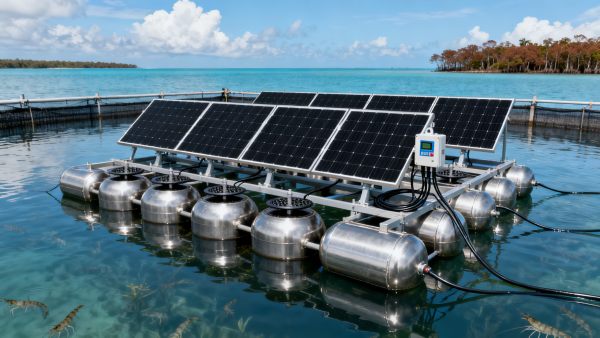
On May 15, 2026, JPMorgan reported that foreign capital inflows into Chinese assets reached RMB 89 billion (approximately USD 12.5 billion), with targeted增持 in artificial intelligence, energy security, and robotics. Notably, the 'energy security' category explicitly includes aeration and water treatment equipment systems powered by distributed photovoltaics — signaling new export opportunities for Chinese manufacturers in aquaculture infrastructure, particularly in overseas shrimp and fish farming projects adopting integrated 'solar + aeration' solutions.
Event Overview
As of May 15, 2026, JPMorgan’s data confirmed net foreign investment into Chinese assets totaled RMB 89 billion. The allocation emphasized three strategic themes: artificial intelligence, energy security, and robotics. Within the energy security segment, distributed photovoltaic-powered aeration and water treatment (Aeration & Water Tech) systems were identified as a specific focus area. International aquaculture project developers are increasingly specifying such integrated solar-aeration solutions, prompting Chinese suppliers to strengthen ESG technical white paper development and carbon footprint verification capabilities.
Which Subsectors Are Affected
Direct Exporters of Aeration & Water Tech Equipment
These companies supply曝气 devices, solar-compatible controllers, dissolved oxygen monitoring units, and integrated PV-aeration skids. They are affected because overseas aquaculture developers are shifting procurement criteria toward verified low-carbon, off-grid-capable systems — directly increasing demand for products with documented carbon footprint validation and modular solar integration.
Manufacturers of Distributed Solar Components for Industrial Use
This includes makers of small-scale inverters, MPPT charge controllers, and ruggedized PV mounting kits designed for humid, saline environments. Their exposure arises from the rising requirement for interoperability between solar hardware and aeration loads — meaning compatibility testing, UL/IEC certification for marine-grade use, and field-proven reliability become differentiators.
ESG Data Providers and Verification Service Firms
Firms offering carbon accounting, life-cycle assessment (LCA), and third-party ESG documentation services face increased demand from equipment exporters seeking internationally recognized verification — especially for Scope 1 & 2 emissions related to manufacturing and product use-phase energy sourcing.
What Relevant Companies or Practitioners Should Focus On
Monitor official guidance on green export incentives and carbon labeling frameworks
While JPMorgan’s report reflects market behavior, no new national policy has been announced. Companies should track updates from China’s Ministry of Commerce and the National Development and Reform Commission regarding preferential financing or certification support for low-carbon environmental equipment exports.
Prioritize technical documentation aligned with international aquaculture standards
Overseas buyers — especially in Southeast Asia and Latin America — increasingly reference standards such as ISO 22000 (food safety), ISO 14067 (carbon footprint), and regional aquaculture best practice guidelines. Exporters should ensure their white papers and test reports explicitly map to these benchmarks.
Distinguish between investor sentiment signals and near-term order flow
The RMB 89 billion figure reflects portfolio-level capital reallocation, not direct project funding. Actual procurement cycles for aquaculture infrastructure remain 6–18 months long. Firms should avoid overestimating short-term demand but treat this as a structural signal supporting longer-term R&D and certification investments.
Prepare interoperability test logs and localized installation protocols
Since 'PV + aeration' integration is now a stated buyer preference, manufacturers should compile verifiable logs showing system performance under variable solar irradiance and high-humidity load conditions — along with multilingual, site-ready commissioning guides tailored for remote farm operators.
Editorial Perspective / Industry Observation
Analysis shows this development is best understood as an early-stage capital signal — not yet a mature export wave. The inclusion of Aeration & Water Tech under 'energy security' reflects how global investors are reframing water infrastructure resilience as part of broader climate adaptation strategy. Observably, it shifts emphasis from standalone equipment sales toward bundled, verified, and grid-agnostic system offerings. From an industry perspective, this underscores growing convergence between clean energy deployment and environmental technology — where performance validation matters as much as hardware capability. Current relevance lies less in immediate revenue impact and more in its role as a catalyst for standardization, documentation rigor, and cross-sector collaboration between solar and water tech stakeholders.
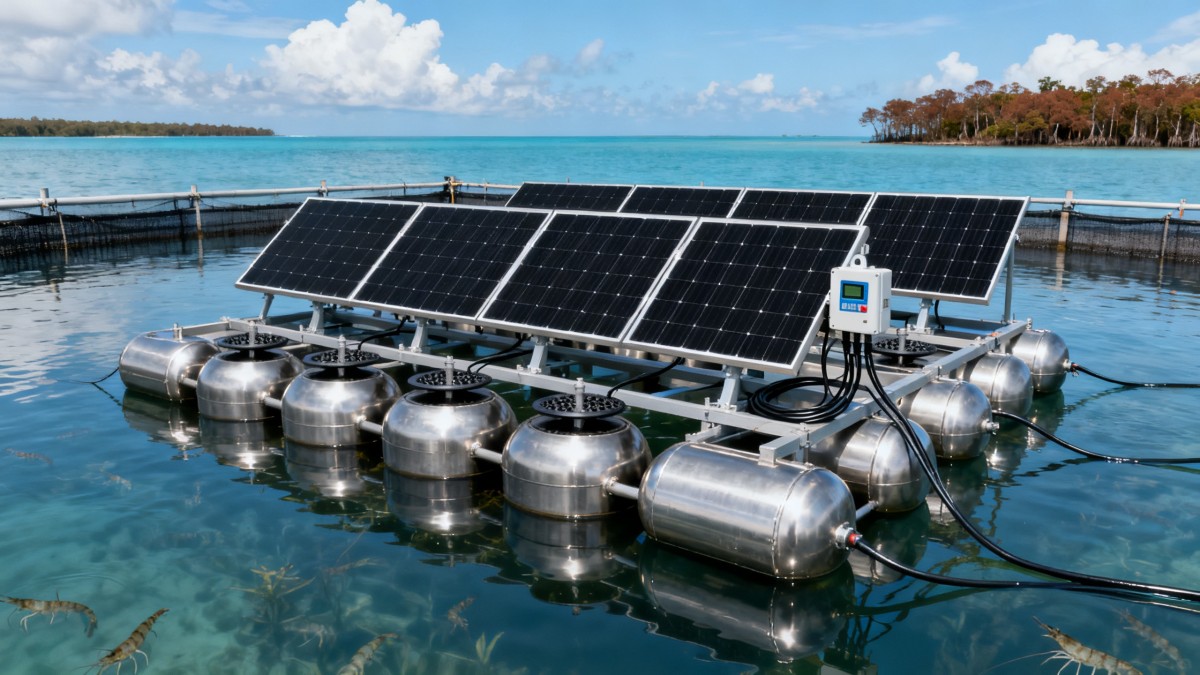
Conclusion: This capital flow pattern does not indicate an imminent surge in overseas orders, but rather highlights an evolving valuation framework among global institutional investors — one that increasingly weights carbon-aware operation, decentralized energy integration, and third-party ESG verification as material factors in environmental infrastructure assets. It is more accurately interpreted as a directional cue for capability building than a transactional trigger.
Source: JPMorgan Global Research, as of May 15, 2026. Note: Ongoing observation is required for confirmation of follow-up policy measures or sector-specific financing programs from Chinese authorities.
Related Intelligence
- Aeration & Water TechHow Water Treatment Research Guides Technology Selection for Industrial Wastewater ProjectsWater treatment research guides smarter industrial wastewater technology selection. Learn how to assess variable streams, pilot risks, compare process trains, and reduce compliance costs.
- Aeration & Water TechSelecting Solids Filtration for Aquaculture: Flow Rates, Loading, and Fish WelfareSolids filtration aquaculture guide: compare flow rates, peak loading, capture performance, maintenance, and fish welfare to choose a reliable system.
- Aeration & Water TechWhat RO water treatment systems deliver consistent 98% salt rejection at 25°C with feed TDS over 3,000 ppm?RO water treatment systems that deliver proven 98% salt rejection at 25°C with >3,000 ppm TDS—engineered for API synthesis, aquaculture & grain processing.
The Morning Broadsheet
Daily chemical briefings, market shifts, and peer-reviewed summaries delivered to your terminal.
