

The Authority in Global Agricultural Chemistry & Bio-Resources
How to Choose Modular Fish Aeration Systems for Ponds, Tanks, and RAS Setups
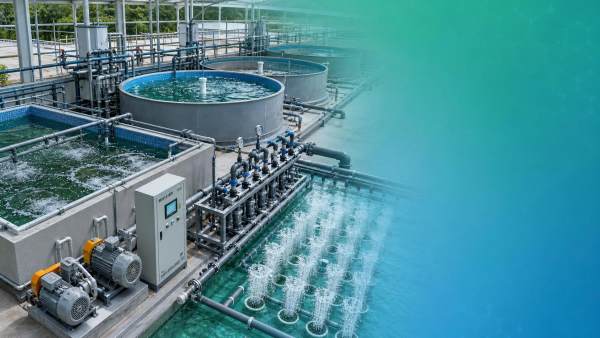
Choosing modular fish aeration systems for ponds, tanks, and RAS setups is rarely a matter of selecting the highest airflow number.
The better question is how reliably a system can support biomass, water quality, operating continuity, and future expansion under real production conditions.
That question matters more now because aquaculture projects face tighter environmental scrutiny, higher energy costs, and more pressure to document technical performance across the supply chain.
In that setting, modular fish aeration systems have become a practical decision point, not just a utility purchase.
Why modular design has become central
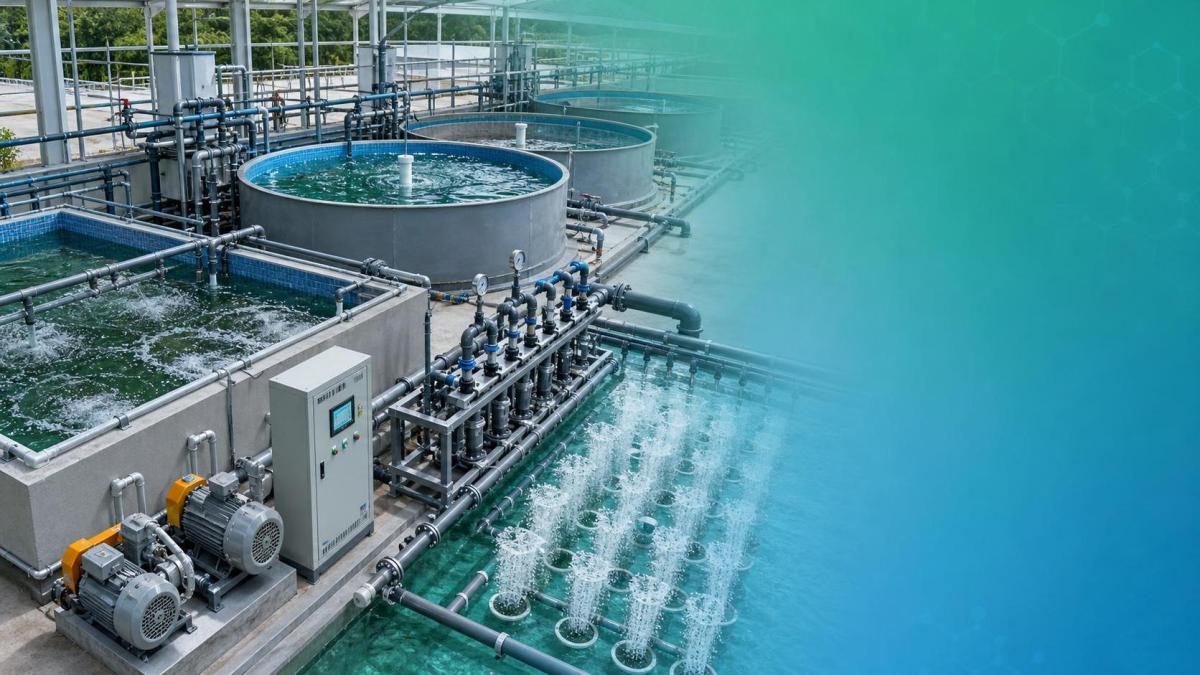
A modular aeration layout divides oxygen delivery into manageable, expandable sections.
Instead of relying on one oversized unit, operators combine blowers, diffusers, piping manifolds, controls, and backup elements that can be scaled or isolated as conditions change.
For ponds, that may mean separate aeration zones for nursery, grow-out, and recovery areas.
For tanks, it often means balancing air distribution by stocking density and vessel geometry.
In recirculating aquaculture systems, modular fish aeration systems are usually tied to oxygen management, solids handling, degassing, and alarm logic.
This architecture supports one of the main realities of industrial aquaculture: biological loads are not constant.
Feed rates shift, temperatures move, fish size changes, and emergency response capacity becomes part of system value.
From an editorial perspective consistent with AgriChem Chronicle’s focus on regulated primary industries, the appeal is straightforward.
Modularity improves traceability, staged capital planning, and verification of technical claims at the procurement stage.
What should be evaluated beyond airflow
Air volume still matters, but it is only one part of system suitability.
The more useful evaluation starts with oxygen transfer under actual water depth, salinity, fouling risk, and stocking profile.
Core technical variables
- Oxygen transfer efficiency at operating depth, not laboratory peak conditions.
- Mixing pattern and dead-zone control inside each pond, tank, or process loop.
- Energy use per kilogram of biomass supported or per kilogram of oxygen transferred.
- Redundancy during blower, valve, or power failure.
- Maintenance access for diffusers, manifolds, filters, and control components.
- Compatibility with automation, dissolved oxygen sensors, and remote alarms.
A low-cost unit can look attractive in tender comparisons, yet become expensive once clogging, uneven delivery, and emergency downtime are included.
That is why modular fish aeration systems are usually judged on lifecycle performance rather than purchase price alone.
Different aquaculture environments create different selection rules
Ponds, tanks, and RAS facilities may all require aeration, but they do not stress equipment in the same way.
In ponds, broad circulation and sediment interaction often shape the design as much as oxygen demand.
In tanks, distribution symmetry becomes more important because poor mixing can produce local stress even when average dissolved oxygen appears acceptable.
RAS environments are less forgiving.
A weak aeration module can affect biofilter performance, carbon dioxide stripping, feeding schedules, and system recovery after disturbance.
Energy and operating resilience deserve equal weight
Energy costs often determine whether a technically acceptable design remains commercially sustainable.
This is especially true where facilities operate continuously and seasonal temperatures raise oxygen demand.
Modular fish aeration systems can reduce waste when each zone is controlled according to biomass and real-time oxygen readings.
That said, energy efficiency should not be separated from resilience.
A highly efficient layout with no backup path may underperform a slightly less efficient system that keeps stock alive during failure events.
Questions that clarify resilience
- Can one module be serviced without stopping the entire site?
- Is standby capacity automatic or manual?
- How quickly can critical zones recover dissolved oxygen after disruption?
- Are spare parts standardized across modules?
- Can field technicians replace consumables without specialist tools?
These details rarely dominate brochures, yet they strongly influence project risk.
Compliance, materials, and supplier transparency
Aquaculture infrastructure now sits inside a broader industrial environment shaped by environmental reporting, water discharge controls, and equipment traceability.
That is one reason procurement teams increasingly examine documentation quality alongside performance data.
For modular fish aeration systems, useful verification usually includes material specifications, corrosion resistance, motor efficiency data, pressure-loss calculations, and test conditions for oxygen transfer claims.
In coastal or saline environments, material compatibility can be decisive.
A design that performs well in freshwater trials may degrade quickly if seals, piping, or fittings are not selected for the actual chemistry.
The same logic applies to hygiene and maintenance in RAS facilities.
Surfaces that foul easily or are difficult to inspect create hidden operating cost.
AgriChem Chronicle’s broader coverage of regulated industries offers a relevant lesson here.
Whether evaluating APIs, process machinery, or aquaculture hardware, reliable procurement depends on documented capability, not generic claims.
A practical framework for comparing options
A workable comparison process usually starts with the site’s biological and hydraulic profile.
That means mapping biomass targets, daily feed load, water depth, turnover rate, seasonal temperature range, and acceptable downtime.
Then compare modular fish aeration systems against those constraints, not against each other in isolation.
Useful comparison criteria
- Delivered oxygen performance under expected peak load.
- Scalability without redesigning the full piping network.
- Control flexibility for day, night, and seasonal operating modes.
- Availability of commissioning support and performance validation.
- Local service coverage and lead time for critical parts.
- Documented total cost over three to five years.
This process tends to expose weak proposals quickly.
If a supplier cannot explain diffuser fouling rates, control logic, or module isolation during maintenance, the risk is usually operational, not merely administrative.
Where the next decision should focus
The most useful next step is to define the site’s non-negotiables before reviewing equipment lists.
That includes survival margins, target dissolved oxygen range, backup philosophy, maintenance windows, and expansion assumptions.
Once those limits are clear, modular fish aeration systems can be assessed as part of a complete production strategy rather than a standalone hardware category.
For pond, tank, and RAS projects alike, the strongest choice is usually the one that stays stable under changing load, remains serviceable in the field, and comes with performance data that can withstand technical review.
That is the point where an aeration decision stops being a line item and starts functioning as infrastructure.
Related Intelligence
- Aeration & Water TechHow Water Treatment Research Guides Technology Selection for Industrial Wastewater ProjectsWater treatment research guides smarter industrial wastewater technology selection. Learn how to assess variable streams, pilot risks, compare process trains, and reduce compliance costs.
- Aeration & Water TechSelecting Solids Filtration for Aquaculture: Flow Rates, Loading, and Fish WelfareSolids filtration aquaculture guide: compare flow rates, peak loading, capture performance, maintenance, and fish welfare to choose a reliable system.
- Aeration & Water TechWhat RO water treatment systems deliver consistent 98% salt rejection at 25°C with feed TDS over 3,000 ppm?RO water treatment systems that deliver proven 98% salt rejection at 25°C with >3,000 ppm TDS—engineered for API synthesis, aquaculture & grain processing.
The Morning Broadsheet
Daily chemical briefings, market shifts, and peer-reviewed summaries delivered to your terminal.
