

The Authority in Global Agricultural Chemistry & Bio-Resources
RAS Lead Times Extend to 28 Weeks After China Export Limits
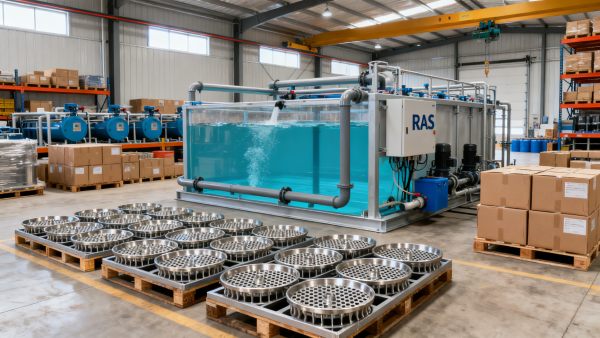
On July 5, 2026, updates shared during the July 5-6 Salmonex Aquaculture Tech Summit in Norway pointed to another supply-side delay for recirculating aquaculture system projects: multiple international RAS integrators confirmed that average lead times for mainstream RAS equipment have moved from 26 weeks to 28 weeks. The trigger, according to the event disclosures, is a temporary tightening of export licensing for a critical titanium alloy microporous aeration disc from China. For equipment buyers, system integrators, and supply-chain service providers, this matters because the affected part accounts for 19% of total system cost and only three Chinese manufacturers currently hold newly approved export qualifications.
What Was Confirmed at the Norway Summit
The confirmed information is limited but commercially significant. During the Salmonex Aquaculture Tech Summit held in Norway on July 5-6, 2026, multiple international RAS system integrators stated that global average lead times for mainstream RAS equipment had extended further, from 26 weeks to 28 weeks.
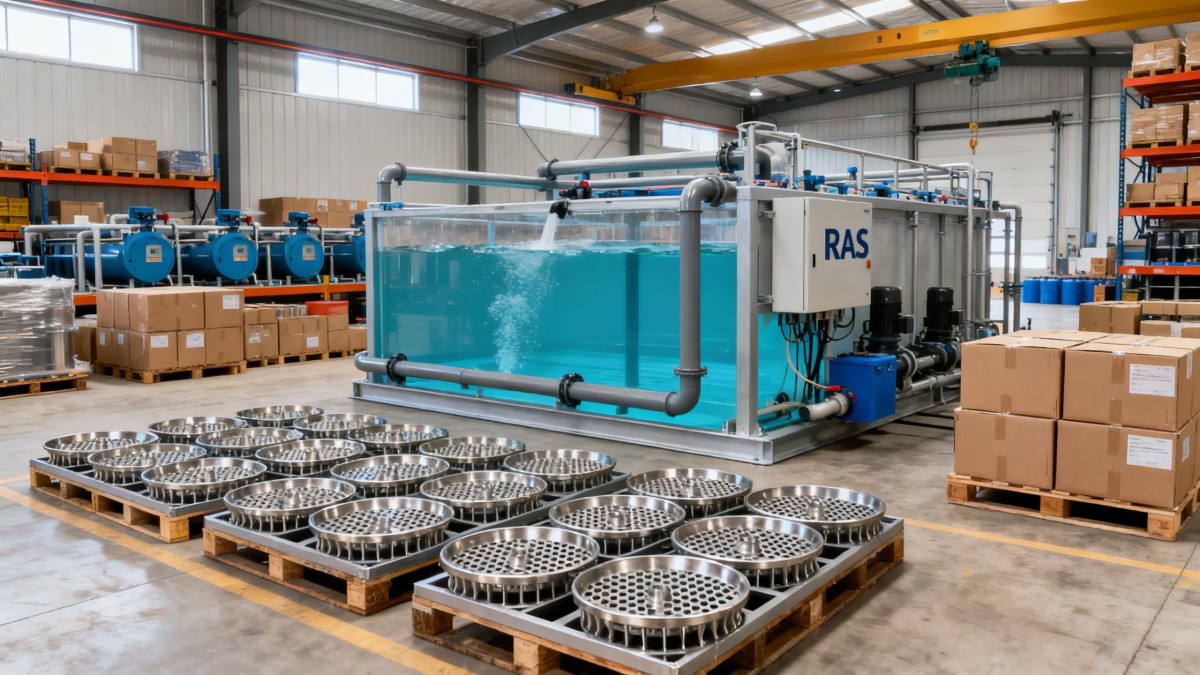
Those same disclosures linked the delay to a temporary tightening of export licenses in China for a key titanium alloy microporous aeration disc, identified under the Aeration & Water Tech category. The component represents 19% of the total cost of the complete system, and only three Chinese suppliers are currently reported to have received newly approved export qualifications.
Where the Pressure May Show Up Across the Chain
Project buyers may face scheduling risk first
From an industry perspective, purchasers of RAS equipment are one of the most directly exposed groups because a longer average lead time can affect project planning, installation sequencing, and budgeting windows. What deserves closer attention is whether procurement timelines, internal approvals, and delivery expectations were built around the earlier 26-week baseline.
System integrators are exposed through delivery commitments
Analysis shows that international RAS integrators may feel the impact through contract execution and customer communication. Because the affected part is both cost-relevant and license-sensitive, integrators are likely to be watching how component availability interacts with promised delivery schedules and whether supply confirmation can still support quoted timelines.
Supply-chain service providers need to track qualification-related friction
For logistics, compliance, and sourcing service providers, the immediate issue is less about broad market demand and more about documentary and qualification constraints tied to exports. Observably, when only a small number of suppliers hold newly approved export status, the practical business focus shifts to shipment readiness, supplier validation, and timing visibility.
What Companies Should Watch Now
Any change in official wording or licensing practice
Analysis shows that the most important near-term variable is not general market sentiment but whether the temporary tightening of export licensing remains unchanged, is clarified, or is adjusted further. Companies involved in sourcing or delivery should distinguish between the current confirmed situation and any later interpretation that may emerge from market conversations.
Supplier qualification and document completeness
What deserves closer attention is the export status of the actual supplier attached to a transaction. Since only three Chinese manufacturers are reported to have newly approved export qualifications, businesses should pay close attention to supplier eligibility, supporting documents, and whether those documents align with contractual delivery assumptions.
Lead-time commitments in active quotations and contracts
For commercial teams, the practical issue is whether customer-facing delivery commitments still reflect current conditions. Analysis shows that the shift from 26 to 28 weeks may appear modest on paper, but it can still matter in tightly sequenced aquaculture equipment projects where downstream tasks depend on confirmed equipment arrival.
Customer communication and contingency planning
Observably, firms with active orders or ongoing negotiations should pay attention to how they explain the source of delay risk. The key distinction is between a general equipment delay and a delay tied to export licensing for a specific high-cost component. That difference can affect how customers evaluate timing, responsibility, and next-step planning.
Why This Looks Like More Than a Simple Timing Update
As an editorial observation, this development is more meaningful than a routine two-week extension because the disclosed cause is not described as ordinary factory congestion or seasonal logistics pressure. It is tied to export licensing conditions around a specific core component with a defined cost share in the full system.
At the same time, it would be premature to treat this as a settled long-term shift. The confirmed facts show a current tightening, a measurable extension in lead times, and a narrow pool of newly qualified exporters. They do not yet prove how long this condition will last or whether alternative supply arrangements will materially change delivery performance.
How This News Is Best Understood for Now
It is more appropriate to understand this as a live industry signal with immediate operational relevance rather than as a fully formed structural conclusion. The current facts point to a real constraint affecting delivery schedules in mainstream RAS equipment, but the longer-term significance still depends on whether export qualification conditions stabilize, widen, or remain tight.
For industry participants, the practical takeaway is clear: this is not only a sourcing issue, but also a delivery-planning and customer-communication issue. The most relevant response at this stage is close monitoring of supplier qualification, order timing, and any updated statements that clarify how temporary the current restriction may be.
Basis of This Report and What Still Needs Verification
This article is based on the user-provided news title, event date, and event summary concerning the July 5-6, 2026 Salmonex Aquaculture Tech Summit in Norway and the reported extension of RAS equipment lead times to 28 weeks.
For this type of industry development, commonly relevant source categories may include official notices, company statements, industry association updates, authoritative media reporting, and standard-setting or technical documentation. No specific official source link was provided in the input, so the precise original documentation still requires ongoing verification.
Further monitoring should focus on whether export licensing conditions for the identified component change, whether the number of qualified suppliers increases, and whether the reported 28-week lead-time level remains stable or shifts again.
Related Intelligence
- Aeration & Water TechHow Water Treatment Research Guides Technology Selection for Industrial Wastewater ProjectsWater treatment research guides smarter industrial wastewater technology selection. Learn how to assess variable streams, pilot risks, compare process trains, and reduce compliance costs.
- Aeration & Water TechSelecting Solids Filtration for Aquaculture: Flow Rates, Loading, and Fish WelfareSolids filtration aquaculture guide: compare flow rates, peak loading, capture performance, maintenance, and fish welfare to choose a reliable system.
- Aeration & Water TechWhat RO water treatment systems deliver consistent 98% salt rejection at 25°C with feed TDS over 3,000 ppm?RO water treatment systems that deliver proven 98% salt rejection at 25°C with >3,000 ppm TDS—engineered for API synthesis, aquaculture & grain processing.
The Morning Broadsheet
Daily chemical briefings, market shifts, and peer-reviewed summaries delivered to your terminal.
