

The Authority in Global Agricultural Chemistry & Bio-Resources
What Is Digital Agricultural Technology and How Does It Improve Farm Decisions?
Why is digital agricultural technology getting so much attention now?
Digital agricultural technology matters because farming decisions now depend on speed, traceability, and better use of limited resources.
Weather volatility, input costs, water pressure, and tighter reporting standards have changed what counts as a good decision.
A field visit still matters, but it rarely gives the full picture.
Digital systems add another layer.
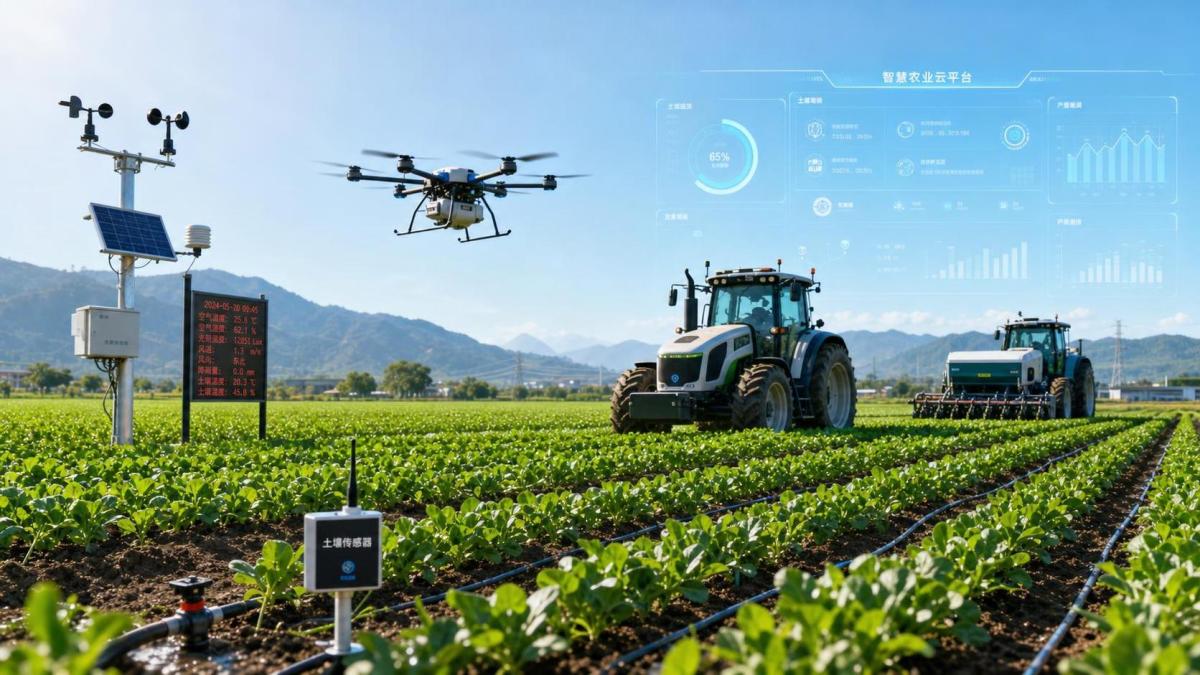
They collect data from sensors, equipment, drones, software platforms, weather feeds, and satellite images.
That information helps reduce guesswork around irrigation, spraying, planting windows, harvest timing, and labor deployment.
In simple terms, digital agricultural technology turns scattered observations into a decision framework.
This matters well beyond row-crop farming.
It also affects forestry machinery planning, aquaculture monitoring, feed processing control, and upstream raw material traceability.
That broader view explains why technical journals such as AgriChem Chronicle track it closely.
The topic sits at the intersection of machinery, compliance, biological performance, and supply chain intelligence.
What is digital agricultural technology, exactly?
The phrase covers digital tools used to monitor conditions, process farm data, and support better operational choices.
It is not one machine or one software subscription.
More often, it is a connected stack of hardware, analytics, and field workflows.
Common examples include GPS-guided tractors, yield monitors, soil probes, remote sensing platforms, livestock wearables, and AI-based advisory tools.
Some tools generate raw data.
Others interpret the data and suggest actions.
The real value appears when the system links measurement to timing.
For example, a moisture sensor alone is useful.
A moisture sensor tied to irrigation automation and weather forecasting is far more useful.
That is the difference between data collection and decision improvement.
A practical way to understand digital agricultural technology is to divide it into three layers:
- Data capture: sensors, cameras, equipment logs, lab results, and satellite imagery.
- Data interpretation: dashboards, models, alerts, and AI-driven pattern analysis.
- Decision execution: variable-rate application, irrigation control, route planning, and maintenance scheduling.
Once those layers connect, digital agricultural technology becomes part of routine farm management rather than a standalone experiment.
How does it actually improve farm decisions?
The short answer is precision.
The longer answer is that digital agricultural technology improves both the quality and timing of choices.
Instead of treating every field zone the same, managers can compare real differences in moisture, vigor, pest pressure, and nutrient demand.
That leads to more targeted interventions.
It also creates a record of why a decision was made.
That record matters when operations need to verify sustainability claims, residue control, equipment performance, or regulatory compliance.
In actual use, the strongest gains usually come from a few recurring decision areas:
This is why digital agricultural technology is increasingly discussed alongside operational risk, not just efficiency.
Better decisions are often the result of smaller blind spots.
Where does digital agricultural technology make the most sense?
It is tempting to assume that only very large farms benefit.
That is too narrow.
The better question is whether the operation faces recurring uncertainty that can be measured and managed.
Digital agricultural technology tends to deliver stronger value when one or more of these conditions apply:
- Inputs are expensive and small mistakes create visible margin loss.
- Field variability is high across soil zones, microclimates, or crop stages.
- Water management is critical and timing errors are costly.
- Documentation is needed for environmental, food, or export compliance.
- Equipment fleets need tighter coordination and maintenance visibility.
That logic also applies across connected primary industries.
Aquaculture systems use digital monitoring for oxygen, feeding, and disease risk.
Feed and grain operations use it for batch consistency, moisture control, and throughput analysis.
Forestry equipment teams apply similar tools to route efficiency, fuel use, and machine uptime.
This cross-sector relevance is one reason ACC treats digital agricultural technology as part of a larger industrial intelligence landscape.
It is no longer only about crop monitoring.
It is about measurable control across biological and mechanical systems.
How can you tell whether a digital tool is useful or just generating more data?
This is where many evaluations go wrong.
More dashboards do not automatically mean better management.
A useful digital agricultural technology solution should answer a specific operational question.
For instance, it might clarify when to irrigate, where to sample, which zones underperform, or why an application rate drifted.
A practical screening approach is to check five points:
Needless complexity is a common warning sign.
If a platform produces many indicators but no clear operating threshold, its value may be limited.
In contrast, strong systems narrow choices and make follow-up easier.
That is also why peer-reviewed market analysis remains useful.
Technical reporting from sources that understand machinery, chemistry, and compliance can reveal whether a tool fits broader industry realities.
What are the biggest risks, costs, and misconceptions?
One misconception is that digital agricultural technology guarantees a quick return in every setting.
It does not.
Results depend on crop value, management discipline, data quality, and whether the workflow actually changes.
Another mistake is focusing only on purchase price.
The full cost usually includes installation, calibration, subscription fees, staff training, connectivity, and support.
In some cases, data ownership and interoperability become bigger issues than hardware cost.
A few risks deserve early attention:
- Poor sensor placement or irregular calibration can produce misleading recommendations.
- Disconnected platforms can trap data in separate systems.
- Automation without field validation can hide local anomalies.
- Weak documentation can undermine compliance and traceability goals.
The more realistic adoption path is staged implementation.
Start with one decision bottleneck, measure improvement, then expand.
That approach usually produces better learning than deploying an entire digital stack at once.
What should you look at next if you are still learning?
A useful next step is to map the decision points that create the most uncertainty.
That could be irrigation timing, treatment verification, fleet utilization, or traceability reporting.
Then compare which type of digital agricultural technology directly improves that decision.
Do not begin with technology categories alone.
Begin with the management question.
It also helps to review whether the tool supports reporting standards, supply chain transparency, and operational verification.
Those factors increasingly shape how digital systems are judged across agriculture, chemicals, and primary processing.
In that sense, digital agricultural technology is not only about productivity.
It is part of a wider shift toward documented, data-led decision making.
For ongoing evaluation, it is worth following technical analysis that connects field performance with machinery trends, regulatory expectations, and supply chain intelligence.
That broader context makes it easier to separate durable value from passing hype.
A clear review checklist, a narrow pilot scope, and reliable benchmark data are usually the most sensible place to begin.
Related Intelligence
- AgrochemicalsUSDA Announces Over $500 Million for Eight Fertilizer Production ProjectsUSDA announces over $500 million for eight fertilizer production projects. Explore how expanded domestic supply could affect farm costs and agricultural supply chains.
- AgrochemicalsAgrochemicals Category Intelligence: Tracking Cost Drivers and Supply RiskExplore agrochemicals category intelligence to track cost drivers, uncover supply risks, and strengthen sourcing decisions. Learn how to negotiate smarter and secure reliable supply.
- AgrochemicalsChina’s Phosphate Fertilizer Exports Near Zero, Tightening Global SupplyChina’s phosphate fertilizer exports near zero in 2026 as sulfur shortages tighten global supply. Explore the risks for importers, prices and sourcing strategies.
The Morning Broadsheet
Daily chemical briefings, market shifts, and peer-reviewed summaries delivered to your terminal.
