

The Authority in Global Agricultural Chemistry & Bio-Resources
How to Read Global Product Specifications Before Comparing Overseas Suppliers

Why do global product specifications matter before any supplier shortlist?
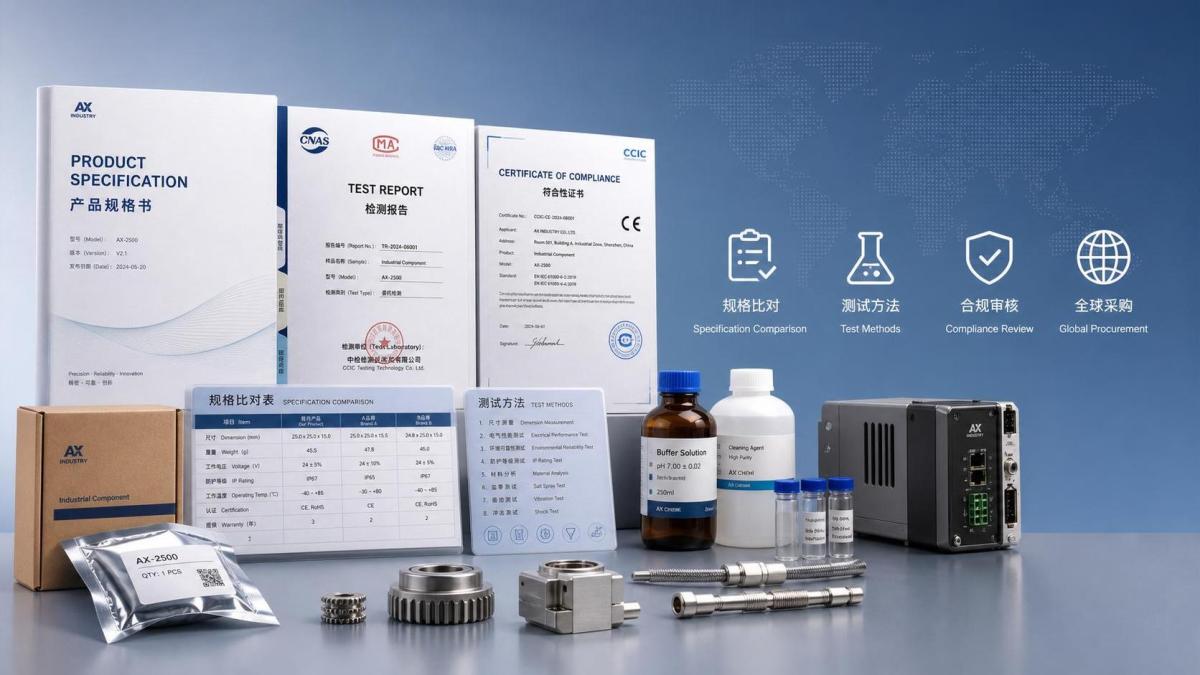
Price comparisons fail early when the underlying specification is unclear. That is especially true in fine chemicals, machinery, aquaculture systems, and processed agricultural inputs.
A supplier may appear cheaper, faster, or more flexible. Yet the offer can still be non-comparable if the global product specifications are written against different standards, tolerances, or test methods.
In practical terms, specifications are the translation layer between need and delivered performance. They define what the product is, how it is tested, and what counts as acceptable.
This is why international sourcing teams in regulated sectors spend time on specification literacy before discussing volume discounts or freight terms.
Editorial coverage across AgriChem Chronicle often reflects the same pattern. Supply disruptions rarely begin with logistics alone. They begin with misread technical requirements, incomplete compliance language, or hidden equivalency assumptions.
If you are comparing overseas suppliers, the first question is not who quoted lower. The first question is whether the global product specifications describe the same product reality.
When a specification sheet looks complete, what should you actually read first?
Start with the product identity section. That sounds obvious, but many sourcing errors come from confusing commercial names with technical identity.
For chemicals, check CAS number, assay basis, impurity profile, moisture limit, and storage condition. For equipment, review model scope, operating environment, throughput, power standard, and safety configuration.
Then move to the test method column. A value without a test method is weaker than it looks. Two suppliers can claim the same purity or output, measured under different protocols.
The next priority is tolerance. A nominal figure is not enough. You need to know the acceptable range, drift limit, and pass-fail criteria for production batches or installed systems.
Also check document revision dates. Global product specifications change after audit findings, regulatory updates, and process modifications. An old version can create a false price advantage.
A useful reading order looks like this:
- Technical identity and grade definition
- Performance parameters and tolerances
- Test methods and sampling rules
- Regulatory and certification references
- Packaging, labeling, storage, and shelf life
- Revision control and issuing authority
Reading in that order helps separate cosmetic document completeness from true comparability.
How can you tell whether two overseas offers are genuinely comparable?
This is where a simple cross-check table saves time. Instead of comparing quotations line by line, compare the specification logic behind each quotation.
The table below captures the most common checkpoints used when reviewing global product specifications across industrial and regulated supply chains.
In other words, comparable price starts with comparable specification architecture. Without that, quote analysis becomes misleading.
Where do buyers usually misread global product specifications?
One common mistake is treating a data sheet as a contract-grade document. Many brochures describe typical values, not guaranteed release limits.
Another mistake is ignoring the difference between regulatory eligibility and technical suitability. A product may be legal to import, yet still fail your process window or site conditions.
Misreads also happen around environmental assumptions. Machinery rated for one humidity range, water chemistry, or voltage profile may underperform in another region.
For APIs, extracts, or feed ingredients, impurity language deserves special attention. A broad impurity cap may be acceptable in one application and unacceptable in another.
More subtle problems appear in translated documents. Terms like active content, effective concentration, available nutrient, or net throughput may not be used consistently across jurisdictions.
A disciplined review usually flags these warning signs:
- Too many “typical” values and too few guaranteed values
- No visible test method reference
- Certification mentioned, but certificate scope is unclear
- Specification version has no approval or issue date
- Critical limits presented without operating conditions
That is often the point where deeper technical validation is cheaper than a bad order cycle.
How do specifications influence landed cost, lead time, and approval speed?
Global product specifications shape cost long before invoicing. Tight tolerances, validated cleaning, special packaging, and lot traceability all affect manufacturing cost and shipment readiness.
The same document also influences lead time. If a supplier must run extra testing, source compliant packaging, or prepare market-specific declarations, the quoted schedule changes.
Approval speed is another hidden factor. A well-structured specification package can shorten internal review, customs clarification, and quality release.
This matters across the sectors tracked by AgriChem Chronicle. Whether the item is a fishery aeration system or a specialty intermediate, document clarity reduces friction across engineering, compliance, and operations.
When evaluating offers, it helps to separate direct price from specification-driven cost elements:
- Additional laboratory verification
- Import testing or third-party inspection
- Repacking and relabeling for local compliance
- Extended commissioning or validation support
- Yield loss caused by parameter drift
- Replacement delays after non-conformance
Seen this way, better global product specifications often lower total sourcing cost even when the unit quote is not the lowest.
What is the most reliable way to review specs before making a final supplier decision?
Use a structured review path rather than relying on one perfect document. Good evaluation combines the specification sheet, compliance files, test reports, and clarification history.
A practical review sequence usually works better than a broad checklist alone.
- Define the non-negotiable parameters for use, regulation, and downstream performance.
- Map each supplier document against those parameters, not against marketing language.
- List all missing values, undefined tolerances, and unsupported claims.
- Request clarification in writing and ask for the exact test basis.
- Confirm whether the approved sample and production lot follow the same global product specifications.
- Record change-control expectations for future batches or system revisions.
That final step matters more than many teams expect. A qualified supplier today can become a mismatch later if a process change is not disclosed early.
For ongoing market monitoring, trusted editorial and technical sources help interpret changes in standards, export controls, and performance benchmarks. That context makes document review faster and more defensible.
So what should you do next if the specification still feels unclear?
Do not move straight to negotiation. First, rewrite the requirement into a comparison sheet built around operational need, compliance need, and verification need.
Then challenge every offer against that sheet. If two suppliers meet different versions of the requirement, they are not yet in the same comparison round.
A strong decision process keeps three ideas in balance: technical fit, documentation quality, and total commercial impact. Global product specifications sit at the center of all three.
The most useful next step is usually simple. Clarify the must-have parameters, verify test methods, and document acceptable tolerances before discussing final cost or contract timing.
When that groundwork is done well, overseas supplier comparisons become less subjective, less risky, and far more efficient.
Related Intelligence
- APIs & IntermediatesHow to Define a Modular System Specification for Interface Control and ExpansionModular system specification guide: define interface control, safety ownership, data rules, and scalable expansion for reliable integration and lifecycle confidence.
- APIs & IntermediatesQuotation Planning for Strategic Sourcing: How Buyers Compare Supplier BidsQuotation planning sourcing helps buyers compare supplier bids beyond price. Learn to assess scope, compliance, lead times, risk, and total cost for smarter sourcing decisions.
- APIs & IntermediatesHow to Qualify a Purified Bioprocess Materials Supplier for GMP ManufacturingPurified bioprocess materials supplier qualification guide for GMP manufacturing: assess traceability, contamination control, change notification, and supply reliability.
The Morning Broadsheet
Daily chemical briefings, market shifts, and peer-reviewed summaries delivered to your terminal.
