

The Authority in Global Agricultural Chemistry & Bio-Resources
GMP Compliance Documentation Requirements: What Records Are Required for Audit Readiness?

Audit readiness in regulated production is rarely decided on inspection day. It is built through records that show control, traceability, and disciplined execution across every batch, process, and quality event.
That is why GMP Compliance documentation requirements matter far beyond paperwork. In fine chemicals, APIs, bio-extracts, feed processing, and adjacent primary industries, documentation is the evidence that procedures were followed, risks were managed, and product quality remained under control.
For sectors covered closely by AgriChem Chronicle, this question has become sharper. Supply chains are more global, audits are more data-driven, and regulators increasingly expect complete, consistent, and reviewable records across operations.
Why documentation sits at the center of GMP control
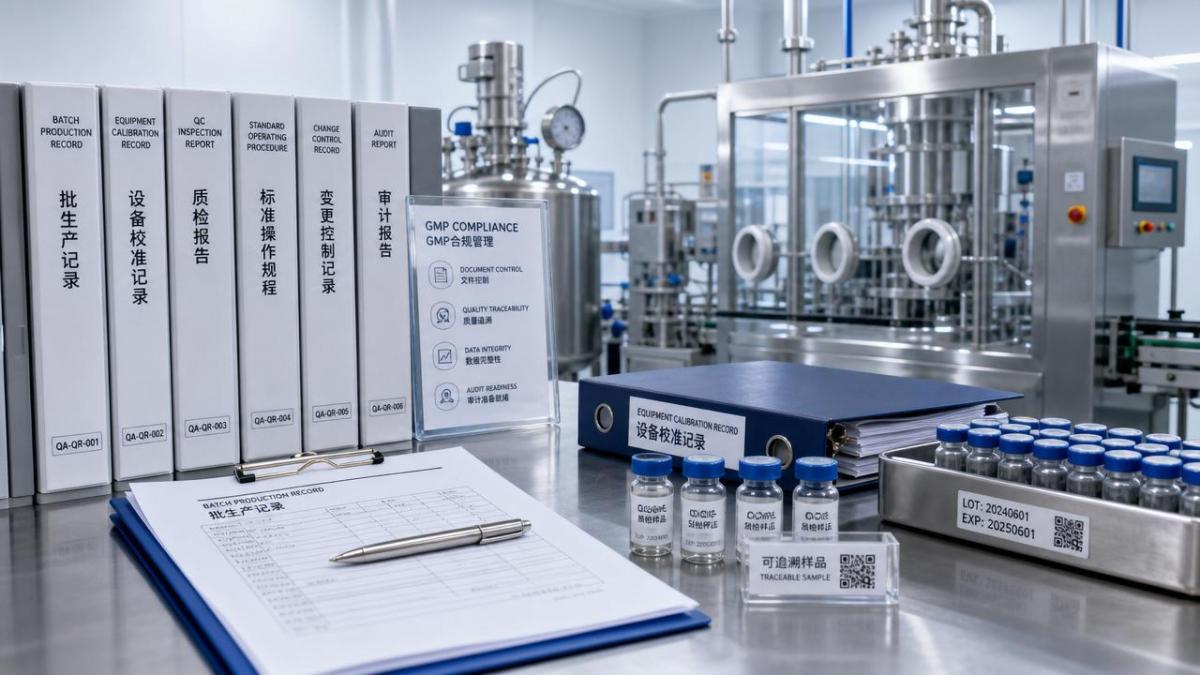
A GMP system is not judged only by written procedures. It is judged by whether records prove the system worked as intended, at the right time, by authorized personnel, with verified oversight.
In practice, auditors look for alignment. They compare what the site says it does, what operators recorded, what quality reviewed, and what investigations or changes followed when something moved out of specification.
This is the practical meaning of GMP Compliance documentation requirements. Records must be accurate, contemporaneous, attributable, legible, and complete enough to reconstruct critical events without guesswork.
A strong documentation set also protects commercial credibility. Buyers in regulated agricultural inputs, pharmaceutical intermediates, and processing materials increasingly view record quality as a signal of operational maturity.
What auditors usually expect to see
The exact record set varies by product, process, and market. Even so, most inspections return to a familiar group of documents that demonstrate whether the site can consistently produce compliant output.
Core manufacturing and quality records
- Master production records that define approved formulas, instructions, equipment, controls, and in-process checkpoints.
- Batch production records showing actual execution, quantities used, signatures, dates, times, and deviations from the approved process.
- Standard operating procedures for production, cleaning, sampling, testing, release, storage, complaint handling, and document control.
- Specifications and test methods for raw materials, intermediates, packaging, and finished products.
- Laboratory records, chromatograms, worksheets, calculations, and certificate review files.
Support records that prove system discipline
- Training records tied to job roles, procedural revisions, and periodic qualification.
- Equipment cleaning, maintenance, calibration, and usage logs.
- Environmental monitoring, water system checks, pest control, and sanitation records where relevant.
- Supplier qualification files, incoming material approvals, and traceability records.
- Stability, retention sample, distribution, and recall readiness records.
When these documents are fragmented or inconsistent, audit risk rises quickly. Small gaps often point to larger control weaknesses.
The records that often determine audit outcomes
Some files receive special attention because they reveal how an organization responds when operations do not go exactly to plan.
These files often make the difference between a manageable observation and a serious finding. They show whether quality systems function under pressure, not only under routine conditions.
How GMP documentation works across industries
The language of GMP is shared, but documentation emphasis changes by sector. That matters in a mixed industrial landscape where chemical production, biological extraction, and processing operations may intersect.
Fine chemicals and APIs
Batch genealogy, analytical records, validation data, and supplier traceability usually receive intense review. Auditors want to see reproducibility, impurity control, and strong management of critical process parameters.
Bio-extracts and ingredients
Raw material variability is often a central issue. Documentation must show sourcing controls, identity testing, contamination prevention, and lot-to-lot consistency supported by reliable release records.
Feed and grain processing
The focus may shift toward sanitation, cross-contact prevention, storage conditions, equipment cleaning, and full downstream traceability in case of complaint, withdrawal, or recall.
AgriChem Chronicle frequently tracks this overlap between regulation and supply reliability. In every segment, GMP Compliance documentation requirements are no longer an internal quality issue alone. They affect customer confidence, market access, and due diligence outcomes.
What weak documentation usually looks like
Many sites believe they are audit ready because documents exist. The real question is whether those documents tell one coherent and defensible story.
- Entries are completed late, rewritten, or missing dates and signatures.
- SOP versions in use do not match the controlled document list.
- Batch records contain unexplained corrections or blank fields.
- Training files show attendance but not demonstrated competence.
- CAPA actions are closed on paper without evidence of effectiveness.
- Change control omits validation impact or cross-functional approval.
Auditors tend to read these as system signals. A missing signature may be minor by itself, but repeated data integrity weaknesses suggest deeper governance problems.
A practical way to strengthen audit readiness
Improving compliance does not always start with more documents. Often it starts with a sharper structure for the documents already required.
Review the record map
List every GMP-critical process and match it to its governing SOP, operating record, review point, retention rule, and approval path. Gaps become easier to spot when viewed as a connected map.
Test reconstruction ability
Select one recent batch, one deviation, and one change control. Then reconstruct the full story from issue to closure. If the timeline is unclear, documentation discipline needs work.
Check review quality, not only completion
A signed form is not enough. Reviewers should detect inconsistencies, question unexplained results, and confirm that linked records support the final disposition.
Align paper and digital systems
Many operations now manage mixed environments. GMP Compliance documentation requirements still apply across both, including access control, audit trails, version control, and data retention.
Where to focus next
A useful next step is to rank records by audit sensitivity. Start with batch documentation, deviations, CAPA, change control, training, and equipment logs. These areas usually reveal the true health of the quality system.
Then compare document completeness against current business realities. New suppliers, revised processes, expanded export markets, and tighter customer qualification demands often expose outdated record structures.
For organizations operating across regulated chemical and primary industry supply chains, the value of strong documentation is cumulative. It supports inspections, strengthens traceability, and gives partners evidence that compliance is managed rather than assumed.
If audit readiness is the immediate goal, begin with the records that prove execution, response, and review. That is usually where GMP Compliance documentation requirements move from policy language into measurable operational trust.
Related Intelligence
- APIs & IntermediatesWood Preservative Prices in the USA: Bulk Costs by Chemical TypeSearching for “wood preservatives price USA”? Compare bulk chemical types, uncover hidden delivery costs, and learn how to choose compliant treatments at the best value.
- APIs & IntermediatesLiaoning Fine Chemicals Institute for New Industrialization Opens in ShenyangLiaoning Fine Chemicals Institute for New Industrialization opens in Shenyang. Explore its plans to link research, pilot-scale development and enterprise services to drive chemical innovation.
- APIs & IntermediatesBuyer-Oriented Category Guides: How to Compare Options Beyond PriceUse buyer oriented category guides to compare quality, lifecycle costs, compliance, and supplier reliability beyond price. Discover how to reduce purchasing risk and choose lasting value.
The Morning Broadsheet
Daily chemical briefings, market shifts, and peer-reviewed summaries delivered to your terminal.
